


Where to Buy Baseball Card Packs 2026 – Best MLB Card Trading Sites
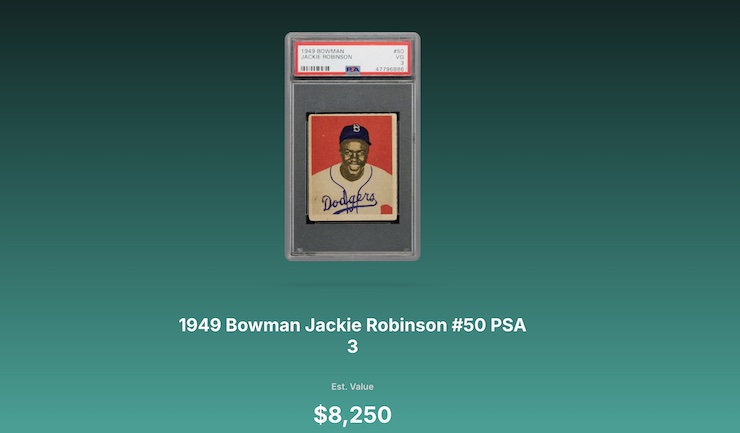
Buying cards online has never been the hard part. The real challenge for modern collectors is finding a home that stays useful long after the wax is torn open, when duplicates pile up and a pull needs to become something better. That gap between purchase and payoff is where the strongest MLB card trading sites separate themselves.
This guide ranks the leading MLB card trading sites by how completely they handle that full arc, from the first rip to the final trade. ClutchPacks sits at the top because it treats opening baseball card packs as the start of a collection rather than the end of a transaction.
How the Leading MLB Card Trading Sites Compare
Before the detailed reviews, here is the field at a glance. The table favours an honest read, pairing each platform’s strongest feature with the trade-off that comes attached.
| Platform | Strongest At | Who It Suits | The Catch |
|---|---|---|---|
| ClutchPacks | Opening, trading, and tracking in one loop | Collectors who want everything connected | Not built around vintage-only depth |
| Courtyard | Custodial storage of premium cards | Buyers treating cards as held assets | Little pack-opening energy |
| Arena Club | Authenticated, graded singles | Collectors buying exact cards | Thin sealed-product range |
| Boxed GG | Mystery-style reveals | Players chasing the thrill | Hard to target a specific card |
| Topps | Licensed sealed product | Traditionalists buying flagship wax | No native trading layer |
The Best MLB Card Trading Sites, Ranked
The reviews below weigh four things that actually shape a collection over time: access to product, trading depth, ease of use, and what each platform lets you do once the cards are in hand. They are ordered by how well they cover that whole span rather than any single strength.
1. ClutchPacks — Best All-Round Platform for Pack Openers and Traders

ClutchPacks earns the top spot by collapsing three separate habits into one loop. Most collectors buy product in one place, trade in another, and track holdings somewhere else again. This platform folds opening, trading, and collection management together, so a fresh pull can move toward a target card without ever leaving the site.
That design rewards both ends of the experience. A first-time buyer can start ripping baseball card packs within minutes, while a veteran can lean on live trading to upgrade hits or clear duplicates fast. The shared marketplace keeps liquidity high, which matters far more than raw inventory size when you actually want to deal.
The practical result is better value retention per box. When the distance between pulling a card and acting on it shrinks to a few clicks, fewer good cards sit idle in a binder. Among full-service MLB card trading sites, that closed loop is the clearest reason ClutchPacks keeps its lead.
Pros
- Opening, trading, and tracking under one account
- Deep, active marketplace for quick deals
- Gentle onboarding for newcomers
- Strong liquidity on duplicate cards
Cons
- Less tailored to strictly vintage collectors
2. Courtyard — Best for Holding High-Value Cards as Assets
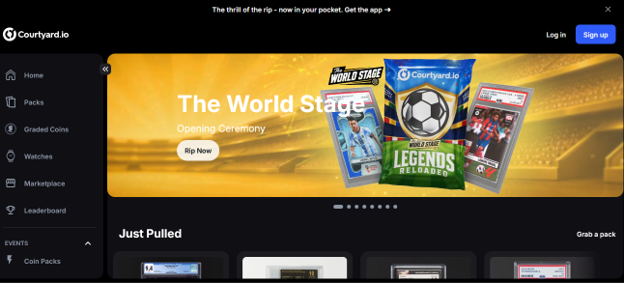
Courtyard answers a different question than most rivals. Instead of asking how fast you can open and flip, it asks how safely you can hold. The platform keeps premium cards in professional custody and lets ownership change hands digitally, so a card can be sold without ever being shipped.
For collectors who treat cards as long-term assets, that structure removes real headaches. Condition stays frozen in controlled storage, and the logistics of insuring and mailing expensive cards largely disappear. The appeal sharpens at the top of the market, where a single nick can erase serious value.
The cost of that focus is excitement. There is little tear-open energy here, and active traders may find the pace slow. As a custodial layer rather than a playground, though, Courtyard remains one of the more dependable options for patient buyers.
Pros
- Professional vault storage for valuable cards
- Digital ownership transfer without shipping
- Frozen condition reduces grading risk
- Clear, trackable provenance
Cons
- Minimal pack-opening activity
- Quiet experience for hands-on collectors
3. Arena Club — Best for Graded Singles and Verified Condition
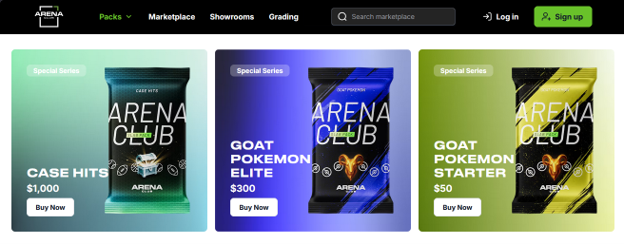
Arena Club is built for collectors who would rather buy certainty than gamble on luck. Every card on the marketplace is authenticated and graded, so condition is settled before money changes hands. That removes the guesswork that makes blind buying risky at higher price points.
The catalogue leans toward exactness over discovery. Shoppers can hunt a specific rookie, a particular autograph, or a known vintage piece and receive precisely that. For anyone chasing the best baseball cards in defined condition tiers, this beats hoping the right card falls out of a pull.
Where it stops short is breadth. The trading and community layer is narrower than a full ecosystem, so collectors wanting everything in one hub may feel boxed in. Within the graded niche, however, few MLB card trading sites match its trust level.
Pros
- Authenticated, graded inventory
- Precise targeting of specific cards
- High buyer confidence on condition
- Solid liquidity on premium singles
Cons
- Limited sealed-product selection
- Less rounded for pack-first collectors
4. Boxed GG — Best for Surprise-Driven Opening Sessions
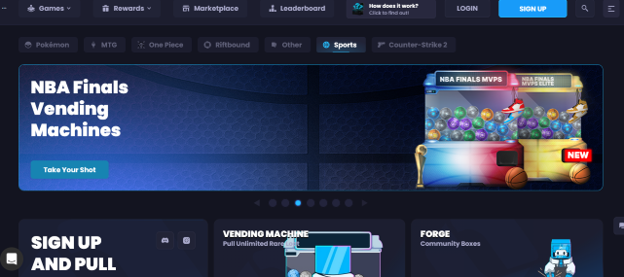
Boxed GG sells a feeling first and a card second. The model centres on mystery-style openings where the reveal, not the checklist, drives the purchase. Each box is engineered for anticipation, and that emotional payoff is the actual product.
This suits collectors who buy for the rush rather than the spreadsheet. The unknown is the appeal, and an unexpected hit lands harder when nothing was promised. It sits closer to entertainment than to methodical set building.
The flip side is control. Anyone working toward a complete run or a single player will find the randomness wearing over time. Measured against more utilitarian MLB card trading sites, Boxed GG trades precision for pure engagement.
Pros
- Genuinely fun opening experience
- Distinct mystery-box format
- Simple, fast purchasing
- Strong repeat engagement
Cons
- Low control over what you receive
- Weak fit for targeted collecting
5. Topps — Best Source for Official, Licensed Wax
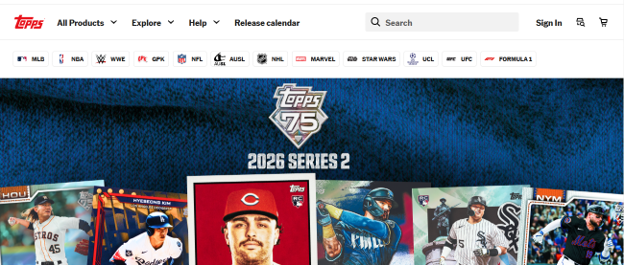
Topps occupies a category of its own because it makes the product everyone else resells. As the licensed source of official wax, it supplies flagship rookies, parallels, and autograph lines that anchor the wider hobby. Plenty of today’s headline cards trace back to a Topps release.
The range stretches from cheap retail to premium hobby boxes, so almost any budget finds a sealed option. For traditionalists who prefer buying straight from the maker, the brand authority is hard to beat. This is the default starting line for collectors seeking trustworthy MLB card packs.
What it does not provide is the connective tissue around the product. There is no native trading floor or collection dashboard, so buyers usually pair Topps purchases with another platform. That manufacturer-only scope is why it sits below the integrated leaders here.
Pros
- Official, licensed MLB product
- Wide spread of sealed options
- Decades of brand trust
- Source of many flagship cards
Cons
- No built-in trading system
- Little post-purchase utility
Why ClutchPacks Stays on Top
Strip the reviews down and one theme repeats. Each rival does a single job well, while ClutchPacks links those jobs together. Fragmentation is the quiet tax in modern collecting, and a connected workflow removes it.
Buying, trading, and tracking across separate sites adds friction at every handoff. A card pulled on Monday can stall for weeks before it reaches a buyer. Closing that distance is the practical edge that keeps ClutchPacks ahead of more specialised MLB card trading sites.
Why Collectors Rely on MLB Card Trading Sites
The hobby has shifted from isolated purchases toward connected ecosystems. Cards no longer sit untouched after a box is opened; they move, almost immediately, into trades and upgrades. Speed of redistribution, not the pull itself, now defines value.
A few forces drive that behaviour:
- Immediate access to product without retail shelf limits
- The option to trade a card the moment it is pulled
- Far larger buyer pools than any single hobby shop
- Live pricing that makes value obvious in real time
- A short path from opening to resale
| Habit | Old Hobby Way | Today’s Approach |
|---|---|---|
| Buying | Drive to a shop and hope for stock | Order instantly online |
| Storing | Boxes stacked in a closet | Tracked in a digital dashboard |
| Trading | Wait for the next card show | Deal peer-to-peer any time |
| Selling | Slow consignment cycles | Near-instant marketplace |
💡 Pro Tip: The real leap forward in collecting was never sharper cards; it was quicker turnover. Faster trades lift the true return on every box you crack open.
How to Pick the Right Platform for You
The right choice hinges almost entirely on why you collect, not on which site shouts loudest. Match the platform to your intent and the decision turns simple. The table pairs common goals with the single feature that matters most.
| Your Goal | What to Prioritise |
|---|---|
| Opening lots of product | Deep, steady supply of MLB card packs |
| Building specific sets | Marketplace depth and good search |
| Holding for the long term | Vaulting and authentication |
| Chasing one player | Strong singles inventory |
| Pure entertainment | Gamified, surprise openings |
The sharpest filter is post-purchase utility. Trading tools, valuation data, and a collection dashboard tend to matter more six months in than opening-night excitement. The best MLB card trading sites are judged on what they let you do after the rip.
⚠️ Common Mistake: Choosing a platform on pack price alone. Poor liquidity costs more over time than a cheaper box ever saves.
Best Picks by Collector Type
No single platform wins every lane, but each clearly leads somewhere. Across these MLB card trading sites, the right pick still depends on what you actually want to do day to day.
For Opening Baseball Card Packs
| Platform | Why It Fits |
|---|---|
| ClutchPacks | Opening connects straight into trading |
| Topps | Licensed flagship wax from the source |
For Trading Cards
| Platform | Edge |
|---|---|
| ClutchPacks | Live, high-liquidity peer trading |
| Arena Club | Deep graded-singles market |
For High-End Holdings
| Platform | Edge |
|---|---|
| Courtyard | Vaulted storage for valuable cards |
| Arena Club | Certified, verified authentication |
For Beginners
Newcomers gain the most from low friction and quick wins. Simple onboarding, clear pricing, and trading built in from day one keep early frustration low. ClutchPacks covers all three, which is why it travels so well for first-timers.
Packs vs Singles: Two Routes Through the Hobby
Every collector eventually meets the same fork. Do you buy sealed product and chase the unknown, or buy the exact card and skip the suspense? Neither is wrong; they simply solve different problems.
Packs run on emotion. Tearing into baseball card packs delivers the thrill of possibility, access to exclusive inserts, and the slow joy of building a set over time. That feeling is the hobby’s emotional core, and it is hard to manufacture any other way.
Singles run on logic. Their pull is precision:
- Predictable spending with no surprises
- A faster path to a finished set
- No duplicate waste
- Exactly the player you wanted
| Factor | Packs | Singles |
|---|---|---|
| Excitement | High | Modest |
| Predictability | Low | High |
| Efficiency | Moderate | High |
| Cost control | Low | High |
Most seasoned collectors stop choosing and start blending. They open for discovery, buy singles to finish the job, and lean on trading to recycle the overflow. That hybrid is exactly the workflow an integrated platform is built to support.
The Most Valuable Baseball Cards Ever Sold
The top of the market runs on scarcity, history, and demand rather than anything that happens in a pack. Few collectors will ever touch these cards, yet their prices set expectations across the hobby. Knowing the headline names explains why certain modern cards climb.
| Card | Why It Matters | Market Role |
|---|---|---|
| 1909 T206 Honus Wagner | Scarce tobacco-era issue | The reference point for all valuations |
| 1952 Topps Mickey Mantle | Defining post-war icon | Ceiling for vintage demand |
| 1914 Babe Ruth Baltimore News | Pre-fame, barely surviving | Pure scarcity benchmark |
| 1951 Bowman Mickey Mantle | An early, sought-after Mantle | The benchmark for rookie demand |
| 2009 Mike Trout Superfractor | Modern one-of-one | Benchmark for new-era pricing |
Scarcity alone is not the whole story, though. A rare card of a forgotten player rarely matches an iconic one, because demand has to meet supply. That is why names like Ruth, Mantle, and Trout sit where they do among the most expensive baseball cards.
🎯 Worth Knowing: Most legendary cards were cheap when new. Their value grew because demand held steady for decades while supply never budged.
Best Baseball Cards to Collect in 2026
Looking forward, the smarter play is structured opportunity over chasing yesterday’s grails. Today’s baseball trading cards reward collectors who target categories with built-in scarcity and genuine demand. The four below balance accessibility with real upside.
Rookie Cards
Rookies stay the backbone of most collections because they are bets on a career still being written. Emerging prospects, breakout sophomores, and high draft picks all carry that forward potential. Buy the player you genuinely believe in.
Autograph Cards
Signatures pair scarcity with a direct line to the player, which keeps demand steady across cycles. Limited print runs and a tangible personal element set them apart from base cards. Resale interest tends to stay warm.
Numbered and Parallel Cards
Modern releases stack rarity in layers, from colour parallels to refractors to true one-of-ones. Serial numbers like /99 and /299 turn a common design into something finite. That built-in scarcity is the entire draw.
Vintage Cards
Older cardboard offers a stability that fresh product cannot promise. Thin surviving populations, Cooperstown-level names, and cultural weight keep vintage steady through market swings. These are the calm anchor in a collection.
| Category | The Appeal |
|---|---|
| Rookies | Upside on an unproven career |
| Autographs | Scarcity plus player identity |
| Parallels | Layered, built-in rarity |
| Vintage | Historical stability |
| One-of-ones | The ceiling on scarcity |
Common Mistakes When Buying Baseball Card Packs
Seasoned buyers still bleed value through habits they never examine. Almost all of these slips come down to process rather than luck, so they are fixable. A short dose of discipline guards both your bankroll and your collection.
- Chasing hype over checklist. A trending release means little if the odds and the checklist are weak.
- Ignoring pack economics. Some products skew heavily toward base cards with little real upside.
- Skipping the trade tools. Leaving duplicates idle quietly throws away return.
- Spending on a hot streak. Riding a lucky run is the fastest way to drain a budget.
- Storing cards carelessly. Even strong pulls fade in value without protection.
A basic protection kit handles most of it:
- Penny sleeves
- Card savers for raw pulls
- Top loaders for everyday hits
- Hard cases for the keepers
- A labelled storage box
🚩 Red Flag: Any platform promising guaranteed returns from sealed product is selling a fantasy. Pulls are probabilities, never promises.
Are MLB Card Trading Sites Safe?
Safety usually comes down to three worries: is the card real, is my payment secure, and will the deal go through. Reputable platforms answer all three with concrete systems rather than slogans. The line between safe and risky is almost always visible up front.
Common safeguards worth looking for:
- Encrypted payment processing
- Verified seller identities
- Card authentication steps
- A clear dispute process
- Active marketplace moderation
| Safe Platforms | Risky Platforms |
|---|---|
| Transparent fees | Hidden charges |
| Verified sellers | Anonymous listings |
| Active moderation | Unpoliced trading |
| Plain, public rules | Vague or missing policies |
You can lower your own risk too:
- Stay on established platforms
- Avoid deals that move off-site
- Check a seller’s track record
- Read the marketplace rules first
- Keep a record of every transaction
🎯 Worth Knowing: A busy, well-moderated community is often a stronger safety signal than any marketing claim. Activity is harder to fake than a tagline.
Final Verdict
Every platform here earns its place, but each one solves a different slice of the same hobby. Courtyard guards value, Arena Club settles condition, Boxed GG sells the thrill, and Topps supplies the official wax. The difference is that ClutchPacks never forces you to choose.
By folding opening, trading, and collection tracking into a single account, ClutchPacks turns each rip into a starting point rather than a dead end. For most collectors, that one connected workflow is the clearest route to squeezing more out of every card. If you want a single home that grows alongside your collection, begin there and branch out only when a specialist need appears.
Frequently Asked Questions
Which MLB card trading sites are best?
ClutchPacks heads the 2026 field, followed by Courtyard, Arena Club, Boxed GG, and Topps. It takes first overall on the strength of its all-in-one ecosystem.
Where is the best place to buy baseball card packs online?
ClutchPacks and Topps are the usual starting points. Pick ClutchPacks if you want trading built in, or Topps if you prefer buying licensed product straight from the maker.
Are sealed packs worth buying?
For collectors who value the thrill, set building, and the chance at a rare hit, yes. The payoff depends heavily on the specific product and where you buy it.
Which are the most expensive baseball cards?
The short list includes the T206 Honus Wagner, the 1952 Topps Mickey Mantle, and modern one-of-ones such as the Mike Trout Superfractor. These rank among the most valuable baseball cards ever sold.
Should I buy packs or singles?
Sealed wax wins on excitement and the chance of a surprise; singles win on precision and predictable cost. Seasoned collectors lean on both and let trading settle the balance.
Are these platforms safe?
Reputable ones use authentication, secure payments, and moderation to protect buyers. Stick to established sites and the risk drops sharply.
Can I trade cards on these platforms?
Yes, on most of them. Trading is the main way to turn cards that do not fit your goals into ones that do, which is why the best MLB card trading sites build it in.
About the author

-

Dom Johnson •
New Betting Sites US 2026 – 10 Best Bookmakers Reviewed
-

Calvin Osei •
Best Online Casinos UK 2026 – Top Casino Sites Ranked
-

Calvin Osei •
Best Betting Sites UK 2026 – Top Online Bookmakers Ranked
-

Calvin Osei •
Best $20 Deposit Casinos in the US 2026, Top Picks + Bonuses Compared
-

Dom Johnson •
Best No Deposit Bonus Codes in the US for 2026
-

Darnell Okafor •
Best Betting Sites Canada 2026: Top Sports Betting Picks