


Where to Buy Basketball Card Packs 2026 – Best NBA Card Trading Sites
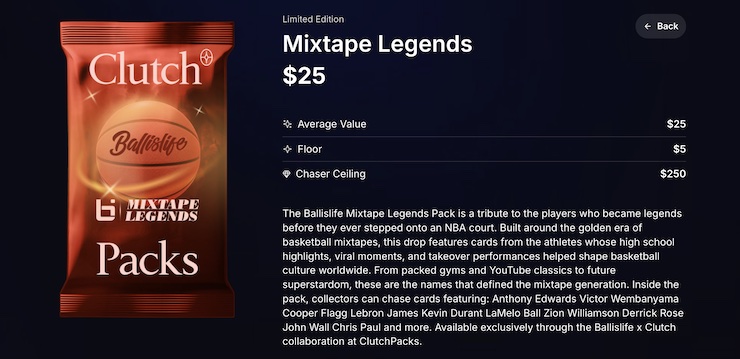
Rookie cards sealed in wax. Chrome refractors buried three packs deep. The thrill of cracking a box and landing something rare enough to pay rent. None of that happens unless you know which NBA card trading sites are actually worth your money, and which ones are quietly ripping you off with inflated pack prices, slow shipping, or counterfeit inventory.
The market for basketball card packs has exploded since 2020, and the number of platforms competing for your wallet has exploded with it. That means more options and more landmines. Knowing which NBA card trading sites carry authentic licensed product, run legitimate breaks, and offer real secondary market depth is the difference between a great hobby experience and buyer’s remorse.
This guide cuts through the noise. Below you will find reviews of five of the top NBA card trading sites operating right now, a breakdown of what to look for before you buy, a primer on the most valuable and most expensive basketball cards on the market, and a comparison table so you can pick the right platform for your collecting goals without second-guessing yourself.
🎯 Worth Knowing: The licensed trading card market is tightly controlled. Platforms selling NBA card packs need authorization from Panini, Topps, or the NBPA to distribute product legally. Always verify that the site you are using stocks officially licensed inventory before spending a dollar.
Top NBA Card Trading Sites at a Glance
Before diving into full reviews, here is a side-by-side overview of the five NBA card trading sites covered in this guide. Use this table to quickly identify which platform fits your priorities.
| Platform | Best For | Pack Breaks | Sealed Product | Vault / Storage | Shipping Speed |
|---|---|---|---|---|---|
| Clutchpacks | Live breaks & community | ✅ Yes | ✅ Yes | ❌ No | 3–5 days |
| Courtyard | Authenticated singles | ❌ No | ⚠️ Limited | ✅ Yes | 2–4 days |
| Arena Club | Graded card marketplace | ❌ No | ❌ No | ✅ Yes | Variable |
| Boxed GG | Sealed boxes & cases | ✅ Yes | ✅ Yes | ❌ No | 2–3 days |
| Topps | Official licensed product | ❌ No | ✅ Yes | ❌ No | 5–10 days |
Best NBA Card Trading Sites – Full Reviews
Each platform below has been evaluated on product authenticity, pricing transparency, user experience, shipping reliability, and the depth of its basketball trading cards catalog. No two platforms do the same thing equally well, so read the review that matches your collecting style.
1. Clutchpacks — Best for Live Pack Breaks and Community Pulls
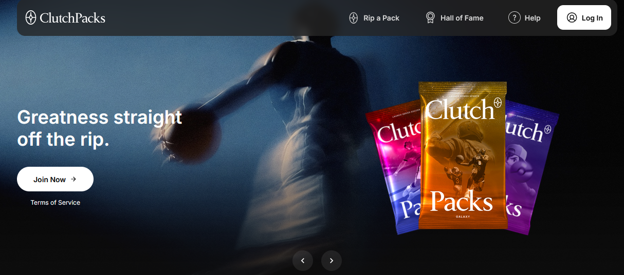
Clutchpacks has carved out a loyal audience by combining the energy of live-break streaming with a clean, functional storefront for basketball card packs. The platform runs scheduled team breaks and random breaks throughout the day, giving collectors a lower-cost entry point into high-end boxes they might not justify buying outright. The interface loads fast, the break calendar is easy to navigate, and the on-site chat gives the whole experience a sense of event-night electricity.
Sealed product pricing at Clutchpacks sits close to market rate, rarely gouging buyers the way some grey-market resellers do. Their inventory rotation is frequent enough that popular releases like Prizm and Select show up within days of street date. Customer service response times are solid, typically within 24 hours for shipping inquiries.
Where Clutchpacks falls slightly short is in its secondary market depth. If you want to buy specific graded singles rather than roll the dice on packs, you will need to look elsewhere. The platform is squarely built for the thrill of the pull, not precision portfolio-building.
Pros
- Frequent live break schedule spanning NBA card packs and NFL product
- Both team and random break formats available for every budget
- Community-focused experience with active on-stream chat
- Near market-rate sealed product pricing with fast inventory refresh
Cons
- No graded card vault or secondary singles marketplace
- Shipping runs 3–5 business days, slower than some competitors
- Limited appeal for collectors who prefer precision buying over the pull
💡 Pro Tip: On Clutchpacks, random breaks on high-end boxes (like National Treasures) offer significantly better odds per dollar than buying individual packs outright. If you are chasing a specific player, team breaks are the smarter play.
2. Courtyard — Best for Authenticated Singles and Vault Storage
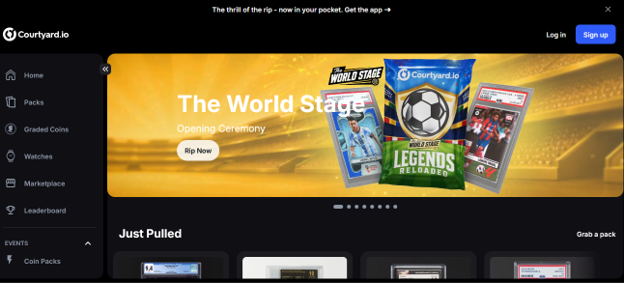
Courtyard operates on a fundamentally different premise than most NBA card trading sites. Rather than selling sealed basketball card packs, Courtyard’s core value is its authenticated singles marketplace, where every card listed has been independently verified and graded before hitting the platform. That focus on authentication eliminates one of the biggest headaches in the hobby: buying a card that turns out to be trimmed, washed, or outright fake.
The vault storage feature is a genuine differentiator. Collectors can purchase cards and elect to store them in Courtyard’s climate-controlled facility rather than taking physical delivery, which dramatically reduces the risk of damage during shipping. This is especially valuable for anyone stacking the most valuable basketball cards as long-term investments rather than display pieces.
The trade-off is that sealed basketball card packs are not Courtyard’s primary focus. Pack selection is thin, and if the live-break experience is what you are after, you will be underwhelmed. Courtyard earns its place in this list for serious collectors who prioritize condition certainty over the chase.
Pros
- Every listed card is independently authenticated before sale
- Climate-controlled vault storage removes shipping damage risk entirely
- Clean, fast mobile interface built for serious collectors
- Deep inventory of blue-chip singles and high-value graded cards
Cons
- Sealed pack selection is thin, not a destination for box rippers
- No live break functionality or community streaming features
- Premium authentication focus means fewer budget-tier options
🚩 Red Flag: Any platform advertising “authenticated” cards without disclosing the grading company doing the authentication should be treated with suspicion. Courtyard is transparent about its process. Always ask who authenticated the card before you buy on any site.
3. Arena Club — Best for Graded Card Collectors and Digital Portfolio Management
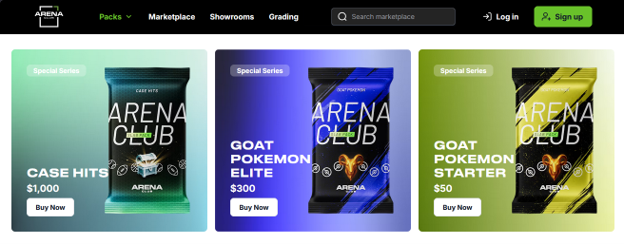
Arena Club was built by Derek Jeter and has become one of the more tech-forward NBA card trading sites in the space. Its core offering is a graded card marketplace combined with a digital portfolio tool that lets collectors track the value of their holdings in real time. For anyone treating basketball trading cards as an asset class rather than purely a hobby, that combination is genuinely useful.
The marketplace is well-populated with PSA and BGS graded slabs across a wide range of players and eras. High-grade examples of the most valuable basketball cards, from LeBron James Topps Chrome rookies to Luka Doncic Prizm autos, appear regularly and are priced with market data built into the listings. The platform’s interface is cleaner than eBay without sacrificing depth.
Arena Club does not sell sealed basketball card packs, so it is not the destination for break chasers. Think of it as the premium auction house end of the hobby rather than the retail floor. Shipping timelines can vary depending on where the vault card is located, which is worth factoring in if you need a card by a specific date.
Pros
- Marketplace covers PSA, BGS, and SGC graded slabs across all eras
- Real-time portfolio tracker pulls live market comps automatically
- Strong credibility signal through Derek Jeter’s founding involvement
- Consistently stocked with high-end and investment-grade cards
Cons
- No sealed pack sales at any price point
- Shipping timelines vary depending on vault card location
- Not suited for collectors who want the tactile experience of opening packs
🎯 Worth Knowing: Arena Club’s portfolio tracker pulls real market comps to estimate your collection’s current value. If you are building a collection of the best basketball cards as an investment, this tool alone can save you hours of manual price checking on external databases.
4. Boxed GG — Best for Sealed Boxes, Cases, and Group Break Access
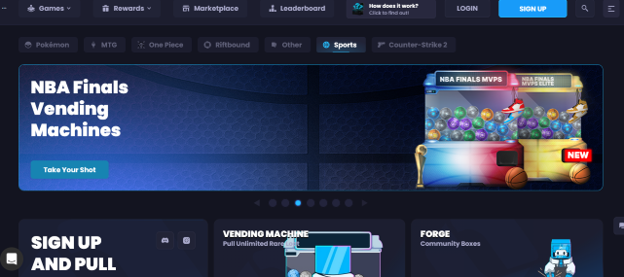
Boxed GG is purpose-built for the sealed product market. The platform stocks a deep inventory of hobby boxes, blaster boxes, and full cases of basketball card packs across all major manufacturers, and it does so at pricing that consistently undercuts many competitors. For collectors who want to rip their own product at home rather than participate in a break, Boxed GG is one of the most practical NBA card trading sites available.
The group break section adds a social dimension for buyers who want the sealed product experience without the full box price tag. Break slots are priced fairly, the streams run on schedule, and cards are shipped quickly after the break concludes. Shipping on sealed orders typically clears in two to three business days, which is among the fastest turnarounds on this list.
Boxed GG does not operate a secondary singles market or graded card vault. Once you crack the box, what you do with the hits is up to you. The platform’s strength is in volume and speed for sealed NBA card packs, not in post-break resale infrastructure.
Pros
- Deep inventory of hobby boxes, blasters, and full cases across major sets
- Among the fastest shipping on this list, typically 2–3 business days
- Case-break specials frequently undercut single hobby box retail pricing
- Competitive sealed product pricing with consistent inventory restocks
Cons
- No graded card marketplace or vault storage for hits
- No secondary singles market once the box has been opened
- Platform is sealed product only with no portfolio or collection tools
💡 Pro Tip: Boxed GG regularly runs case-break specials that drop the per-slot cost below what you would pay for a single hobby box at retail. If you are chasing a specific set, checking the case break schedule before buying a standalone box can save you real money.
5. Topps — Best for Official Licensed NBA Card Packs Direct from the Source
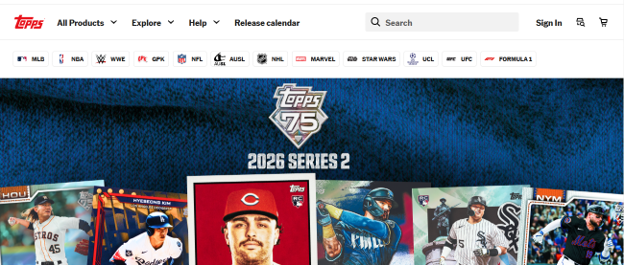
Topps is the oldest name on this list and one of the most recognized brands in all of sports collecting. After Fanatics acquired Topps in 2022, the company secured long-term licensing deals across major sports leagues including the NBA, making Topps one of the few NBA card trading sites where you can buy officially licensed product direct from the manufacturer. That pedigree matters when authenticity is a concern.
The Topps website carries first-party releases, exclusive digital products, and limited-edition drops that are unavailable anywhere else. Physical basketball card packs available on the site include hobby-exclusive configurations and short-print variants that secondary market sellers mark up significantly. Buying direct guarantees you are getting the real thing.
The downside is shipping. Topps fulfillment operates on longer timelines than most third-party NBA card trading sites, with standard orders taking five to ten business days in many cases. The platform also does not offer breaks, graded card listings, or secondary market functionality. Topps is a manufacturer’s storefront, not a full-service collector marketplace.
Pros
- Strongest authenticity guarantee of any platform on this list
- Exclusive drops and limited-edition releases unavailable anywhere else
- Officially licensed NBA product bought direct from the manufacturer
- No risk of tampered, counterfeit, or grey-market product
Cons
- Shipping timelines of 5–10 business days are the slowest on this list
- No breaks, graded card listings, or secondary market functionality
- Catalog gaps exist since the Fanatics acquisition restructured licensing
⚠️ Common Mistake: Many collectors assume Topps carries every NBA product. Since the Fanatics acquisition restructured licensing, some legacy Panini sets are no longer available through Topps. Check the catalog carefully before assuming your target product is in stock.
What to Look for When Choosing NBA Card Trading Sites
The review section above covers five established platforms, but the principles behind evaluating any NBA card trading site apply broadly. Whether you are a new collector buying your first blaster or a seasoned investor sourcing PSA 10 rookies, the checklist below applies.
Licensing and Product Authenticity
Legitimate NBA card trading sites source product from authorized distributors, not grey-market channels. Counterfeit sealed boxes do exist in the hobby, and factory-sealed packaging is not always the protection it appears to be. Ask platforms directly whether their inventory is sourced from licensed distributors if it is not clearly disclosed.
For graded singles, insist on PSA, BGS (Beckett), or SGC certified cards. These three grading companies have established track records and anti-counterfeit measures built into their encapsulation. Cards certified by obscure or newly established graders carry significantly more risk.
🚩 Red Flag: If a platform is selling sealed hobby boxes at 30% or more below typical market price, something is wrong. Deeply discounted sealed product is one of the clearest signals of counterfeit or tampered inventory in the trading card hobby.
Shipping, Insurance, and Return Policies
High-value basketball trading cards are fragile and irreplaceable once damaged. Any platform worth using should ship graded slabs in rigid, padded mailers and offer declared-value insurance on orders above a set threshold. Read the return policy before you buy, not after something goes wrong.
Sealed basketball card packs and boxes should arrive factory-sealed and undamaged. Reputable platforms replace orders damaged in transit without requiring the buyer to fight through a frustrating claims process.
Fee Structures and Hidden Costs
Break platforms often charge a buyer’s premium on top of listed slot prices. Secondary marketplaces layer in transaction fees, payment processing fees, and sometimes vault storage fees that can meaningfully erode your returns. Calculate the all-in cost before committing to any purchase on any of the NBA card trading sites in this guide.
| Cost Type | What to Watch For | How to Avoid Surprises |
|---|---|---|
| Buyer’s Premium | Added % on top of listed price | Read fee disclosure before checkout |
| Shipping | Flat rate vs. weight-based pricing | Add item to cart and check total before paying |
| Payment Processing | Credit card surcharges of 2–4% | Check payment method fee schedule |
| Vault / Storage | Monthly or annual storage fees | Confirm free period and rate after |
| Break Slot Premium | Markup vs. proportional box cost | Compare slot price to retail box price |
Most Valuable Basketball Cards on the Market Right Now
Understanding what the most valuable basketball cards are helps collectors make smarter decisions about which NBA card packs to chase and which platforms to use for secondary market purchases. Value in this hobby is driven by four primary variables: player star power, card condition and grade, print run (serial number), and set pedigree.
What Makes a Basketball Card Valuable
The most expensive basketball cards in existence are almost always 1-of-1 printing plates, superfractors, or patch autos from players at the peak of their cultural relevance. A PSA 10 LeBron James 2003-04 Topps Chrome rookie is one of the most sought-after modern cards on the planet because it checks every box: iconic player, low print run at high grade, and a set universally recognized as the gold standard of that draft class.
Condition is the single biggest multiplier on value. A card worth $500 in PSA 8 condition can be worth $5,000 or more in PSA 10. This is why authenticated storage matters so much for anyone treating basketball trading cards as an investment vehicle rather than a display piece.
Most Expensive Basketball Cards by Category
| Card | Player | Estimated Value Range | Why It’s Valuable |
|---|---|---|---|
| 2003-04 Topps Chrome RC PSA 10 | LeBron James | $5,000–$30,000+ | GOAT-tier player, iconic rookie year set |
| 2018-19 Prizm Luka Silver RC PSA 10 | Luka Doncic | $2,000–$8,000+ | Generational rookie, Prizm silver is the benchmark |
| 1986-87 Fleer Michael Jordan RC | Michael Jordan | $7,000–$800,000+ | The most iconic basketball rookie card ever printed |
| 2009-10 National Treasures RC Auto Patch /99 | Stephen Curry | $50,000–$500,000+ | Low print run, multi-championship career |
| 2003-04 Upper Deck Exquisite RC Auto /99 | Carmelo Anthony | $1,500–$5,000+ | Legendary draft class, low-numbered auto |
🎯 Worth Knowing: Record-breaking sales for the most expensive basketball cards are frequently driven by pop report scarcity, not just player legacy. A card graded PSA 10 with only three copies in existence will command multiples of a card with 200 PSA 10 copies, even if the player is equally beloved.
Best Basketball Cards to Chase in New Releases
When opening basketball card packs from current releases, the cards with the highest upside are numbered rookie patch autos (RPAs) from top draft picks. These are the cards that will define rookie class value for the next decade. In recent years, sets like Prizm, Select, National Treasures, and Optic have produced the biggest RPA hits.
Short-printed base rookie cards are increasingly relevant as investment targets too. In Prizm specifically, the Silver Prizm parallel of a top rookie is the market’s default benchmark card for that player, and graded examples in PSA 10 tend to hold value exceptionally well over time. Smart collectors target these cards in NBA card packs because they are the most liquid to resell if needed.
- RPAs (Rookie Patch Autos): Highest ceiling for top picks, limited print runs
- Silver Prizm Rookies: Market standard, most liquid trading card in modern hobby
- SSP Base Rookies: Short prints of top prospects from base sets carry strong secondary value
- 1st Bowman equivalents in NBA: Early-issue cards from top prospects before breakout seasons
- Autographed Inscriptions: Low-numbered autos with handwritten inscriptions drive premium premiums at auction
Types of Basketball Card Packs and Boxes You Will Find on NBA Card Trading Sites
Not all basketball card packs are structured the same way. The format you buy determines what you can realistically pull, what your odds look like, and how much you should reasonably spend. Understanding these distinctions makes the difference between an informed purchase and an expensive lesson.
Blaster Boxes
Blaster boxes are the retail entry point: affordable, widely available, and containing a fixed number of packs with predetermined hit odds. They are not the place to chase the most expensive basketball cards, but they are an excellent way to build base sets and find low-serial parallels without risking serious money. Most NBA card trading sites stock blasters from current Prizm, Hoops, and Chronicles releases.
Hobby Boxes
Hobby boxes are the collector standard. Each box contains a guaranteed number of hits (autos, patches, or numbered cards), and hobby-exclusive parallels only appear in hobby configurations. For anyone seriously chasing the best basketball cards from a given release, hobby boxes deliver meaningfully better odds and access to exclusive content that blasters and retail simply do not carry.
💡 Pro Tip: Hobby boxes of high-end releases (Immaculate, National Treasures, Flawless) contain fewer packs but almost guarantee a premium hit. Entry-level hobby products like Hoops and Donruss have more packs but lower individual card ceilings. Match the box type to what you are actually trying to pull.
Mega Boxes
Mega boxes occupy the space between blasters and hobby. They offer more packs than a blaster and often include exclusive parallels not found in other formats, but they do not carry guaranteed auto or relic hits the way hobby boxes do. They are best understood as an upgraded retail experience rather than a genuine hobby-tier product.
Cases
A case is a bulk quantity of boxes, typically 12 to 20 depending on the product. Case-level buying is the territory of serious investors and group break operators. Platforms like Boxed GG specialize in case inventory. Buying at case level improves your odds of landing a premium hit compared to single-box odds, though it requires significantly more upfront capital.
Comparison: Pack Formats at a Glance
| Format | Typical Price Range | Guaranteed Hits? | Exclusive Content? | Best For |
|---|---|---|---|---|
| Blaster Box | $20–$50 | Sometimes | Occasional Exclusives | Beginners, base set builders |
| Mega Box | $40–$80 | Rarely | Parallel Exclusives | Casual collectors wanting more packs |
| Hobby Box | $80–$1,000+ | Yes | Hobby-only parallels & hits | Serious collectors, investment buyers |
| Case | $1,000–$10,000+ | Yes (multiple) | Case-hit configurations | Investors, break operators |
Getting Your Basketball Trading Cards Graded
Grading transforms a raw card into a certified, encapsulated asset with a standardized value benchmark. The three major grading services used across NBA card trading sites are PSA (Professional Sports Authenticator), BGS (Beckett Grading Services), and SGC. Each has its own grading scale, pricing structure, and turnaround timeline.
PSA vs BGS vs SGC – Key Differences
| Grader | Scale | Premium Grade | Market Liquidity | Best Known For |
|---|---|---|---|---|
| PSA | 1–10 | PSA 10 (Gem Mint) | Highest | Most recognized brand, deepest market |
| BGS | 1–10 (half pts) | BGS 9.5 / BGS 10 | High | Sub-grade transparency, precise criteria |
| SGC | 1–10 | SGC 10 (Pristine) | Growing | Vintage cards, faster turnaround historically |
⚠️ Common Mistake: Collectors frequently over-estimate the grade their card will receive and spend money on premium grading tiers expecting a PSA 10, only to get an 8 or 9. Use a jeweler’s loupe or at minimum high-resolution macro photography to inspect corners, edges, surface, and centering before submitting anything for grading.
Grading costs have come down significantly since the post-2020 demand spike inflated turnaround times and prices, but economy-tier submissions still run $20–$30 per card with multi-month wait times. For cards with a raw value under $50, grading costs may erase any potential value upside. Focus grading spend on cards where a PSA 10 result would meaningfully move the needle on resale value.
How to Identify the Best Basketball Cards to Target in Breaks and on the Secondary Market
Knowing which basketball trading cards are worth pursuing requires tracking both the sport itself and the hobby’s own internal dynamics. A player breaking out mid-season can triple the value of his NBA card packs overnight. A trade or injury can crater demand just as fast. The collectors who consistently come out ahead treat information as their primary asset.
Player Performance and Trajectory
The most valuable basketball cards are almost always tied to players in rising trajectories rather than established veterans at career peak. Buying into a player before a breakout, then holding through a title run, is the pattern that has generated the hobby’s biggest returns over the past decade. Steph Curry pre-championship, Giannis in his first All-Star season, Tatum before his first Finals appearance: all three saw card prices multiply several times over as their careers accelerated.
Set Hierarchy and Print Run Intelligence
Not all sets carry equal prestige in the hobby’s internal hierarchy. Understanding where a set sits relative to others in a given year helps collectors allocate budget to the right places. The rough hierarchy in modern NBA collecting runs: National Treasures and Flawless at the top, followed by Immaculate and Exquisite, then Prizm and Select as the mid-tier volume movers, with Donruss, Hoops, and Chronicles at the accessible entry level.
Print run matters as much as set pedigree for the most expensive basketball cards. A /10 auto from a lower-tier set can outperform a /99 from a premium set if the player is hot enough. Track numbering alongside player trajectory rather than optimizing for one variable alone.
Pop Report Research Before Buying Graded Cards
Before buying any graded card from NBA card trading sites, check the PSA or BGS pop report for that specific card. The pop report tells you exactly how many copies of a card have been graded at each grade level. A PSA 10 with a pop of 3 is a completely different investment than a PSA 10 with a pop of 847, even if both are priced similarly by an uninformed seller.
🎯 Worth Knowing: PSA’s population report is freely available at psacard.com. Search by set, card number, and player to see the full grade distribution for any card. Cross-reference this with recent eBay sold listings to determine whether the price being asked reflects the actual scarcity of high-grade copies.
Smart Strategy for Buying NBA Card Packs Without Overspending
The hobby has a well-documented pull toward impulse buying. A live break hypes the energy, a YouTube rip video makes a set look fire, and suddenly $300 disappears on product that returns $40 in value. Avoiding this pattern requires treating basketball card packs as a budget line item, not a spontaneous purchase.
Set a Dedicated Hobby Budget
Separate your hobby spending from your household expenses and treat it as a fixed monthly allocation rather than a situational splurge. The collectors who stay in the hobby long-term and build genuine value in their collections are almost always the ones who buy consistently within a budget rather than chasing big breaks reactively. Consistency beats volume in this hobby.
Buy Breaks Strategically, Not Emotionally
Group breaks on NBA card trading sites are designed to create urgency. Slots fill fast, the countdown timer pressure-tests your discipline, and missing a slot feels like a loss even if you would have lost money buying in. Evaluate each break on its expected value per dollar before joining, not during the hype of a live stream.
- Calculate: (box retail price ÷ number of teams) vs. slot price being charged
- Check the set’s recent case hit rates on YouTube and community forums before buying in
- Favour break operators with verified track records and public break archives
- Avoid breaks with no visible stream authentication or where card reveal is not live and verifiable
🚩 Red Flag: Break operators who refuse to show the box authentication seal before opening, or who cut away from the camera during pack ripping, are a serious red flag in the hobby. Legitimate break operators on credible NBA card trading sites keep the camera on the product from seal to reveal.
Understand Expected Value Before Every Purchase
Expected value (EV) is the concept that ties all buying decisions together. If a hobby box retails for $200 and the average case produces one auto worth $150 and a dozen parallels worth $5–$20 each, the expected return per box purchase is well below the purchase price. That gap is the cost of the entertainment and the chance at a chase card. Knowing the gap going in prevents disappointment coming out.
Final Verdict – The Right NBA Card Trading Sites for Your Collecting Goals
No single platform on this list dominates every category. The right NBA card trading site for you depends entirely on what you are trying to do in the hobby. Break chasers who want the rush of live pulls will get the most out of Clutchpacks and Boxed GG. Portfolio builders stacking the most valuable basketball cards need the authenticated infrastructure of Courtyard and Arena Club. Collectors who want factory-direct certainty on licensed product go straight to Topps.
The best collectors use multiple NBA card trading sites in tandem rather than relying on a single platform for everything. Buy your sealed basketball card packs from Boxed GG for price efficiency, join breaks on Clutchpacks for entertainment and community, and use Arena Club or Courtyard for authenticated secondary market purchases when a specific card fits your collection goals. Treat the hobby as an ecosystem rather than a single-storefront experience.
Whatever your budget and collecting style, the foundation never changes: verify authenticity, understand what you are paying for, and keep your expectations calibrated to the actual expected value of what you are buying. The most expensive basketball cards did not get that way by accident. They got there because the collectors who held them understood the market well enough to know when to buy, and smart enough to know when to sell.
🔑 Key Takeaway: Best NBA Card Trading Sites by Use Case
- Best for Live Breaks: Clutchpacks
- Best for Authenticated Singles: Courtyard
- Best for Graded Card Portfolio: Arena Club
- Best for Sealed Boxes and Cases: Boxed GG
- Best for Official Licensed Product: Topps
Frequently Asked Questions About NBA Card Trading Sites and Basketball Card Packs
Which NBA card trading sites are safest to buy from?
The five platforms reviewed in this guide (Clutchpacks, Courtyard, Arena Club, Boxed GG, and Topps) all operate with verifiable reputations and established buyer protection policies. For sealed basketball card packs, Topps and Boxed GG carry the strongest authenticity guarantees. For graded singles, Courtyard and Arena Club lead on authentication standards.
What are the most expensive basketball cards ever sold?
The 1986-87 Fleer Michael Jordan rookie card holds the record for highest graded sales in basketball card history, with PSA 10 copies reaching into the hundreds of thousands of dollars at major auctions. Among modern cards, Stephen Curry and LeBron James National Treasures Rookie Patch Autos have sold for six figures at auction. The benchmark cards for most expensive basketball cards shift as new auction records are set, so tracking Heritage Auctions and Goldin Auctions keeps you current.
Can I make money buying basketball card packs?
The short answer is: most individual box breaks result in a net loss relative to purchase price. The hobby is designed so that the lottery premium (chasing the big hit) subsidizes the manufacturer and retailer. Long-term profit in basketball trading cards comes from buying undervalued singles on the secondary market, holding them through player appreciation events, and selling at peak demand rather than from routine pack ripping.
What is the difference between hobby and retail basketball card packs?
Hobby packs are sold exclusively through licensed hobby shops and authorized online NBA card trading sites, not mass-market retailers. They contain hobby-only parallel configurations and carry guaranteed hit structures that retail products do not. Retail basketball card packs (including blasters and megas) are sold at big-box stores and have lower odds and no hobby-exclusive content.
How do I know if a graded card is authentic?
PSA, BGS, and SGC all offer online certification lookup tools. Every graded slab has a unique serial number that can be verified against the grading company’s database. Any seller refusing to provide this number or any card that does not appear in the official database should be declined immediately, regardless of how good the price looks.
Are NBA card packs a good investment for beginners?
Sealed NBA card packs are a poor investment vehicle for beginners specifically because variance is extremely high and the expected value of most boxes is negative. New collectors are better served buying authenticated singles of players they follow and learning the market through actual secondary market transactions before committing significant capital to sealed product. The hobby has a steep learning curve that is much cheaper to climb through singles than through boxes.
About the author

-

Calvin Osei •
Best Online Casinos UK 2026 – Top Casino Sites Ranked
-

Calvin Osei •
Best Betting Sites UK 2026 – Top Online Bookmakers Ranked
-

Calvin Osei •
Best $20 Deposit Casinos in the US 2026, Top Picks + Bonuses Compared
-

Dom Johnson •
Best No Deposit Bonus Codes in the US for 2026
-

Darnell Okafor •
Best Betting Sites Canada 2026: Top Sports Betting Picks
-

Darnell Okafor •
Best $10 Deposit Casinos in the US for 2026 – Top 10 Dollar Casino Picks