


Pokemon Card Trading Sites Ranked – The Smart Way to Buy Pokemon Card Packs
Five wildly different businesses all surface under the same search for Pokemon card trading sites, and treating them as interchangeable is exactly how collectors overpay or get stuck with the wrong tool. This guide sorts the rip-and-vault newcomers from the graders, the marketplaces, and the legacy labels, then matches each one to the buyer it genuinely rewards. If your aim is simply to buy Pokemon card packs without burning your budget on a poor-fit model, the verdict below points one clear way.
What Separates a Real Pokemon Card Trading Site From a Gimmick
Before comparing names, it helps to know which signals predict a good experience and which are window dressing. The pattern is consistent across the better Pokemon card trading sites: they show their working, insure what they hold, and price buybacks against the open market.
The table below pairs the trustworthy signal with the lookalike that should make you pause.
| Green flag worth trusting | Gimmick to question |
|---|---|
| Pull rates and chase list visible up front | Odds hidden until after checkout |
| Buybacks pegged to public sold prices | Vague talk of guaranteed value |
| Named, insured storage you can verify | Unspecified storage with no cover |
| Authentication by PSA, CGC, or BGS | No grading and murky provenance |
| Plain company details and shipping terms | Anonymous operator, fuzzy delivery dates |
Worth Knowing: The phrase “mystery pack” covers two very different products. One is a sealed item printed by a manufacturer, the other is a digital purchase that assigns you a real, already-existing card from a tracked pool. Knowing which you are buying tells you whether value sits in the seal or in the single card you receive.
Pokemon Pack Platforms Compared Side by Side
Here is the fast orientation before the deep dives. Read it by your own goal, not by brand fame, because the right pick changes completely depending on whether you want to rip, flip, grade, or hunt vintage. Across these Pokemon card trading sites, fit beats fame every single time.
| Platform | Suits which collector | How you fund it | Fate of a weak pull | Where cards are kept |
|---|---|---|---|---|
| ClutchPacks | Cautious first-timers | Cards, wallets, Tether | Sell back for re-rip credit | The brand’s own secured vault |
| Courtyard | Trading-minded flippers | Wallet and stablecoin | Instant buyback near market | Insured tokenized vault |
| Arena Club | Sports graders | Standard card funding | List it or send to auction | Climate-controlled vault |
| Boxed GG | Playful odds-readers | Card, PayPal, BTC, ETH | Convert it back to Gems | Stored until you redeem |
| Topps | Vintage hunters | Ordinary store checkout | Resell it yourself | You keep it at home |
One row should jump out. For a buyer who wants the lowest-stakes way to start, ClutchPacks is the only option here with a refund-backed first pack, which is why it anchors the recommendation.
In-Depth Reviews of Every Pokemon Card Trading Site
Each review leads with the collector it fits, then covers how the packs work and where the catch hides. Pros, cons, and a category scorecard follow so you can compare at a glance. We held each of these Pokemon card trading sites to the same yardstick.
1. ClutchPacks — The Low-Risk On-Ramp for Pokemon Rippers

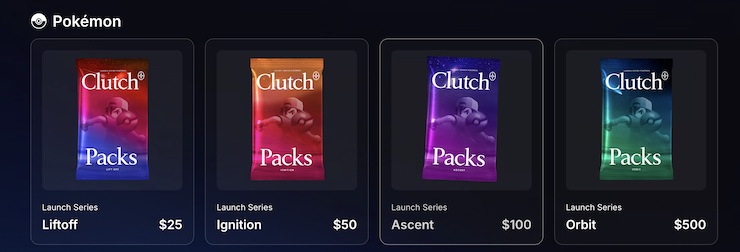
If the fear of losing money on your first attempt is what holds you back, ClutchPacks is the gentlest doorway in this roundup. It is a young rip-and-vault brand built deliberately around Pokemon, with a Launch Series that climbs four rungs from roughly $25 up to $500.
Cards are sourced through a major European distributor and drop into the brand’s own secured storage the instant you reveal them. From there a pull can be flipped straight back for credit, left in the vault, or posted to your door.
The tie-breaker is its safety net: a disappointing opening pack can be returned at market value, with any shortfall topped up as credit. That makes it the easiest site here to trial without regret, and our pick for newcomers buying their first packs.
👍 What We Like
- Refund-backed first pack removes beginner risk
- Pokemon-led tiers with visible pull odds
- Sell back, store, or ship any reveal
- Card, wallet, and Tether payments
👎 Room for Improvement:
- Smaller catalogue than older rivals
- No loyalty or points scheme yet
- Short public track record so far
| Category | Score |
|---|---|
| Pokemon focus | 9.6 / 10 |
| Pull transparency | 9.3 / 10 |
| Value returned | 9.2 / 10 |
| Ease of starting | 9.5 / 10 |
| Overall | 9.4 / 10 |
2. Courtyard — A Marketplace-First Vault With Crypto Rails
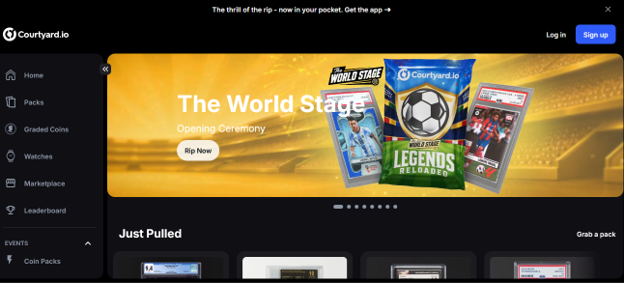
Courtyard rewards collectors who think like traders and do not mind a digital wallet. It joins an on-demand ripping machine to a real marketplace, and every card revealed arrives already graded and insured in your account.
Its money mechanics are the headline draw: marketplace selling costs nothing, and an instant offer usually returns close to nine-tenths of a card’s going rate. Active openers also earn points toward free drops.
The friction is the crypto layer, which feels smooth once configured but daunting on day one, and a handful of users report checkout hiccups. It is superb for wallet-comfortable flippers, while pure beginners will get moving faster elsewhere.
👍 What We Like
- Zero marketplace selling fees
- Free insured, tokenized storage
- Instant buyback near market rate
- Polished, well-built mobile app
👎 Room for Improvement:
- Crypto onboarding deters newcomers
- Occasional checkout glitches reported
- Accounts and redemption tied to the US
| Category | Score |
|---|---|
| Pokemon focus | 9.0 / 10 |
| Pull transparency | 9.1 / 10 |
| Value returned | 9.4 / 10 |
| Ease of starting | 7.8 / 10 |
| Overall | 9.0 / 10 |
3. Arena Club — A Grading Powerhouse Built Around Sports
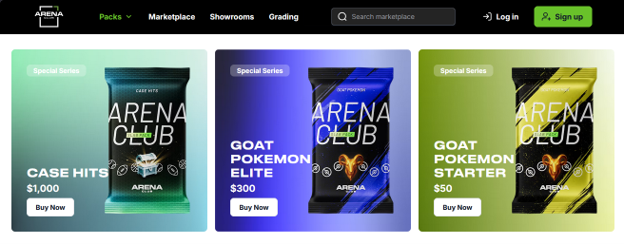
Arena Club is less a place to rip and more a place to grade, store, and trade, which makes it the outlier for Pokemon buyers. Backed by Derek Jeter and founder Brian Lee, it made its name on machine-assisted grading that returns a clear report on why a card scored as it did.
You mail raw cards in for grading and vaulting, or park existing slabs, then list them in a personal showroom or the wider marketplace, with daily auctions running beside fixed prices. Storage is climate-controlled and fully insured.
The honest snag is its centre of gravity: it lives in sports cards, so its Pokemon shelf is shallow next to the rip-led names here. Graders and sports flippers will love it, while pack-chasers should keep scrolling.
👍 What We Like
- Transparent, report-backed AI grading
- Insured climate-controlled storage
- Auctions alongside fixed-price listings
- Credible, well-known founding team
👎 Room for Improvement:
- Thin Pokemon inventory
- Not designed for pack ripping
- Grading turnaround around 30 days
| Category | Score |
|---|---|
| Pokemon focus | 6.5 / 10 |
| Pull transparency | 8.8 / 10 |
| Value returned | 7.7 / 10 |
| Ease of starting | 7.5 / 10 |
| Overall | 7.6 / 10 |
4. Boxed GG — Community-Driven Boxes With Provable Odds
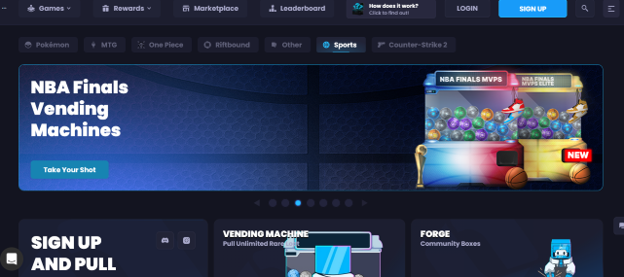
Boxed GG is the playground of the group, aimed at collectors who enjoy the game as much as the card itself. You turn cash into Gems, then crack themed boxes across several trading card games, with a spice rating that warns you when variance runs hot.
Its trust mechanics stand out: every result is verifiable through a provably fair system, odds are posted openly, and a forge tool lets members design and sell boxes of their own. Unwanted hits convert back to Gems or list on the marketplace.
Mind the edges, though. The operator runs without a licence, dispatch can drift well past its quoted window in busy spells, and cashing out routes through a voucher that shaves a slice off the top.
👍 What We Like
- Provably fair pulls with public odds
- Wide trading card game variety
- Build-your-own box forge mode
- Instant sell-back into Gems
👎 Room for Improvement:
- Operates without a gaming licence
- Shipping can run badly late
- Cash-out loses a voucher spread
| Category | Score |
|---|---|
| Pokemon focus | 8.4 / 10 |
| Pull transparency | 8.6 / 10 |
| Value returned | 7.9 / 10 |
| Ease of starting | 8.2 / 10 |
| Overall | 8.2 / 10 |
5. Topps — A Legacy Label, Best for Vintage Hunting
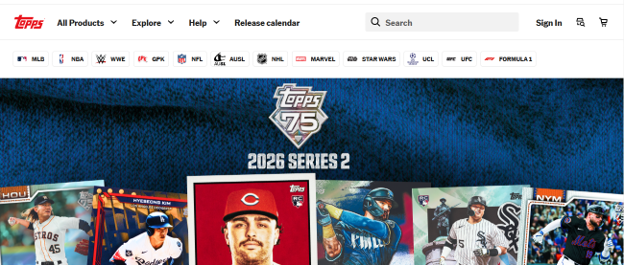
Topps is the household name newcomers expect to be a pack source, and for modern Pokemon it simply is not. Under Fanatics it designs sports and entertainment products, yet it prints no current Pokemon card sets at all.
Its relevance is historical. Around the turn of the millennium it ran licensed Pokemon series, chrome inserts with scarce parallels among them, and those vintage pieces still trade for real sums today.
Treat Topps as a manufacturer and a vintage target rather than a live ripping venue. You buy its current lines at its own shop or through resale channels, and you track down its older Pokemon releases on the secondary market.
👍 What We Like
- Iconic, widely trusted brand
- Deep sports and entertainment catalogue
- Collectible vintage Pokemon heritage
👎 Room for Improvement:
- No modern Pokemon packs to open
- Not a rip-and-vault platform
- Vintage stock only through resale
| Category | Score |
|---|---|
| Pokemon focus | 5.0 / 10 |
| Pull transparency | 8.0 / 10 |
| Value returned | 7.0 / 10 |
| Ease of starting | 8.0 / 10 |
| Overall | 7.0 / 10 |
Buying Pokemon Card Packs: Your First Session, Step by Step
Rather than a generic checklist, picture an actual first sitting from sign-up to your first reveal. Following this order keeps your costs down and your expectations honest. The flow is broadly similar across most Pokemon card trading sites, so the routine transfers.
- Fund light: Add a small amount using the cheapest method the site offers, often a wallet over a card.
- Read one pool fully: Open the odds and chase list for a single pack before anything else.
- Open an entry tier: Take the lowest tier first to learn the reveal flow without high variance.
- Choose your exit: Decide on the spot whether to sell back, vault, or redeem.
- Log the result: Note what you spent against what you got, so session two is data-led.
Common MistakeJumping straight to a high tier because the grail looks irresistible. Variance is brutal at the top, and most first-timers would learn far more from three cheap opens than one expensive miss. Walk up the tiers, do not leap.
Opening Live vs Cracking Sealed Pokemon Card Packs
Digital ripping and old-fashioned sealed opening both have a place, and the right answer depends on what you actually enjoy. Use the question-led table to find your side rather than chasing whichever is trendier. Most Pokemon card trading sites lean digital, yet the choice here is genuinely yours.
| The question | Opening live online | Cracking sealed yourself |
|---|---|---|
| How fast you see a result | Seconds after payment | Days, once it ships to you |
| What you are really buying | One specific card | A whole pack’s spread |
| Who stores the haul | An insured vault | Your own shelves |
| Selling it on later | Often a single tap | List, pack, and post it |
| The core appeal | Speed and liquidity | The hands-on ritual |
Pro TipIf the ritual of physically tearing foil is half the joy, no digital site will replace it. If you mostly want hits without clutter, storage costs, or postage, live ripping wins outright. Many collectors run both, ripping online for liquidity and buying sealed for the experience.
Reading Pack Odds Without Fooling Yourself
Reputable platforms publish their numbers, but the figures only protect you if you read them honestly. Most regret comes from misreading probability, not from the odds themselves, so the better Pokemon card trading sites make those numbers prominent and plain.
The table separates what each common figure says from the mental trap that tends to follow it.
| The figure you see | What it actually means | The trap to sidestep |
|---|---|---|
| 1% grail chance | Roughly one pack in a hundred | Feeling “due” after ninety-nine misses |
| 70% average return | The platform keeps a margin | Treating opens as an investment |
| Guaranteed hit | A hit by their definition | Assuming a hit means a profit |
| Provably fair | Verifiable randomness | Confusing fairness with generosity |
Red FlagAny site that buries its odds, or insists the next pack is “primed” for a big hit, is leaning on psychology rather than maths. Genuine randomness has no memory, and an honest platform never implies otherwise.
What Happens to Your Card After the Reveal
The moment of the reveal is only the start of the card’s journey, and understanding the rest is what keeps the model sane. Picture a single pull and follow it through four stages.
- Reveal: The pool assigns you a real, existing card, recorded to your account.
- Decision: You instantly sell it back, hold it in the vault, or queue it for delivery.
- Storage: Held cards stay insured in a managed facility, freeing your space and reducing risk.
- Redemption: When you redeem, the identical physical card ships to you, usually well protected.
Most Pokemon cards you reveal will be common, and that is entirely normal, because the system is built on the rare hit paying for the many that do not. The vault simply means you never have to handle, sleeve, or mail the routine ones yourself. This lifecycle plays out the same way across the major Pokemon card trading sites.
The practical upshot is that you can collect at real scale without drowning in supplies, because the routine cards never need a sleeve, a binder, or a trip to the post office until you decide they should leave the vault.
Chasing the Grails: The Hits Worth Knowing About
Half the thrill is knowing what could land. You will not strike a record-breaker on a Tuesday, but premium tiers do stock seriously desirable cards.
For scale, the most expensive Pokemon cards ever sold reach seven figures for unique promos and flawless early-print holo rares. The most valuable Pokemon cards you could realistically land inside a pack tend to be high-grade modern alt-arts and clean vintage classics.
| Grail category | Why collectors chase it | Realistic price window |
|---|---|---|
| Vintage first-edition holos | Nostalgia meeting true scarcity | High hundreds into the thousands |
| Modern secret and alt-art rares | Striking art, tiny pull rates | Tens up to low thousands |
| Certified gem-mint icons | Condition proven and locked in | A clear premium over raw copies |
| Sealed vintage product | Untouched and steadily dwindling | Wildly unpredictable |
Key TakeawayYou are paying for a shot at a grail, not the grail itself. If owning some of the best Pokemon cards matters more than merely browsing them, aim at certified chase tiers and vault each winner so its grade and worth stay locked.
A Plain-English Guide to Card Grades and When to Grade a Pull
Grading is the quiet engine behind most card values, yet it confuses newcomers more than almost anything else. A third-party service inspects a card, assigns a condition score on a ten-point scale, and seals it in a tamper-evident case so buyers can trust exactly what they are getting.
The three names you will meet most often are PSA, CGC, and BGS, and a higher grade can multiply a card’s price dramatically. The table below translates the common grades into plain language.
| Grade | What graders call it | What it means for you |
|---|---|---|
| 10 | Gem Mint | About as flawless as it gets, sitting at the top of the market |
| 9 | Mint | One tiny imperfection away from perfect, still highly sought after |
| 8 | Near Mint-Mint | Crisp and clean, though a clear step below a 9 on price |
| 7 and lower | Near Mint down to Poor | Visible wear, prized mainly on scarce or vintage cards |
| Raw | Ungraded | Condition unconfirmed, so it trades at a discount for the risk |
When you redeem a raw pull, grading only makes sense if the likely jump in value clears the fee and the waiting time. An everyday common rarely earns back its grading cost, whereas a clean, scarce card can return many times the outlay.
Common MistakePaying to grade a card worth less than the grading fee itself. Do the sum first: if a gem-mint result would not comfortably beat the service charge plus postage, leave the card raw and enjoy it as it is.
The reassuring part is that many premium pulls arrive already slabbed, so on a platform like ClutchPacks you often skip this step altogether. Grading then becomes a choice you make only on the raw cards you decide to take home.
How Each Pokemon Card Trading Site Handles Your Money
The funding and cash-out plumbing quietly decides how much of your stake survives. Across the leading Pokemon card trading sites, wallet and crypto funding usually undercut card fees, and the path back to cash differs widely from one brand to the next.
| Platform | Top-up routes | Cost to sell a pull | Getting money out | Re-rip credit |
|---|---|---|---|---|
| ClutchPacks | Apple Pay, Google Pay, bank cards, Tether | No-listing instant sell-back | Ship the card or hold credit | Yes, immediate |
| Courtyard | Digital wallet, USDC, or card (fee applies) | 0% on the marketplace | Wallet balance, then redeem | Via balance |
| Arena Club | Card and account top-up | Marketplace or auction fees | Account proceeds, ship slabs | Not applicable |
| Boxed GG | PayPal, card, BTC, or ETH | Sell-back into Gems | PayPal voucher, minus spread | Yes, in Gems |
| Topps | Standard store checkout | You handle resale | Whatever your buyer pays | None |
For a tight loop of open, decide, and re-rip, ClutchPacks keeps things simple and refundable at the start. Courtyard wins on pure selling economics for anyone comfortable operating out of a wallet.
Getting the Best Price When You Sell or Redeem
The fastest exit is rarely the most profitable one, so it pays to weigh your options before you tap sell. Every pull hands you three broad routes, and the right pick depends on how much time and effort you are willing to spend.
| Exit route | Speed | Likely return | Effort | Best when |
|---|---|---|---|---|
| Instant sell-back | Seconds | Solid, set below market | None at all | You need liquidity right away |
| Platform marketplace | Days to weeks | Closer to full market | A light listing | The card has genuine demand |
| Redeem and sell elsewhere | Slowest of the three | Often the highest | You ship and absorb fees | The card is scarce or costly |
Whichever route you take, anchor the call in real sold prices rather than hopeful asking prices. Recent sold listings on a site like eBay, alongside a dedicated price tracker, reveal what buyers genuinely paid.
Smart MoveBefore accepting any instant buyback, glance at recent sold comps for that exact card in that exact grade. If the offer lands within a few percent of the going rate, take the convenience, and if it sits well under, list the card instead.
Timing carries real weight too, since values swing with new releases, tournament results, and sudden restocks. Selling into a wave of fresh attention almost always beats offloading a card once the buzz has faded.
Trust Signals That Genuinely Matter on Pokemon Card Trading Sites
Legitimacy and safety are not the same thing, and the gap is where money goes missing. The reputable Pokemon card trading sites are real e-commerce businesses, yet they still differ sharply on the protections that count.
Rank these signals by weight, not by which one a homepage shouts loudest.
- Verifiable odds: Published, checkable pull rates beat any marketing claim.
- Insured storage: A named, professionally run vault protects you if something goes wrong.
- Recognised grading: PSA, CGC, or BGS slabs anchor a card’s resale value.
- Honest buybacks: Offers tied to live comps, not invented numbers.
- Shipping reality: Reviews about delivery reveal more than any policy page.
This is also why genuine Pokemon trading cards behave differently from random loot. Because the underlying cards carry transparent, trackable prices, an honest platform can peg its buybacks to a market you can verify yourself.
Red FlagRunning without a licence does not by itself signal dishonesty, but it raises the stakes whenever a dispute arises. Pair that with sluggish shipping or a clumsy cash-out, and you have every reason to keep your deposits modest.
Habits That Keep Collectors Ahead
The difference between collectors who enjoy these platforms and those who feel fleeced is rarely luck. It is a short list of disciplines anyone can copy. They hold true on every one of the Pokemon card trading sites covered here.
- Test with guarantees: A refundable first pack is the cheapest way to vet a new site.
- Ship in batches: Combine vaulted cards into one delivery to slash postage per card.
- Exit on hype: Sell hits while a set is hot, not after attention cools.
- Hunt low spreads: Favour platforms with zero selling fees and clean withdrawals.
- Cap your session: Set a spend limit before you open, and honour it.
Smart MoveNew platforms compete hardest for early users, so their guarantees tend to be at their most generous at launch. Trialling a fresh site like ClutchPacks while its refund-backed first pack still stands is a low-cost way to learn whether the model suits you.
Setting a Budget You Can Enjoy and Stick To
Ripping is at its best when it feels like entertainment, and that only holds when the spending stays inside a line you draw in advance. Treat the money the way you would a night out, as funds set aside for fun rather than cash you expect to grow.
A simple structure keeps the experience light and stops either a hot streak or a cold one from taking the wheel.
- Set a monthly cap: Decide the total you are comfortable spending before you open a single thing.
- Fund only that amount: Top up to the cap and resist topping up again mid-session.
- Never chase a loss: A run of weak pulls is not a debt the next one owes you.
- Bank part of a big hit: Withdraw a slice of any major win rather than rolling it all back in.
- Schedule breaks: Step away on a fixed rhythm so the habit never runs on autopilot.
Key TakeawayThe healthiest frame treats every pull as the product you already paid for, not a rung toward the next one. Once the budget is spent, the session is finished, whether you are up or down.
If the spending ever stops feeling fun, starts drifting past your cap, or begins to feel hard to rein in, treat that as the cue to pause. Stepping back for a while costs nothing, and a problem-gambling helpline in your country is there if you ever want to talk it through.
Pack Ripping Jargon, Decoded
Most of the confusion beginners feel is vocabulary, not the model itself. Keep this list handy and the value screens stop looking like a foreign language.
| Term | Plain-English meaning |
|---|---|
| Drop | A scheduled or on-demand release of packs to open. |
| Chase card | The high-value card a pack is marketed around. |
| Raw | An ungraded card, exactly as it left the pack. |
| Cert number | The unique ID linking a graded slab to its record. |
| Comps | Recent sold prices used to value a card. |
| Expected value | The average payout a pack returns over many opens. |
| House margin | The cut a platform keeps to stay in business. |
| Float | The pool of cards currently available to pull. |
| Top loader | The rigid sleeve that shields a card in transit. |
| Redeem | Pulling your physical card from the vault to ship it. |
Two of these decide your real return: expected value and house margin. Together they explain why ripping should be framed as paid entertainment with a chase attached, never as a savings plan.
Questions New Buyers Ask Most
Are Pokemon card trading sites worth it for beginners?
They can be, provided you start small and pick a transparent platform. ClutchPacks is the friendliest entry because its refund-backed first pack lets you test the whole flow without real downside.
How do I avoid overpaying when I open packs?
Read the odds and the chase list before paying, start at the lowest tier, and compare any buyback against recent sold prices. Treat the spend as entertainment, and stop when you hit a limit you set in advance.
Do I actually own the physical card before I redeem it?
Yes. A reputable vault holds the real, specific card on your behalf and ships that identical item when you redeem, so you own it throughout, not just a picture of it.
Why are graded cards worth more than raw ones?
Grading certifies condition, which removes guesswork for buyers and protects the card in a sealed slab. That certainty usually commands a clear premium over an identical raw copy.
Which platform ships outside the United States?
Coverage varies, so always confirm before funding. Courtyard offers broad worldwide redemption, Boxed GG covers the US, Canada, and the UK, and other platforms differ by region.
Is Topps a good place to buy Pokemon cards today?
Only for vintage. Topps makes no current Pokemon sets, so use it to hunt its older licensed releases on the secondary market rather than to open new product.
The Bottom Line on Buying Pokemon Card Packs
Weigh transparency, exits, fees, and Pokemon depth together and the field separates cleanly. Arena Club, Boxed GG, Courtyard, and Topps each shine for a particular kind of collector, but only one is engineered for low-risk Pokemon ripping from the first click.
ClutchPacks pulls together a Pokemon-led Launch Series, odds shown up front, three clean exit routes, wide payment support, and a true refund-backed first pack. For a newcomer deciding where to buy Pokemon card packs, that guarantee turns a leap of faith into a low-stakes trial.
Start there, claim the first-pack safety net, and keep this guide bookmarked for when you are ready to branch into the marketplaces, graders, and vintage hunts the other names do best.
About the author

-

Calvin Osei •
Best Online Casinos UK 2026 – Top Casino Sites Ranked
-

Calvin Osei •
Best Betting Sites UK 2026 – Top Online Bookmakers Ranked
-

Calvin Osei •
Best $20 Deposit Casinos in the US 2026, Top Picks + Bonuses Compared
-

Dom Johnson •
Best No Deposit Bonus Codes in the US for 2026
-

Darnell Okafor •
Best Betting Sites Canada 2026: Top Sports Betting Picks
-

Darnell Okafor •
Best $10 Deposit Casinos in the US for 2026 – Top 10 Dollar Casino Picks