
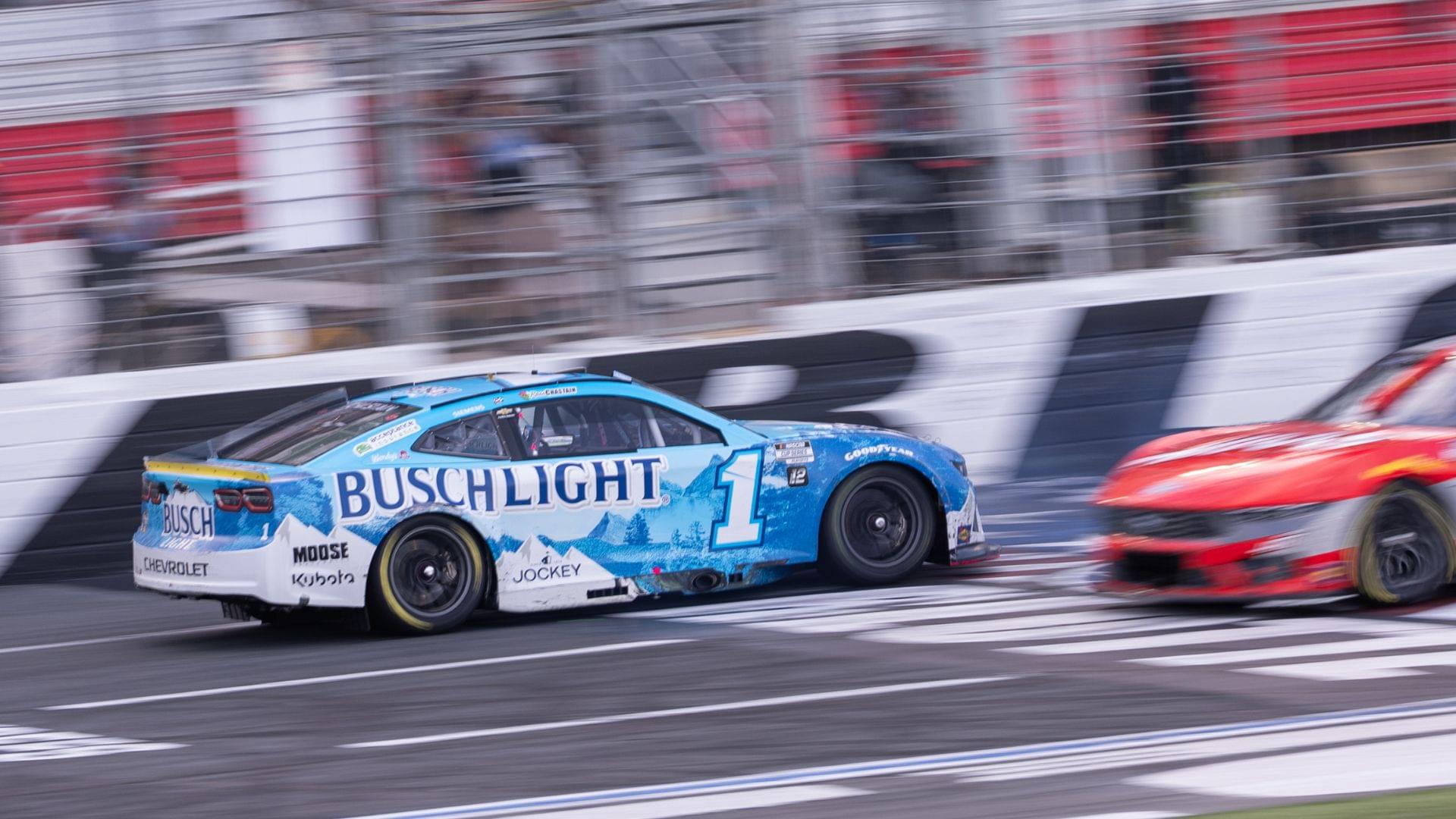
This week’s antitrust proceedings brought two of NASCAR’s most influential voices into the spotlight, as chairman and CEO Jim France and Chief Racing Development Officer John Probst took the stand to explain the league’s technical and structural decisions. While France focused on the philosophical backbone of the charter model and the reasoning behind the Next Gen era, Probst drilled into the nuts and bolts of how the Gen 7 platform came to life and what it cost to build.
Advertisement
Probst, who has overseen every aerodynamic tweak, structural reinforcement, and safety update on the Next Gen car since its inception, revealed the scale of NASCAR’s investment.
According to reporting from Adam Stern of Sports Business Journal, Probst testified that NASCAR spent roughly $14 million to research and develop the Gen 7 machine. He also confirmed that race teams did not participate in the design phase, a point that has become a central tension in the ongoing dispute.
He detailed that wind-tunnel testing, once a regular tool for organizations, now carries a price tag of $60,000 to $70,000 per day. With practice time trimmed in recent seasons, those tunnel sessions are among the only ways teams can search for speed. Yet the cost has placed aerodynamic development beyond the reach of all but the best-funded operations.
John Probst says that @NASCAR has spent about $14 million in total on research and development around the Gen 7 car, and when asked if teams helped design any of the parts of the car, he responded: “No.”
➡️ He said wind-tunnel testing costs teams about $60,000 to $70,000 a day.
— Adam Stern (@A_S12) December 10, 2025
Before the 2022 rollout, teams built their own cars within the confines of the rule book, pouring millions into research and development. Moving to a spec-driven, state-of-the-art platform made sense on paper, but it also introduced substantial overhead and unforeseen complications.
Denny Hamlin spoke about the financial burden long before the trial, revealing on a 2023 podcast that early estimates for a complete Next Gen car hovered around $225,000. By the time teams accounted for essential components to make the car race-ready, the figure had ballooned to nearly $350,000.
Hamlin compared the Next Gen fleet to a grid of Lamborghinis and admitted he often circled back after a wreck, praying none of the damaged machinery belonged to 23XI Racing.
Compounding the cost issue, the Next Gen car’s original construction proved unforgiving. Built with an extremely rigid front and rear structure, it failed to absorb impact effectively, pushing crash forces into the driver instead of dispersing them. That flaw ended Kurt Busch’s full-time career after his Pocono qualifying crash and triggered a sweeping redesign of both ends of the car.
While the updates improved driver safety, they also increased repair expenses, especially when a hit compromised the rear trans-axle, a $50,000 component that has become a notorious budget wrecker.
Hamlin noted that crash-related costs had risen significantly in just two seasons of the Next Gen era. His proposed remedy was to allow individual teams to manufacture specific parts for the entire garage, reducing redundancy and lowering expenses across the board.