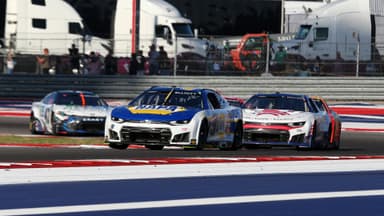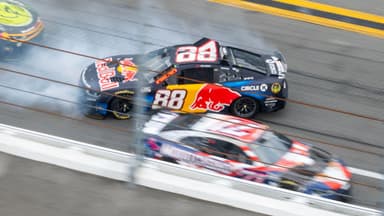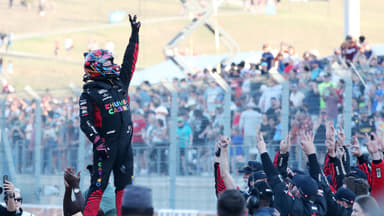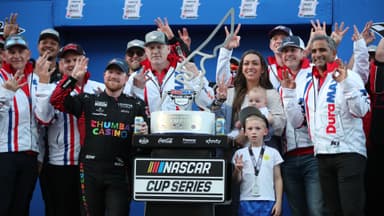
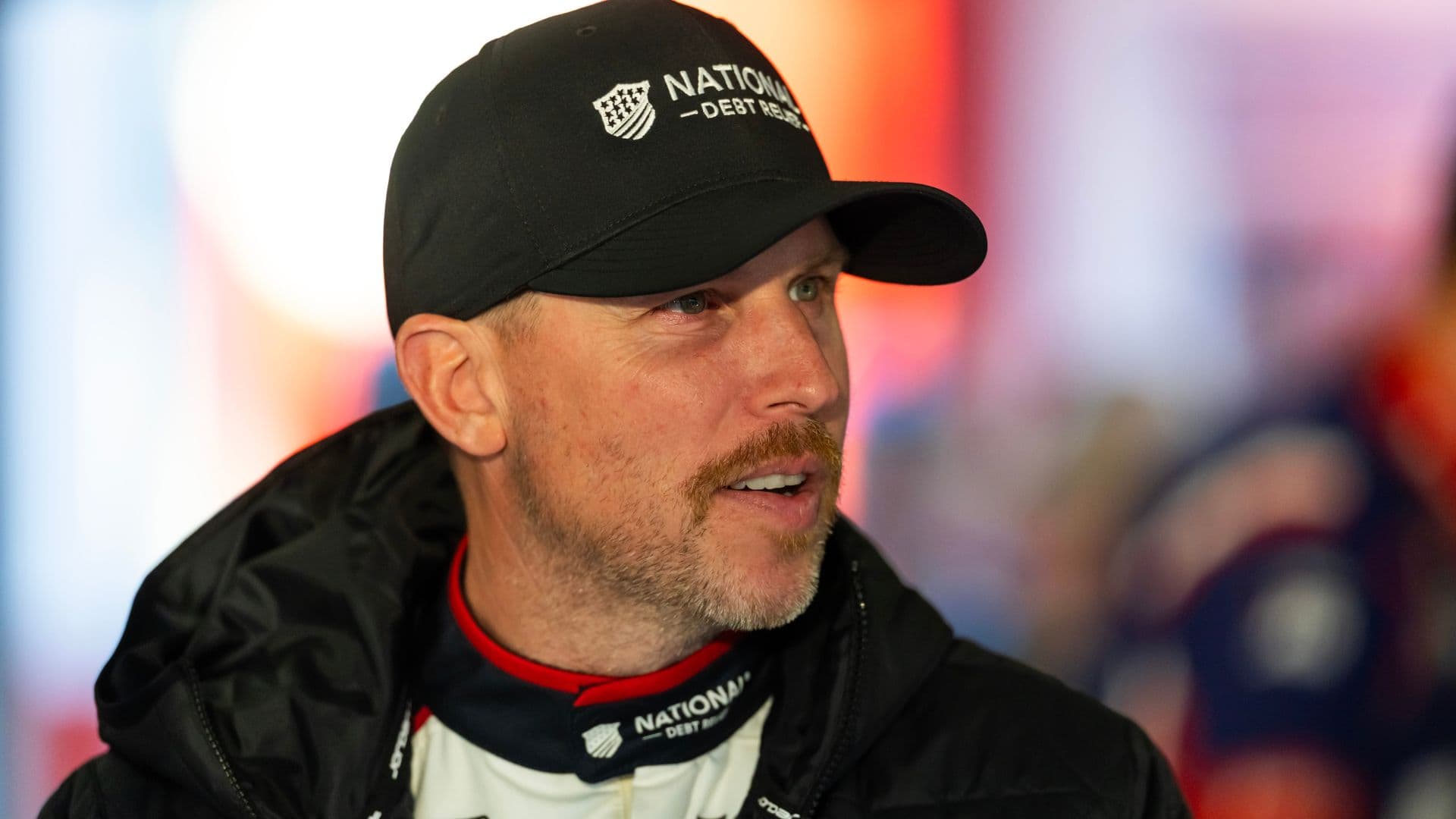
As the NASCAR Cup Series heads to Circuit of the Americas (COTA), the track’s infamous Turn 1 has stormed back into conversations. And few drivers understand the chaos that usually plays out at the turn better than Denny Hamlin.
Advertisement
Every driver arrives at that turn in COTA with the same plan: To grab as many positions as they can before the field strings out. That intent funnels into Turn 1, which comes at the end of the run from the start line with more than 30 cars charging uphill before a tight left-hand hairpin.
The climb is of a steep grade, and forces the pack to bunch up as engines strain and sightlines shrink. Cars crest the hill together, each hunting a lane, trying to wedge into space that may or may not exist, and there’s no easing into rhythm possible there.
It is elbows out after that, when the pack stacks into a braking zone that invites contact. Asked whether any racing code applies in that moment, Hamlin did not dress up his answer.
“Yeah, I don’t know. I don’t know if there is any. I wish I could say. I think everyone has the mentality, and I’m guilty of it too, is [that] you go in there, and you try to position your car that is whatever [is] best for yourself,” said Hamlin.
“Now, there’s collateral damage that goes on way out on the right side of you that you never see. And so it’s kind of out of sight, out of mind,” he added.
After the chaos in the turn, drivers convince themselves they didn’t do anything wrong because they didn’t directly hit someone in front of them. However, their move may have triggered a chain reaction a few lanes over.
Cars could end up getting shoved wide, forced off line, or spun, and the driver who started it may not even realize it. Hamlin pointed to the nature of the corner as the reason it keeps happening.
“So it’s easy to have a little bit of that lawlessness with less repercussions at turn one at Cota than probably any corner that we’ve got on our schedule,” he said.
Is it the most lawless turn in NASCAR? @dennyhamlin explains the ethics – or lack of – when it comes to racing into Turn 1 at @NASCARatCOTA ⚠️ pic.twitter.com/M5BqgoydDy
— PRN (@PRNlive) February 27, 2026
Drivers are less likely to destroy their car at Turn 1 compared to other turns, where one bad dive ends their day instantly. That safety net encourages risk. That is the reason that in Turn 1 at COTA, survival instincts override etiquette. Drivers go in with tunnel vision, focused on maximizing their own position.
Even the spotters, who normally guide drivers through madness with calm precision, are stretched thin here. They’re trying to describe a traffic jam that’s still forming while their driver barrels toward it, driving uphill. There’s only so much guidance you can give when visibility is limited, and everyone is braking at different points.
Fans also understand this, which is why many camp on the hill above the braking zone, waiting for the dominoes to fall. One missed braking point can trigger the accordion effect, stacking rows of cars in seconds.
That’s why Turn 1 at COTA has become an engineered chaos. It rewards conviction and punishes hesitation, while masking blame just enough for drivers to convince themselves they did nothing wrong. It’s not that there are no ethics. Just that instincts overpower them the moment the field hits that hill.
Ross Chastain’s take on Turn 1 at COTA
During a media interaction ahead of the race at Circuit of the Americas, Ross Chastain said he has struggled there and admitted he has both spun and been spun in the corner.
Chastain owned up to the miscues. “I’ve made more than my fair share of mistakes. The track was designed to build a lot of speed, have a ton of braking potential with the uphill elevation climb to Turn 1, and then trying to make a turn back the other way is really difficult. But when you get it right, it’s very rewarding,” he said.
The Trackhouse Racing driver pointed to the uphill approach as the main problem. Finding a braking marker while climbing compresses time and space, and restarts amplify the issue. The speed delta between restarts and green-flag laps changes how drivers judge entry, even with restart zones moved closer to Turn 20.