
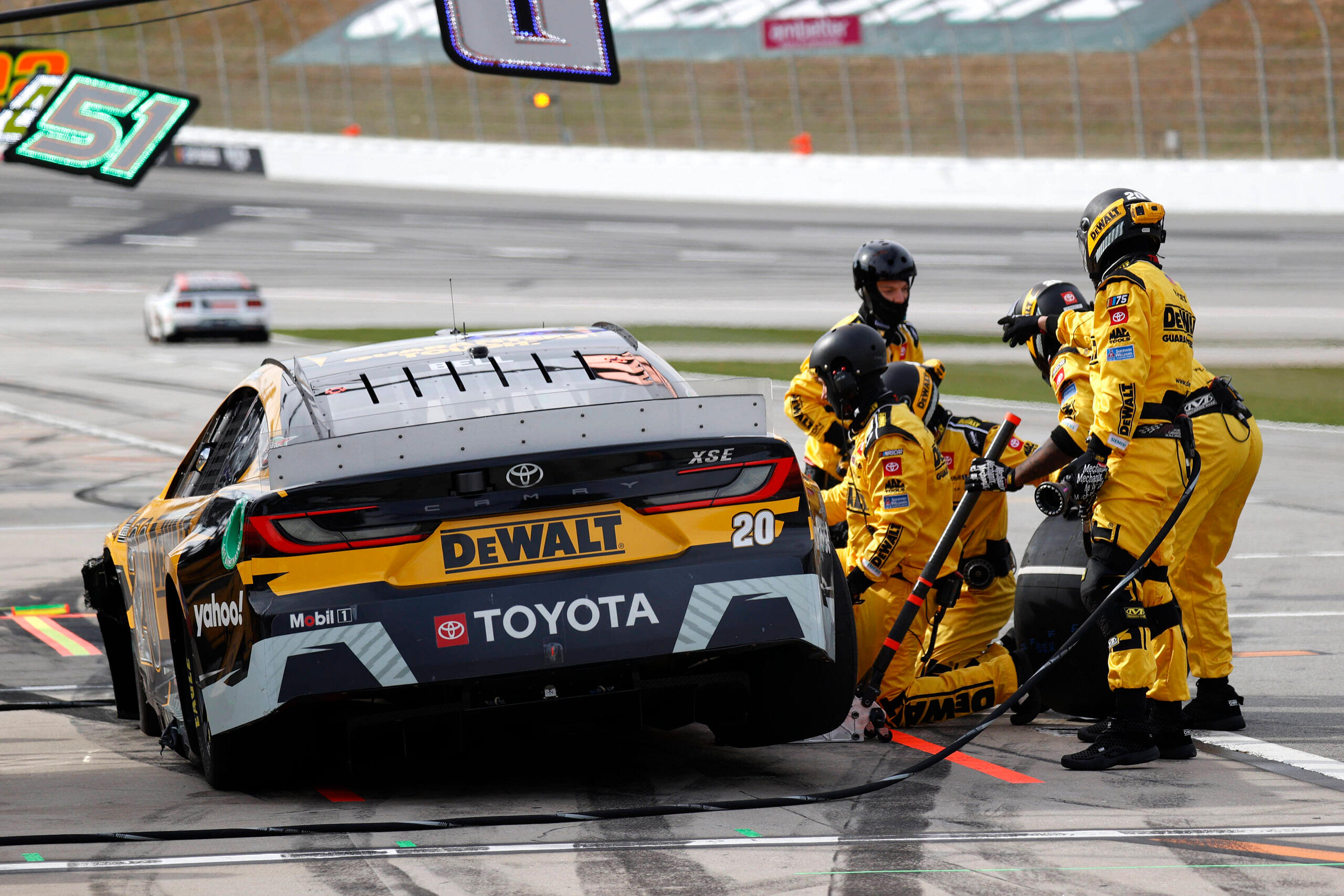
Pit stops in the NASCAR Cup Series are a complete package of controlled chaos. They are beautiful choreography, brute force, and quick decision-making all combined into one. A typical pit stop includes four tire changes, a fuel refill, and minor adjustments to the car. It can typically last anywhere between 8-10 seconds based on the current standards.
Advertisement
But the process could get even quicker going into the 2026 racing season. A Joe Gibbs Racing insider expressed the same opinion for a video that was posted on his team’s YouTube channel. With the introduction of the Next Gen car, a big field of parity has been imposed on the sport. Teams can only differentiate themselves from competitors in a handful of areas, and the pit stop is one of them.
So, being quick on the pit stop has become an arms race of sorts. The insider believes that this is what will make reaction times even quicker going forward into next season. He said, “I think someone will get into the seven-second range. I think it will probably be in that 7.95 to 7.99-second range. We are already doing eight-flat.”
“I think we are going to transition here. We have made a lot of transitions over the last three to four years, of about two seconds.” A modern Cup Series crew is not an ordinary unit. It contains highly specialized individuals, including jackmen, tire changers, tire carriers, fuelers, and utility men. The advancement that he speaks of has come from the collective efforts of all these people.
The biggest challenge that a pit crew faces
It is not uncommon for a pit crew to perform quicker during practice in the race shop and slower during the actual races. This is due to the mental pressure that they undergo during live events. In practice sessions, there is no penalty for a mistake they make. They simply correct the mistake and go on to the next set without the fear of consequences.
But there could be heavy repercussions for the mistakes they make during races. The fear of the same is what makes them be extra cautious during races so as not to hurt the chances of their team to secure a good result. In the 1950s to 1960s, pit stops used to last anywhere from 45 seconds to more than a minute. Notably, drivers did their own pit work in this era.
This scenario changed over the years, and we are in a time when the stops are concluded in less than 10 seconds.