


NASCAR 101: Why Do the Next Gen Cup Car’s Brakes Explode?

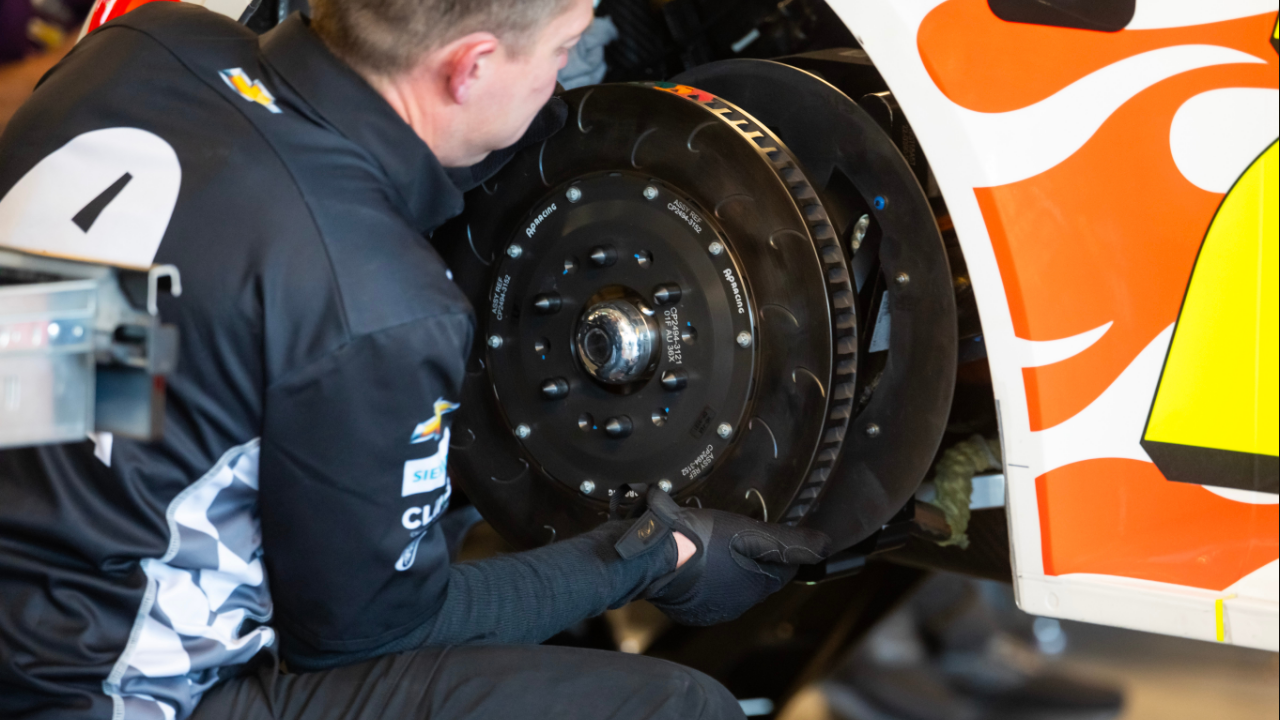
NASCAR’s Next Gen car boasts the best safety features, ensuring driver protection. However, the new model has also introduced complexities that were less pronounced in its predecessors.
While parity in speed and equipment levels the playing field, allowing for fair competition, it has also limited the flexibility in the choice of rotors and calipers, which can significantly affect performance.
Brake rotors have become a notable topic of discussion. Last year at the Enjoy Illinois 300 at World Wide Technology Raceway, several drivers, including Carson Hocevar, Tyler Reddick, and Noah Gragson, encountered issues with their brake rotors.
The issue persisted into the 2023 season’s climax at Phoenix, where a brake rotor failure caused Christopher Bell, one of the final four contenders, to crash hard into the wall, abruptly ending his championship hopes.
This year again, at the Great American Getaway 400 at Pocono Raceway, one more driver, Todd Gilliland, experienced a brake rotor failure that sent him crashing into the wall. With numerous such failures occurring, it’s apparent that this issue is growing more troublesome.
A violent brake-rotor explosion for Tyler Reddick. He's done for the day. pic.twitter.com/JT81Mu5w0i
— FOX: NASCAR (@NASCARONFOX) June 4, 2023
What is the reason behind the failures?
While some racing series opt for carbon-fiber brake rotors for their performance, NASCAR continues to use cast iron for its durability and cost-effectiveness. Although cast iron is robust, it struggles with thermal shock.
The rapid expansion and contraction at race tracks cause the brake rotors to deform unevenly, with different sections of the material expanding or contracting at varied rates. The uneven thermal expansion puts the material under stress, leading to strain accumulation. Over time, this strain can cause the rotors to crack.
At short tracks, brake rotors consistently run hot, while at superspeedways, they are primarily used during pit stops. There have also been alarming incidents where the brake rotor shattered and ejected from the wheel.
Interestingly, road courses, even those with long straightaways leading into tight hairpin turns like COTA, have not experienced these issues. Similarly, Martinsville, a track infamous for its heavy brake use, has seen no such failures.
The frequent breakdowns of rotors supplied by AP Racing have sparked concern.
Although the occurrences of brake rotor failures have decreased this season compared to last, NASCAR still faces a pressing need to address the issue. Brake rotor failures pose a significant risk and can lead to some of the most perilous accidents in the sport.
About the author


-
Gowtham Ramalingam •
Chevrolet’s 2026 NASCAR Body Might Have ‘Thrown Them for a Loop’ According to Kevin Harvick
-

Neha Dwivedi •
Carson Hocevar Takes a Different Route than Most Drivers to Prepare for NASCAR Races
-

Gowtham Ramalingam •
Ryan Blaney Reveals What Makes Martinsville Unique Despite Its Similarity to Another Popular NASCAR Track
-

Gowtham Ramalingam •
“Read Between the Lines”: Darrell Waltrip’s Darlington Appearance Has Fans Talking About His Take on Modern Day NASCAR
-

Gowtham Ramalingam •
How NASCAR’s New Darlington Aero Package Led Ryan Blaney to a Career First
-

Gowtham Ramalingam •
Chris Buescher Not Motivated by NASCAR’s Incentive Program for Increased Activity on Social Media