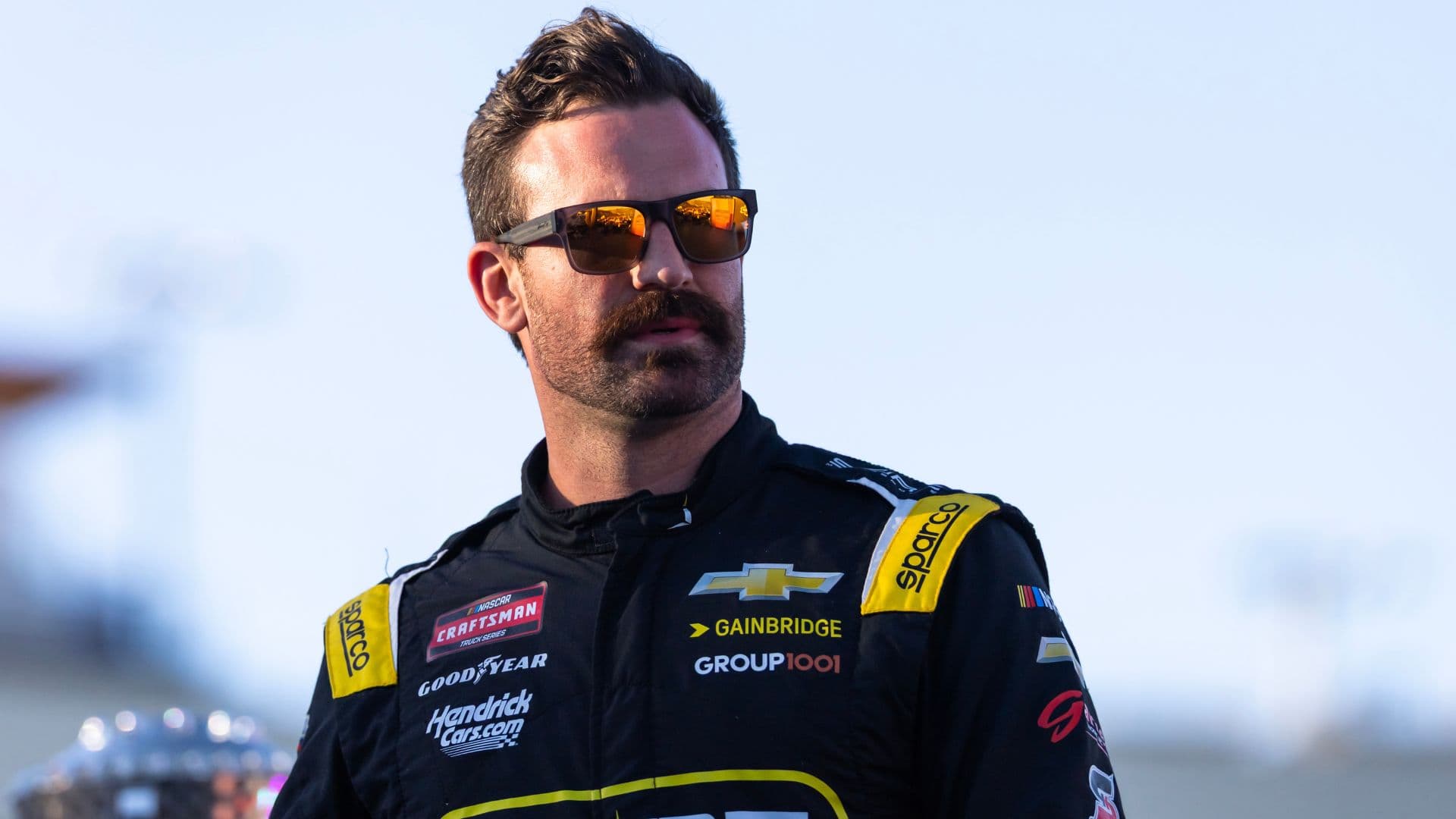
Corey LaJoie now finds himself calling races instead of running them, taking on analyst duties for NASCAR on Prime Video after the full-time Cup opportunity he hoped for never materialized. Instead of a packed Cup slate, he pieced together four starts in Rick Ware Racing’s No. 01 Ford Mustang and logged nine appearances in the Craftsman Truck Series with Spire Motorsports’ Nos. 7 and 77 entries.
Advertisement
LaJoie’s Truck outings showed real bite, yielding three top-five finishes and seven top-tens, but his Cup performances never truly caught fire. His best effort across those four starts was a 22nd-place run in the Daytona 500.
LaJoie, however, once looked like a can’t-miss prospect. His stint in the ARCA Menards Series and K&N Pro Series still holds up: three ARCA wins in only seven starts and six K&N successes across 37 races from 2009 through 2016. In those days, he routinely went toe-to-toe with the sport’s future headliners. But it didn’t go the same way as he moved up the ladder.
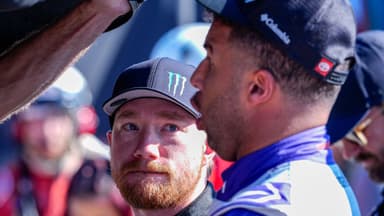
Reflecting in a 2019 interview with Frontstretch, LaJoie laid out the blunt truth of how his ascent stalled while others’ careers skyrocketed. “I haven’t had enough people do research to realize I used to be good and win races and be good a couple years ago,” he said, recalling how he mixed it up with Ryan Blaney, Chase Elliott, Bubba Wallace, and Daniel Hemric.
“I raced with them wheel to wheel, and sometimes they beat me, but a lot of times I beat them.”
The turning point, he admitted, came when advancement depended less on raw ability and more on financial backing he simply didn’t have. When the funding well dried up, so did the doors of the sport’s powerhouse organizations.
“I had to jump in whatever car I had because I didn’t have a Hendrick deal, or a Penske deal, or a Ganassi deal, any sort of deal that gets me in a good car and around a good group of people,” he explained.
Without a major pipeline, he found himself hopping from opportunity to opportunity, often in equipment that couldn’t showcase his ceiling. He acknowledged that maturity may have played a role, but still, “No one wanted to help me out at that time.”
LaJoie didn’t sugarcoat how the struggle reshaped him. He admitted he had been knocked down “a couple rungs in the humility department,” a setback he now considers a necessary step. He said the grind deepened his appreciation for every rung he’s managed to climb back.
LaJoie believes that if his career had followed a straight upward trajectory, he would not value today’s opportunities with the same perspective or gratitude.
His path hasn’t mirrored those of the peers he once beat on Saturday nights, but LaJoie insists the knocks sculpted a soundness that now defines him.