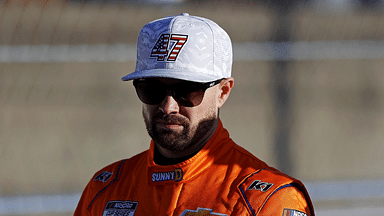
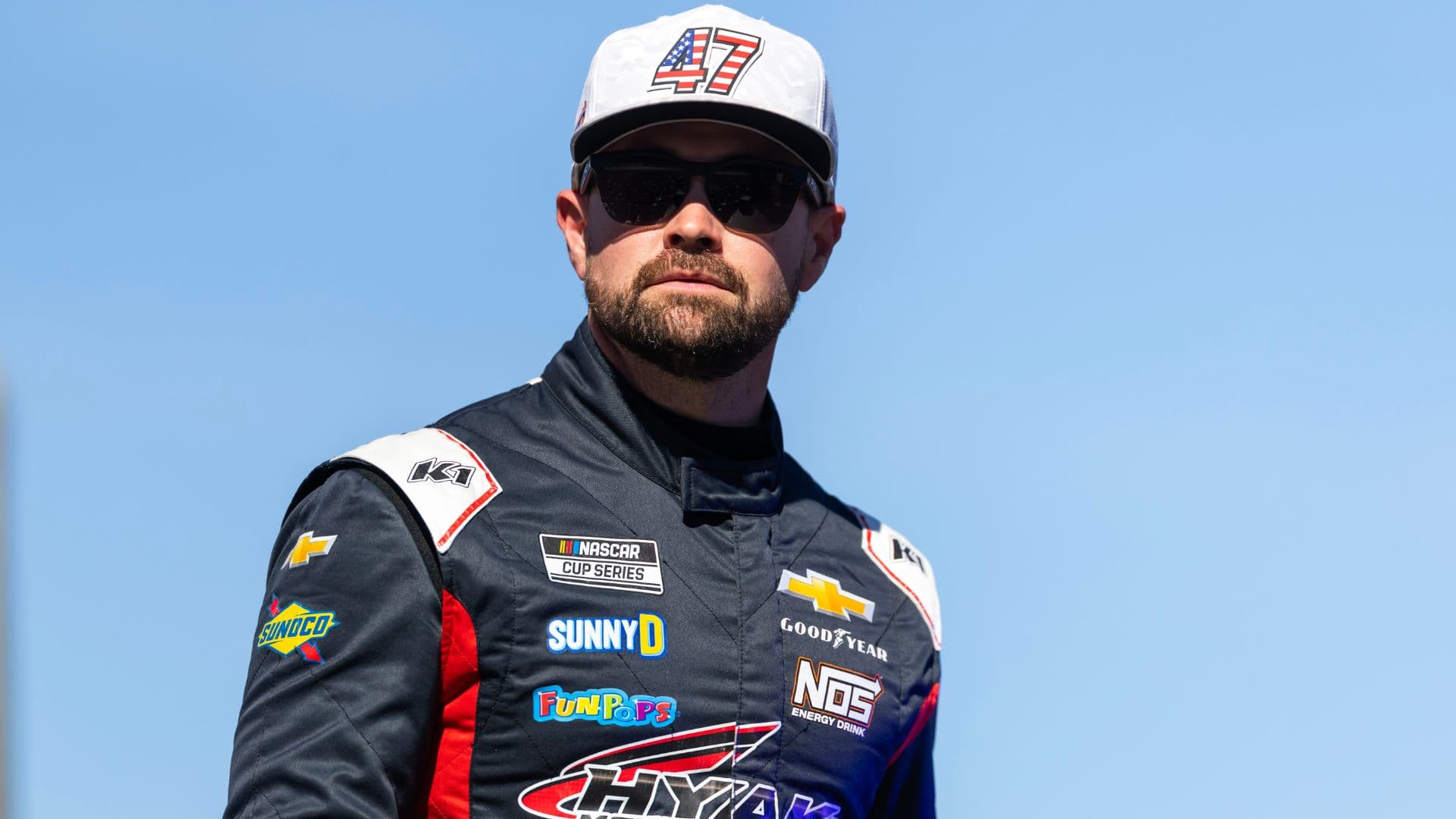
Ricky Stenhouse Jr. began racing at six years old in karting, before moving into sprint car competition in 2003. Over the next five years, he amassed 47 victories on dirt and eventually moved toward stock car racing through the ARCA Racing Series. In just one ARCA season, Stenhouse made 21 starts, scored two wins, finished fourth in the standings, and earned an Xfinity Series debut in 2009.
Advertisement
The transition from grassroots motorsport to NASCAR, however, required more than what meets the eye. While speaking on Donut Podcasts, Stenhouse reflected on how his sprint car background molded his career in the top tier of stock car racing, noting that while some habits translated cleanly, others required adjustment.
He explained that sprint car racing conditions drivers to operate with the car pitched sideways for extended periods. That style looks fast, but actually works against forward momentum. Sliding may feel natural on dirt, but excessive angle costs drive, regardless of the driver’s discipline.
That realization forced Stenhouse to do a mental reset when switching between cars. He admitted that “I don’t race my NOS energy drink sprint car near as much as I used to obviously back in the day, but when I get in it, there’s a lot of times that I got to remind myself like, ‘It’s cool to be sideways, but like you want to be pretty straight and and driving forward.'”
However, the comfort he developed with that instability proved valuable in stock cars. As he put it, “The car control, the feel of being comfortable sideways, helped in the stock car. I mean, if you get the stock car too sideways, there’s sometimes just no coming back.” Stenhouse also admitted he pressed his luck too much during the early days of his career, trying to drive a stock car in yaw, and losing control as a result.
Managing that balance became central to his driving approach. Letting the car move just enough to help it turn without sacrificing speed or control is a skill Stenhouse believes applies across racing disciplines.
Other than that, line selection was another lesson dirt racing burned into his instincts. Stenhouse explained that dirt racing demands constant adaptation, as usable lines evolve rapidly throughout an event. A line that works for two laps may disappear by the third, forcing drivers to search elsewhere. That mindset carried over to stock car racing, where he feels some drivers become locked into prescribed lanes.
Instead of committing to the bottom or the top by default, the Hyak Motorsports driver approaches the racetrack as a moving target. On dirt, he learned to enter high, exit low, or abandon the bottom once grip faded. And that willingness to explore, he said, has helped him find speed where others might never look.