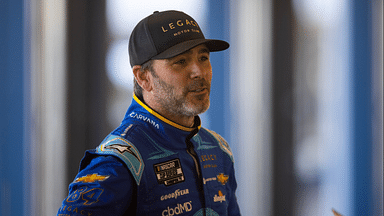
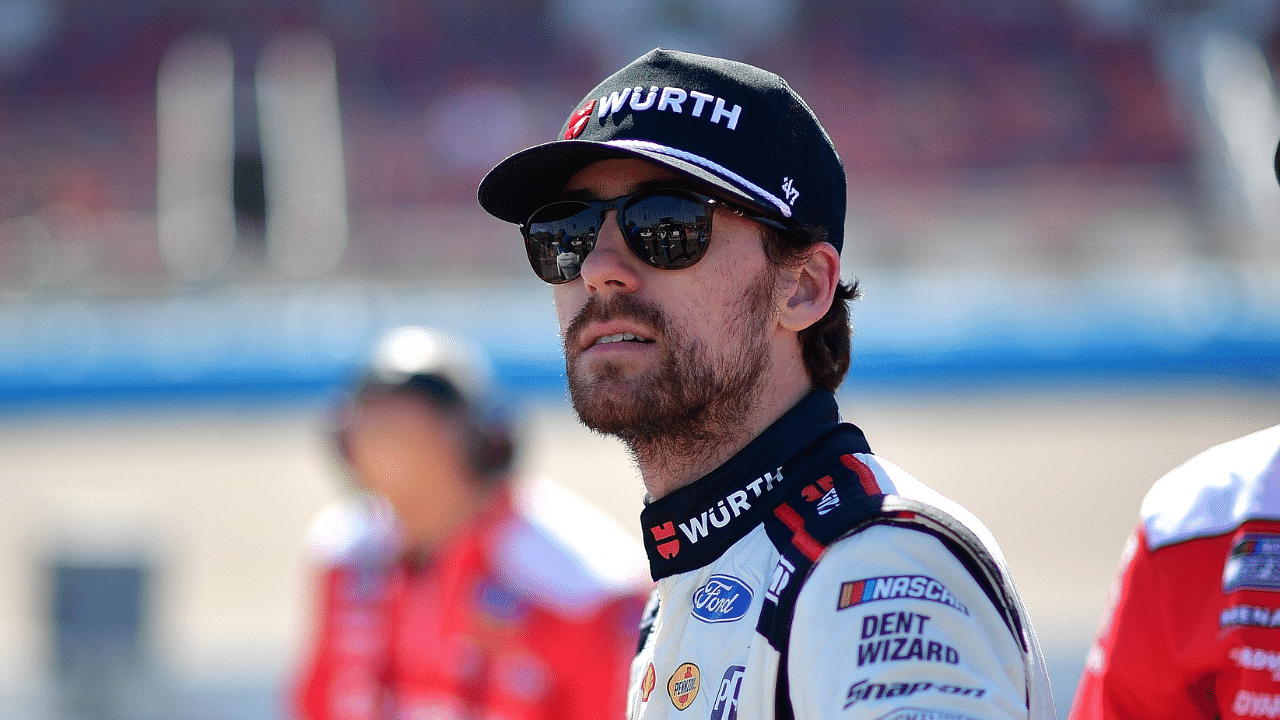
The hero factor in NASCAR nearly vanished under the three-race elimination format. In the era of a full-season points system, drivers such as Dale Earnhardt Sr., Richard Petty, Jeff Gordon, and their contemporaries towered over the sport, week after week. The original Chase carried parts of that tradition forward, though never quite to the same height.
Advertisement
The elimination model, however, took the sport in a different direction, driven by parity measures, reduced practice time, and instilled a ‘win, and you’re in’ mindset among drivers. Yet despite some of that backdrop still looming, such as stage racing, 2023 NASCAR champion Ryan Blaney has not fully dismissed the possibility of a return to hero-style dominance under the revised Chase format.
In earlier decades, teams enjoyed wide latitude to design cars and build engines, and that freedom created visible separation across the field. Certain organizations consistently unloaded faster than the rest, and certain drivers imposed their will without apology. When NASCAR introduced the Chase, wins and consistency were brought closer together, but even then, sustained excellence could still break through.
That reality allowed Jimmie Johnson to separate himself from the pack, using wins as leverage to stay ahead of everyone else. That’s why Blaney believes a Johnson-style run of seven titles remains plausible under the current Chase framework. He did not frame it as a certainty, but he did not dismiss it either, saying, “Maybe!” followed by a clear explanation of how such a scenario could unfold.
He said, “You could see it. You could see a team just go on a terror for these ten weeks, like Jimmie was able to do… It’s amazing what they can do at all these different types of tracks and not have any trouble in go to execute into their job for 10 weeks.”
.@Blaney says respect was lost under the Playoffs era and hopes The Chase brings legitimacy back to racing. #NASCAR pic.twitter.com/PTIjhgm2nN
— Peter Stratta (@peterstratta) January 12, 2026
Blaney stopped short of predicting it outright, acknowledging how tight the field has become. Still, he left the door open. If a team manages to overpower the competition for eight or nine weeks and lock up the title early, that would show domination at the highest level.
The challenge, of course, lies in the nature of the Next Gen car. No previous generation has produced this level of parity, making prolonged dominance far more difficult. For one group to control the championship stretch for two months would be a big achievement. But NASCAR is still making decisions about a measure of creative freedom, and within that margin, sharper preparation can still yield advantages.
Jimmie Johnson’s record under the Chase stands as proof of what is possible
During the 2004–2013 Chase era, Johnson won five consecutive championships. The argument has always been that a team blending outright speed with specialized preparation for the final ten races could bend the system in its favor. Hendrick Motorsports treated the Chase as a season within the season, preparing cars and strategies months in advance for those specific tracks. That approach fueled Johnson’s run from 2006 through 2010.
Across the ten-year Chase era, he won 60 of his 83 career wins and accounted for 24 of Hendrick Motorsports’ 32 Chase victories.
Even when he lacked season-long superiority, such as in 2010, Johnson relied on a calculated long-game approach to erase point deficits. But that method thrived in a format where the field was smaller, and mistakes carried less immediate consequence.
The modern Chase operates under different constraints. The Next Gen platform compresses advantages; the postseason field has grown to 16 drivers, and point resets magnify risk. Crashes and poor finishes can quickly accumulate, dropping the team behind others in points.
At the same time, wins now carry 55 points rather than 40, keeping the balance toward both aggression as well. Ultimately, the actual final product of the new format will only be seen when the green flag drops.