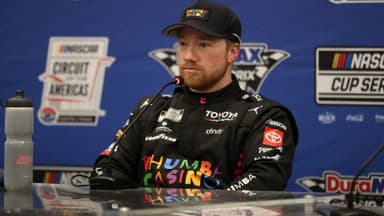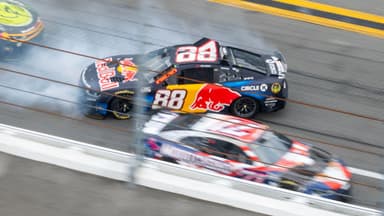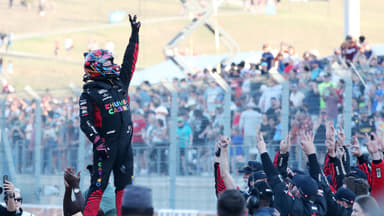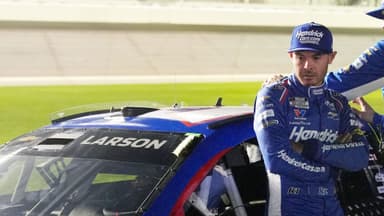
Tyler Reddick’s third win on the track and the overall racing at COTA seem to have altered former Hendrick Motorsports crew chief Steve Letarte’s take on the impact of the Chase format on racing strategy and how drivers race now. He was seen having a mini-philosophical moment about how the championship format seems to have changed how teams actually race.
Advertisement
Letarte appreciated the No. 45 team’s overall effort at COTA, where they put in a strong performance since the start of the weekend. They qualified well, raced cleanly, executed strategy correctly, and handled pit stops without mistakes. No penalties, no blown calls, no bad timing. They did everything that was required to dominate the race, because wins rarely just come from having speed.
Most fast cars lose somewhere along the way. A bad pit stop, a wrong strategy call, or even a driver mistake usually levels the field. The 45 didn’t give anyone that opening. Besides that, he mentioned, “I was absolutely wrong about the effect of the chase on the racing on the racetrack.” And to explain that realization, he used Ty Gibbs’s COTA run as an example.
Letarte stated Gibbs drove like someone desperately trying to maximize points, almost like a driver buried deep in the standings, clawing back every position. Even if Gibbs wasn’t realistically going to beat Reddick, the intensity of how he raced reflected a mindset of the drivers dealing with points pressure.
Under older systems, Letarte believes drivers might have gambled more recklessly, chasing wins because points deficits felt insurmountable. Now, it’s something different. Drivers are treating points as meaningful currency again, not just a stepping stone to playoff eligibility. For years, points racing became a dirty phrase in NASCAR culture.
The 45 team had them covered in all phases…offense, defense, on pit road…
Plus, we saw teams points racing today thanks to the new Chase format…
Inside The Race: https://t.co/a4qTke2AHb pic.twitter.com/UA50gKRj5O
— Steve Letarte (@SteveLetarte) March 2, 2026
Fans and analysts criticized it as conservative or boring, preferring the all-or-nothing drama of win-or-bust racing. But now, with the value-chase format bringing to mind the drivers and teams, Letarte now sees value in drivers racing smart for points, not just trophies.
In his mind, trophies should matter because they represent achievement, not just because they unlock playoff spots. A strong second-place finish or a high-scoring day should still feel meaningful, and he thinks this format may be nudging the sport back toward that balance.
A driver like Reddick, who already has strong results and a cushion, can afford to think differently than someone struggling early in the season. If you underperform early, you’re forced into harder decisions later. That pressure creates more compelling racing because every phase of the season matters. It rewards consistency and punishes slow starts, which aligns with what racing should be: a cumulative test of execution over time.