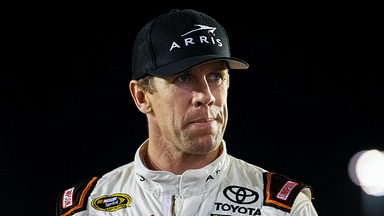

For many NASCAR drivers, simply reaching the top tier already marks the fulfillment of a lifelong ambition. Yet once that first win arrives, the finish line moves. The objective shifts from survival to supremacy, from collecting trophies to chasing the one prize that defines careers: the NASCAR Cup Series championship. Matt Kenseth articulated that hierarchy with clarity back in 2011.
Advertisement
Drivers such as Denny Hamlin, Carl Edwards, and Mark Martin are prime examples of how unforgiving that pursuit can be. All three compiled race wins in bulk and performed at an elite level for years, yet the championship eluded them. Their careers highlight a hard truth within the garage: talent and victories do not always guarantee the ultimate reward. Still, the Cup title remains the north star for anyone who straps into a stock car on Sundays.
Kenseth framed the dilemma, explaining, “Well, if you’re not going to win the championship, you’d rather have the race wins,” echoing a competitor’s instinct to salvage meaning from a season that falls short of the summit.
However, he also stressed, “If you wanted to choose either zero wins and a championship or five wins and no championship, I think everybody in the garage would choose (a) championship, unless they’re lying to you.”
“That’s the ultimate prize that you work toward for nine or 10 months. I know there’s not a champion in the garage who didn’t win a race. So you’ve got to be running well enough to win races in order to win a championship,” he continued.
Kenseth also acknowledged nuance within that binary. If the championship slips out of reach and the season reduces to numbers on a standings sheet, he would take victories without hesitation. Finishing second instead of seventh might matter on paper, but it does not carry the same weight as standing in victory lane. For him, winning races still defines purpose when the title remains out of grasp.
That mindset aligns with an earlier era of NASCAR, when consistency often mattered more than checkered flags. Under previous systems, drivers could claim championships without winning races, a format that reshaped debates about fairness and merit.
Austin Dillon won the Xfinity Series championship in 2013 without a single win, and Matt Crafton repeated that feat in the Craftsman Truck Series in 2019. Both cases backed how championships, regardless of the path taken, command greater respect than individual race wins.
Kenseth himself sits at the center of that conversation. His 2003 Cup Series championship, secured with just one win across the season, sparked widespread controversy and ultimately accelerated NASCAR’s shift toward the Chase format. That structural change reflected the sport’s desire to reward winning more heavily than the steady accumulation of points.
Even with those adjustments, the hierarchy remains unchanged. NASCAR continues to emphasize victories, yet the championship still towers above everything else. If drivers ever face a hypothetical choice between stacking wins and lifting the Cup, most would trade the former for the latter without blinking. The Championships define history and status, while race wins decorate a career.