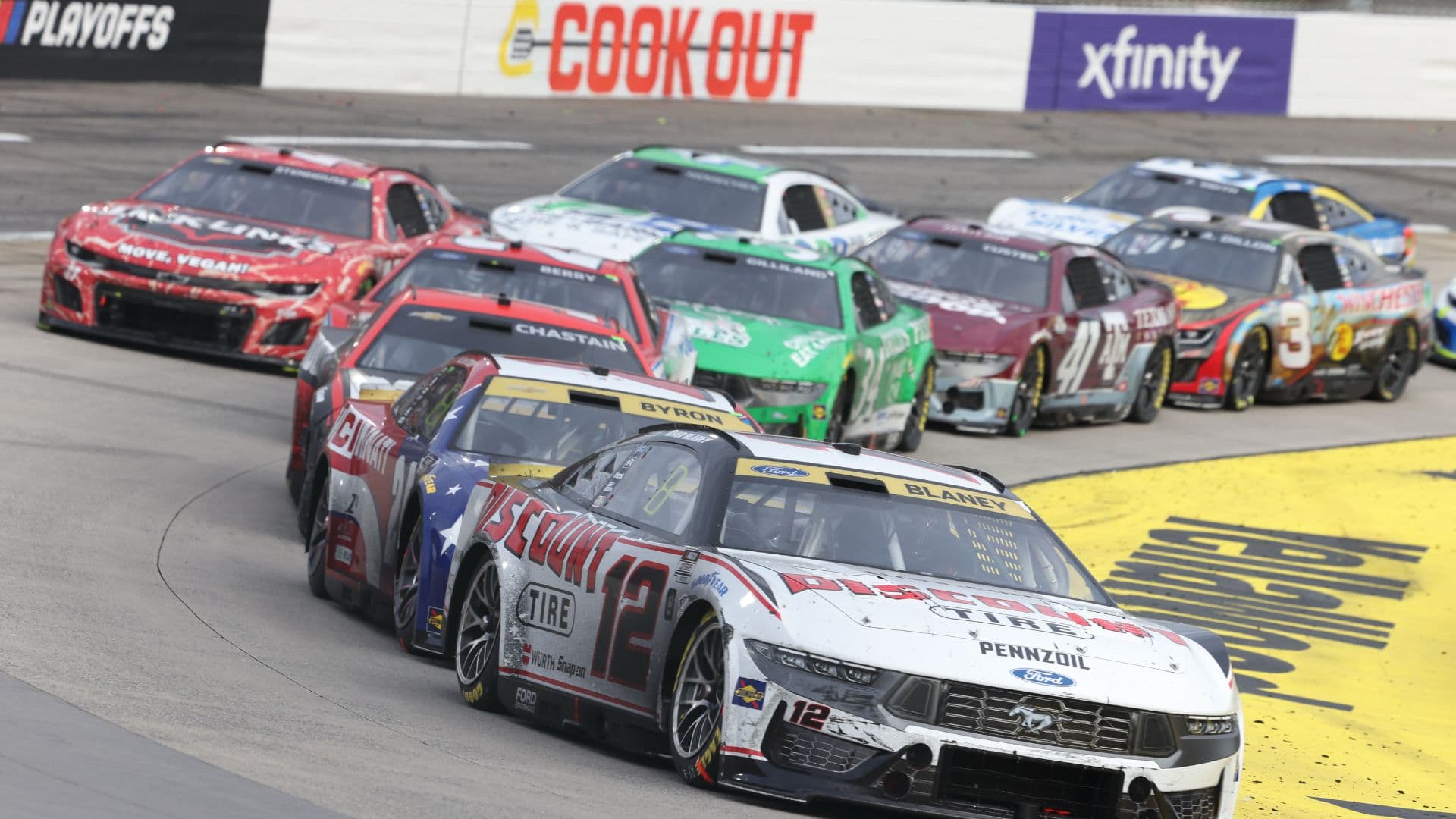
NASCAR’s elimination system delivered surprises and the unpredictability that television networks crave. It kept audiences engaged until the final race, too. However, the ‘win-and-you’re-in’ format also raised questions about championship legitimacy.
Advertisement
The now-discarded elimination system created scenarios in which dominant season-long performers exited championship contention due to a single mechanical failure or a racing incident. This unjust shortcoming was precisely what NASCAR reporter Bob Pockrass highlighted in a recent episode of Beating and Banging.
Like many, he acknowledged that there were positives to the elimination format. For one, the drama was incredible. “I kind of liked eliminations,” said Pockrass.
“I kind of like the Bristol night race where you had several drivers potential winning in. I think the Daytona regular season finale will have a little bit of drama, but probably not like you had last year, with what, five drivers who potentially could win it,” he elaborated.
“So, I think you’re going to miss some of that one race drama,” added Pockrass, before presenting the larger picture as to why the change to Chase format was a necessity.
“I think for motorsports as a whole and the way fans judge a champion, this is way better. They’re gone back to the term Chase. So, no more quote-unquote playoffs. No more, uh, walk-off win, right?” said Pockrass.
“Like we always talked about that, playoffs and walk-off. Those are words used in other sports to talk about the drama of other sports, but they don’t really resonate when you talk about motorsports with motorsport fans,” he continued.
Most drivers favor the reintroduced format. Then again, there are naysayers too. For a few teams, such as Trackhouse Racing and its driver Shane van Gisbergen, the format change was not welcome news. The previous system rewarded drivers’ authority on specific tracks and granted them a playoff berth.
SVG benefitted from that because of his almost complete domination on road courses. Now that will not be the case, as drivers must show up week after week, consistently.
Yes, a driver can still peak during the final 10 races and capitalize. But he will not be able to overcome mediocre season-long performance through single-race heroics.
Chase Briscoe’s thoughts on new format
Chase Briscoe believes that the new NASCAR format will retain a playoff feel and still produce a legitimate champion. NASCAR has not reverted completely to the 36-race points format, and the playoff remains intact. But those 10 final races will also be based on overall points, not divided into rounds, and eventually a one-race finale.
Briscoe explained how the system balances playoff intensity with season-long accountability. “You still have the playoff feel, and then you still have kind of the season-long points because it is going to matter all season long where you’re running because of how the seedings work when the chase starts,” he said on Beating and Banging.
That’s why Briscoe believes the format hits the right balance by leveling the playing field and rewarding consistency alongside wins in nearly equal measure. This is something drivers and fans have demanded for years. He views it as an ideal mix in which a competitor can catch fire at the right time during the 10-race playoff stretch, and go all the way and win it.