
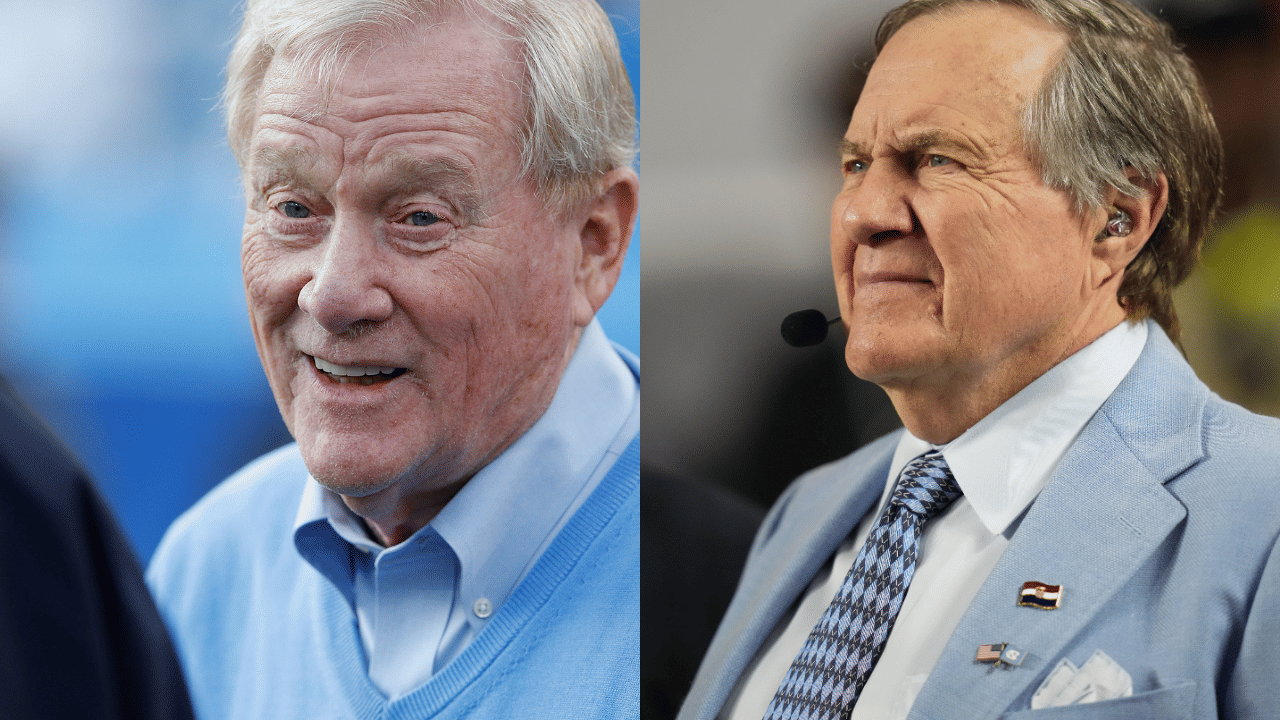
Bill Belichick’s stunning omission from the Pro Football Hall of Fame as a first-ballot inductee has continued to reverberate around the NFL, and new reporting suggests that the decision may not have been purely procedural.
Advertisement
According to ESPN, former Indianapolis Colts and Buffalo Bills general manager Bill Polian was involved in lobbying against Belichick’s immediate induction, citing the Patriots’ past cheating scandals.
Belichick, who won six Super Bowls as New England’s head coach and two more as the New York Giants’ defensive coordinator, failed to receive the required 40 of 50 votes from the Hall of Fame selection committee. The result shocked much of the football world and prompted questions about how such a résumé could fall short.
ESPN reporters Don Van Natta Jr. and Seth Wickersham reported that Spygate and Deflategate were discussed during deliberations, and that at least one voter claimed Polian argued Belichick should be made to “wait a year” before induction as penance for Spygate, the 2007 scandal that cost the Patriots a first-round draft pick and resulted in heavy fines from the league.
“A voter who spoke on condition of anonymity said that Polian… told some voters he believed Belichick should ‘wait a year’ before induction as penance for Spygate,” Van Natta and Wickersham wrote.
Polian, who served as an at-large Hall of Fame voter, was described as a strong supporter of Patriots owner Robert Kraft during discussions and allegedly emphasized that Kraft had no knowledge of Spygate while it was occurring.
Polian forcefully denied the report shortly after it surfaced.
“That’s totally and categorically untrue. I voted for him,” Polian told Sports Illustrated’s Matt Verderame.
However, in a separate conversation with ESPN, Polian struck a more uncertain tone. He said he could not remember his ballot with absolute certainty but was “95 percent sure” he voted for Belichick. He added that he voted for Kraft and “most likely” senior finalist L.C. Greenwood.
Polian also denied advocating for any punishment related to Deflategate, though he acknowledged that other voters floated the idea during deliberations.
The suggestion of Polian’s influence immediately reignited memories of the intense Patriots–Colts rivalry of the early 2000s, when Polian ran Indianapolis, and Belichick presided over New England’s dynasty.
That rivalry reached a boiling point in the 2003 AFC Championship Game, when the Patriots physically overwhelmed Peyton Manning’s Colts receivers in a snowy Foxborough win. Manning threw four interceptions in a 24–14 loss, and the fallout reshaped NFL officiating.
Polian, a powerful voice on the league’s competition committee, was instrumental in pushing for stricter enforcement of illegal contact and defensive holding the following season. While the rulebook itself did not change, enforcement did.
Illegal contact penalties jumped from 79 in 2003 to 191 in 2004, a shift that became known around the league as the “Ty Law Rule.” NBC News later reported that Polian, along with then-Rams coach Mike Martz, pushed hard for the directive after repeated losses to New England.
Despite those changes, the Colts continued to struggle against Belichick’s Patriots, including a 20–3 loss in Foxborough in the 2004 Divisional Round.
Since ESPN’s report, Polian has become a lightning rod for criticism. Some fans and analysts have called for Hall of Fame ballots to be made public, while others have gone further, suggesting Polian should lose his voting privileges altogether.
Belichick, meanwhile, is said to have been “puzzled” and “disappointed” by the decision, though few expect the delay to be permanent. The Hall of Fame changed its eligibility rules in 2024, allowing coaches to be considered after just one year out of the league, a change that may have made Belichick an easier target for protest votes.