
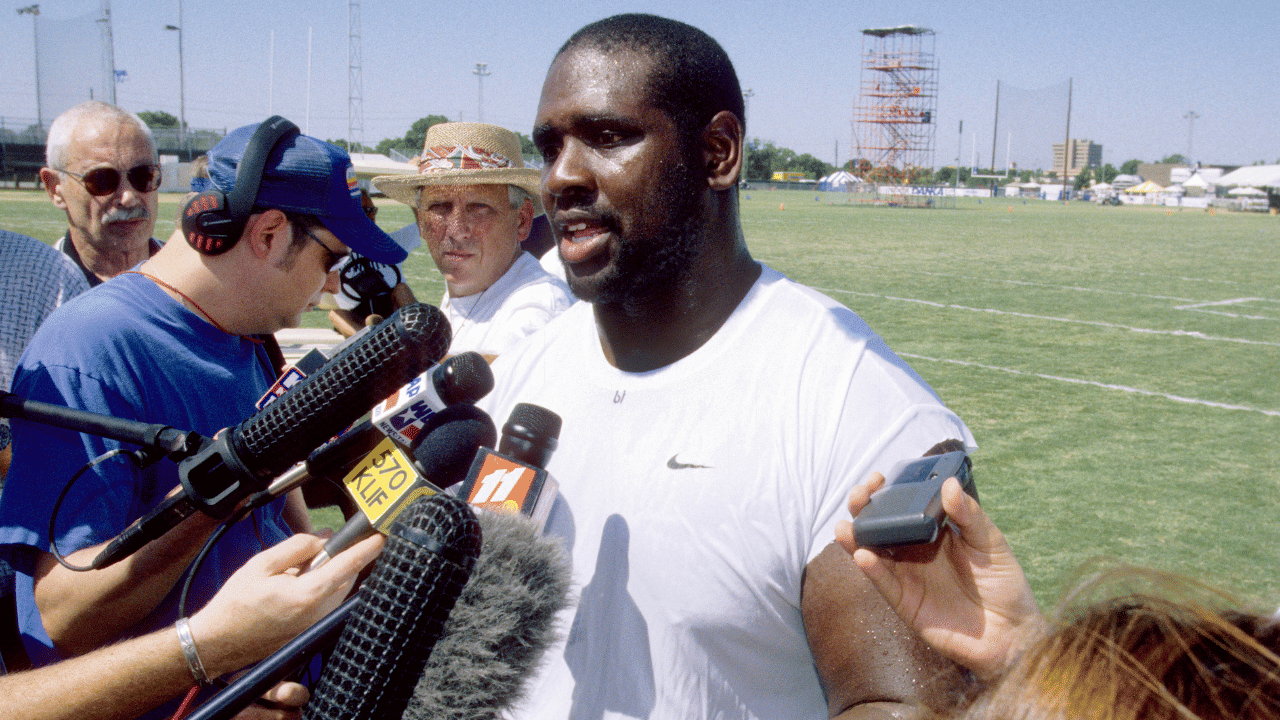
Former Dallas Cowboys standout Nate Newton, one of the defining forces behind the franchise’s dominant 1990s dynasty, is embracing a powerful new chapter after receiving a presidential pardon from Donald Trump for his 2002 federal drug-trafficking conviction.
Advertisement
For Newton, nicknamed “The Kitchen” during his playing days, the moment marked the culmination of more than two decades of rebuilding, reflection, and redemption following one of the most difficult periods of his life.
And Michael Irvin couldn’t be happier for his “best friend” and former teammate. Irvin praised Newton for never hiding from his history, emphasizing that honesty has been central to his comeback.
“As long as you’re willing to talk about your situations, people will respect you,” Irvin said on his podcast. “They’ll say, ‘We all made mistakes and move forward.’ And that’s what he’s done.”
For Newton, nicknamed “The Kitchen” during his playing days, the moment marked the culmination of more than two decades of rebuilding, reflection, and redemption following one of the most difficult periods of his life.
A six-time Pro Bowler and two-time All-Pro, Newton was a cornerstone of the legendary Dallas Cowboys offensive line that powered three Super Bowl championships in 1992, 1993, and 1995. Alongside Hall of Fame teammates, he helped define an era in Dallas that remains unmatched in franchise history.
But in 2001, Newton’s life took a dramatic turn. He pleaded guilty to federal drug-trafficking charges after authorities discovered $10,000 in his pickup truck and 175 pounds of marijuana in a companion vehicle. He served nearly two years in prison from 2002 to 2004, a fall from grace that shocked the football world.
“He’s a good dude,” Irvin added. “He just made a bad decision. And I’m glad somebody saw that.”
Newton was one of five former NFL players pardoned in the latest round, announced by White House pardon czar Alice Marie Johnson. The group included Joe Klecko, Jamal Lewis, Travis Henry, and the late Billy Cannon.
Johnson described the pardons as a reflection of second chances and personal growth, thanking Trump for what she called his commitment to mercy and rehabilitation. While a presidential pardon does not erase a conviction, it restores certain civil rights and serves as an official act of forgiveness.
“I want to continue to do the right things,” Newton said after the pardon. “It’s a trust thing. When you do bad things, you lose trust. And only time can get that trust back.”
He added that he feels grateful for how his life has unfolded since his release.
“It’s been a lot of years since those things I’ve done against society and individuals. I’ve been truly blessed.”
Today, Newton remains deeply connected to the Cowboys organization. He is a regular presence on team media platforms, appearing on pregame and postgame shows, radio programs, and podcasts such as “Hangin’ with the Boys” and “Cowboys Cross-Talk.” His voice has become a familiar and respected one among fans, players, and alumni alike.
In 2022, he was inducted into the Black College Football Hall of Fame for his standout career at Florida A&M, another milestone in his long journey back to recognition and respect. When asked whether the pardon could help his chances of being inducted into the Pro Football Hall of Fame or the Cowboys Ring of Honor at AT&T Stadium, Newton made it clear that he isn’t focused on accolades.
“Those are things that other people give you,” he said. “I don’t worry about that.” Instead, he pointed to what he considers his three greatest honors.
“Number one, when I turned my life over to Christ. Number two, when I made the Black College Football Hall of Fame. And number three just happened last night when Mr. Jones told me this news.”