
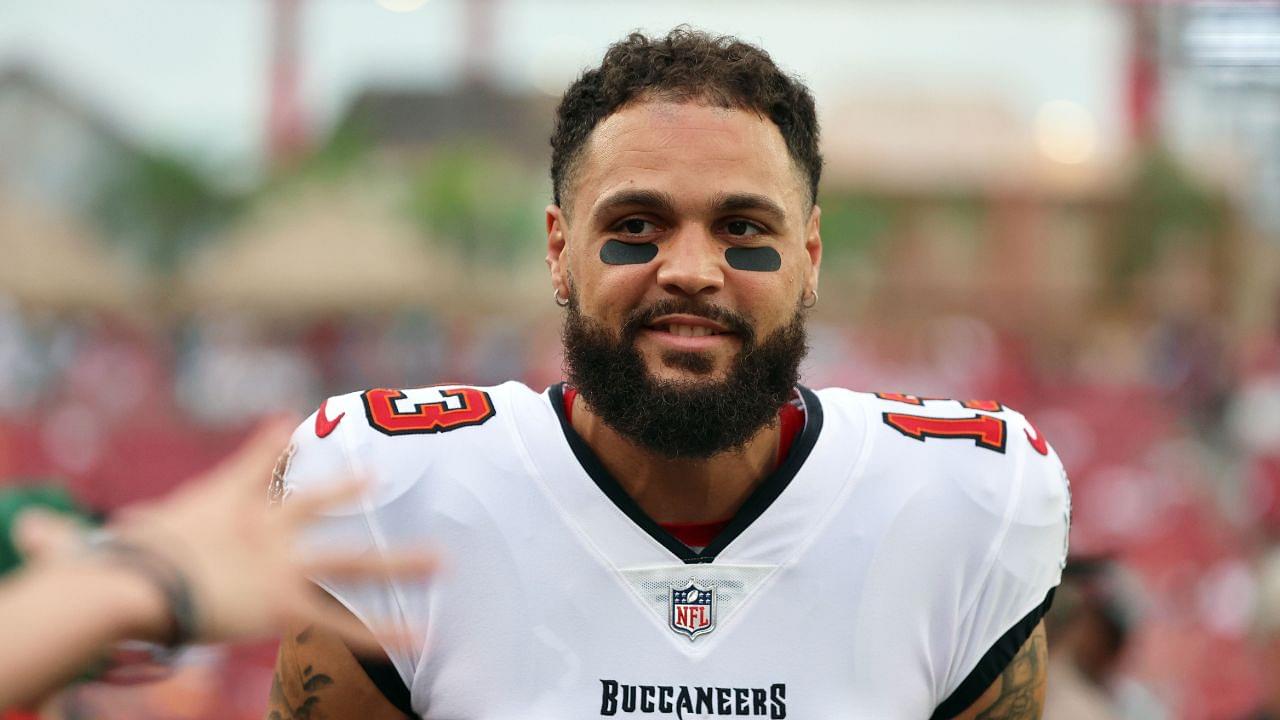
When a veteran wide receiver leaves the only franchise he has ever known, the move is rarely just about money or geography. For Mike Evans, walking away from more than a decade with the Tampa Bay Buccaneers meant finding a situation that offered both a legitimate Super Bowl path and a system that would actually maximize what he still does best at 32 years old. That search ultimately led him to the San Francisco 49ers, a roster widely viewed as one of the most complete in the league but one that lacked a consistent, physically dominant outside receiver last season.
Advertisement
Former Hall of Fame wideout Cris Carter believes the fit is not just good but ideal. Speaking about Evans’ move, Carter pointed to a part of the veteran’s game that often gets overshadowed by his highlight catches and red-zone production.
“That’s a perfect spot for him,” Carter said. “They need wide receiver help. And with their overall physicality, one of the things we never talk about receivers because it doesn’t come into play that much. he is an amazing blocker. And their whole team mentality that we are the bullies on the block, he is going to fit perfect for them.”
That blocking ability becomes especially valuable in a San Francisco offense built around the versatility of Christian McCaffrey and the run-first tendencies of head coach Kyle Shanahan. Carter explained that Evans’ presence on the perimeter forces defenses into impossible choices.
“With McCaffrey, they run the ball so effectively and get him the ball so effectively, they have to commit so many people to the line of scrimmage. He’s going to get a lot of one-on-one coverage,” Carter said. “If you try to double him or play two high safeties, they’re going to run the ball to the weak side. He’s going to smack that corner and you’re going to have a soft edge there.”
The strategic logic behind the signing mirrors what Evans himself said during his introductory press conference, where he described San Francisco as a team that has been “one piece away” from finishing the job in the postseason.
The 49ers reached the playoffs again last year but were hampered by injuries across the receiving corps and the ongoing uncertainty surrounding Brandon Aiyuk, who never took the field for the team during the 2025 campaign.
From a roster construction standpoint, Evans’ arrival provides something the 49ers lacked in key moments: a big-bodied, boundary receiver who can consistently win contested catches and demand safety attention in the red zone. For most of his career, that role was filled by Evans in Tampa Bay, where he produced 11 consecutive 1,000-yard seasons, trailing only Jerry Rice in that particular measure of sustained dominance.
There are, of course, risks attached. Evans is coming off an injury-marred season in which he was limited to just 368 receiving yards after battling a hamstring issue and a broken collarbone. The three-year contract he signed with San Francisco reflects that uncertainty, with relatively modest guaranteed money compared to other top receivers in the same free-agent class. It gives the 49ers flexibility if his body does not hold up, while still allowing them to benefit massively if he returns to form.
Carter sees that gamble as worthwhile precisely because of what Evans learned during his time catching passes from Tom Brady late in his career.
“Especially what he saw in Tom Brady, he got a little preview of what you can do late in your career,” Carter said, suggesting that Evans’ understanding of route nuance, timing, and situational football should allow him to age more gracefully than receivers who rely purely on speed.
If that projection holds, Evans could become the missing piece in an offense that already features McCaffrey, George Kittle, and one of the league’s most creative play designers in Shanahan. And if Carter is right, the impact may show up not just in touchdowns and highlight catches, but in the quieter moments when a veteran receiver seals the edge on a run play and helps define the physical identity the 49ers have spent years trying to build.