
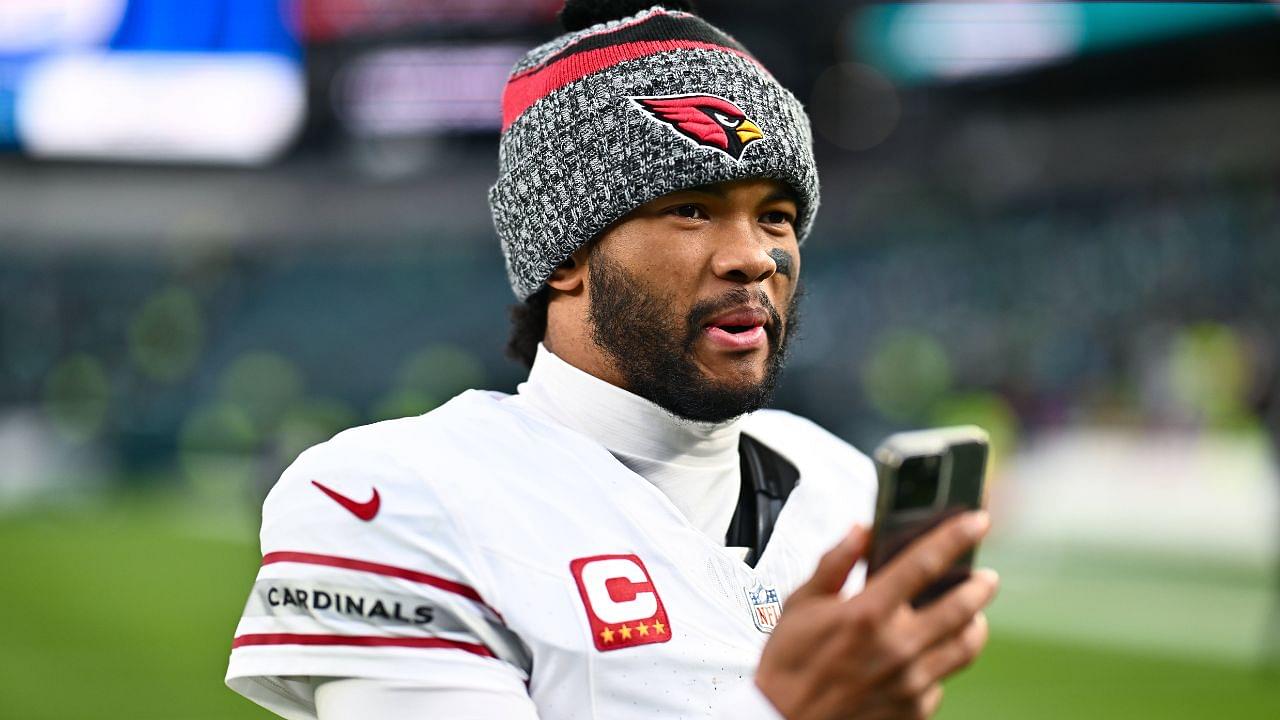
After injuries, inconsistency, and organizational turmoil ended his tenure with the Arizona Cardinals, the former No. 1 overall pick now walks into a fresh locker room, a quarterback-friendly system, and a roster built to win immediately. With that reset, however, comes a new wave of expectations, especially for a player who has shown flashes of elite play but has yet to translate it into sustained team success.
Advertisement
Despite the uneven ending in Arizona, Murray’s résumé is far from empty. He has thrown for more than 20,000 yards with a career completion percentage above 67 percent and has consistently been one of the most dangerous running quarterbacks in football, topping 400 rushing yards in every full season prior to his ACL recovery year.
The Vikings are betting that those traits, paired with a stronger supporting cast and offensive structure, can revive the version of Murray that once looked like a future MVP candidate.
Hall of Famer Cris Carter believes the environment change alone could be transformative. “Let’s see if the Vikings and the talent they have in their building can overcome what Arizona did for Kyler Murray,” Carter said, pointing to Minnesota’s roster strength compared to Murray’s previous situation.
Carter went even further, suggesting that Murray’s ceiling is still among the highest at the position if he fully commits to the details of the position. “How good could Kyler Murray be if he actually did the work on film and handled it like a franchise quarterback? He can be a candidate for MVP. Seriously.”
The former Vikings star made it clear that Murray’s athleticism remains the most underappreciated part of his game. “Don’t forget about his legs,” Carter said, stressing that Murray’s rushing ability is not just a bonus but a defining trait that can tilt games and force defenses into uncomfortable matchups. Murray has rushed for more than 3,000 yards and over 30 touchdowns in his career, production that separates him from most traditional pocket passers.
Minnesota’s decision to sign Murray to a one-year deal reflects both opportunity and caution. The Vikings are not committing long-term yet, but they are giving him a legitimate chance to win the starting job over J.J. McCarthy, who has only ten career starts. That experience gap alone gives Murray a natural edge entering training camp, particularly in command of protections, pre-snap reads, and situational awareness.
Head coach Kevin O’Connell has made it clear that the organization values depth and competition at quarterback after a 2025 season derailed by injuries. “Ultimately, in the quarterback room, it’s about having just the deepest, most talented room you possibly can every single year,” O’Connell said earlier this offseason, explaining the team’s decision to carry multiple viable options at the position.
That philosophy has created one of the league’s most crowded quarterback rooms, with Murray, McCarthy, Carson Wentz, and Max Brosmer all competing. Publicly, the Vikings continue to frame the situation as an open competition, but the reality is that Murray’s experience, production history, and playmaking upside make him the favorite to take the first snaps of the 2026 season if he performs as expected through the summer.
The stakes for Murray are enormous. A strong season in Minnesota could reestablish him as a long-term starter and position him for a lucrative contract next offseason. A disappointing one would reinforce the doubts that followed him out of Arizona and leave him fighting for another short-term opportunity elsewhere.
That is why Carter’s comments resonate beyond simple praise. He is not just highlighting Murray’s talent but pointing to the rare combination of motivation, supporting cast, and scheme fit that can turn a reclamation project into a breakout star. If Murray embraces the structure in Minnesota while continuing to leverage his elite mobility, he has a realistic path to delivering the best season of his career.
For the Vikings, the gamble is relatively low-risk financially but potentially franchise-altering on the field. If Murray returns to peak form, Minnesota could go from a team searching for stability at quarterback to one capable of contending in the NFC North and beyond. If he does not, the organization still retains a young quarterback in McCarthy and flexibility heading into 2027.
Either way, Murray’s fresh start in Minnesota ensures that his career narrative is far from finished. The next season will not just determine whether he wins the starting job. It will shape whether he is remembered as a talented quarterback who never quite delivered or as a late-career success story who finally matched his production to his potential.