
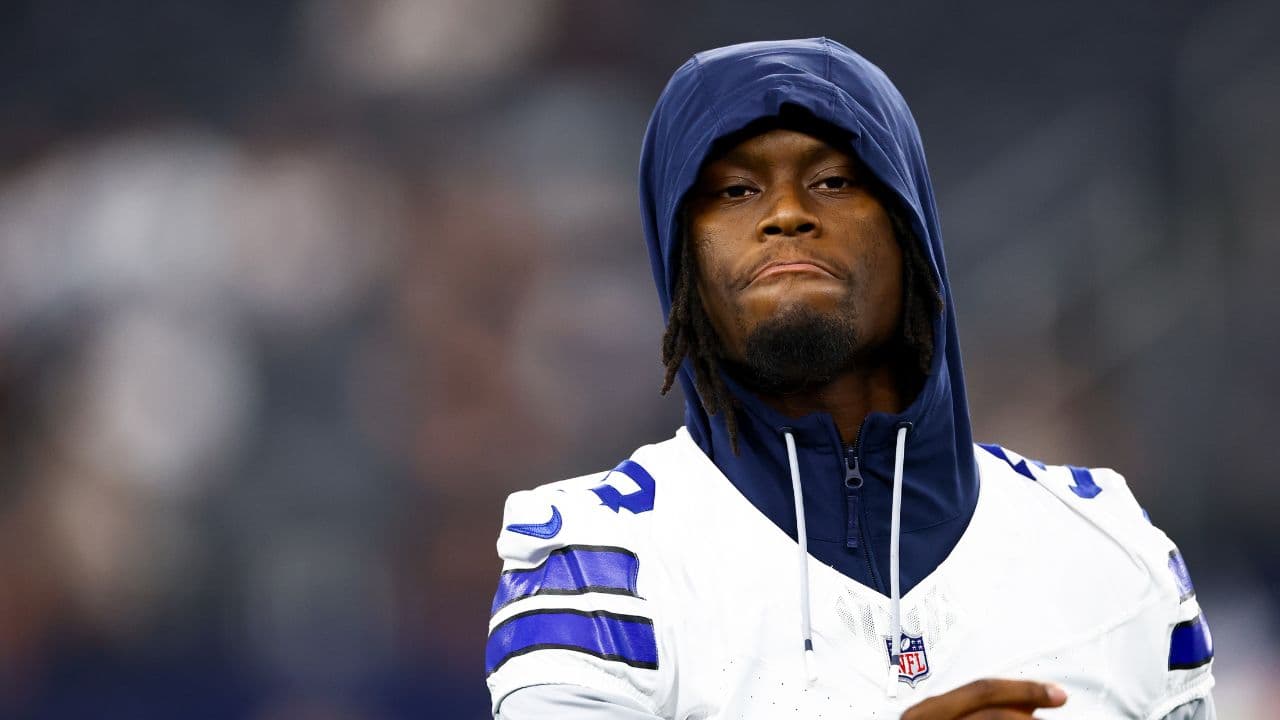
The Dallas Cowboys are already navigating a tight salary-cap situation, and their decision to place the franchise tag on wide receiver George Pickens has only intensified the financial balancing act in Dallas. With the tag giving the two sides until mid-July to negotiate a long-term extension before it becomes binding for the 2026 season, the Cowboys must determine whether Pickens is part of their long-term blueprint or simply a short-term solution.
Advertisement
That looming decision has sparked debate around the league, including from Hall of Fame receiver Cris Carter, who warned the Cowboys that tagging Pickens instead of locking him into a proper extension could create more problems than it solves.
Carter argued the move makes little sense considering the resources Dallas has already invested in the receiver. According to him, placing the tag on Pickens risks frustrating a player who has already delivered his best football.
“It does not do you any good to franchise him. You’ve already traded the draft pick for him. You don’t want to franchise him two years and pay him $50 million, $25 a year, because he’s going to be upset,” Carter said.
“You got the best football out of him now. He’s a loose cannon. He can go either way.”
Carter’s criticism goes beyond just Pickens’ temperament. He believes the Cowboys’ broader roster-building strategy is flawed, particularly when it comes to how much money they are committing to offensive stars like quarterback Dak Prescott and fellow receiver CeeDee Lamb.
From Carter’s perspective, the financial math simply doesn’t work in a salary-cap league.
“You cannot pay a receiver $40 million, another receiver $35 million, and your quarterback $55 million,” Carter said. “Guess who the Dallas Cowboys are now? You’re the Cincinnati Bengals.”
His comparison to the Cincinnati Bengals reflects a broader critique of modern roster construction. Carter believes teams that invest too heavily in a handful of stars risk weakening the rest of the roster, something he says is particularly dangerous in the NFL, where success depends on depth across multiple positions.
“That is not a business model to compete for championships,” Carter explained. “Wide receivers can be negated based on coverage and pass rush. We can drop seven people into coverage, put two on you and two on you, and rush the passer.”
Unlike the NBA, Carter emphasized, football doesn’t reward “super teams” built around a few elite players.
“That ain’t basketball, bro. The big three ain’t going to help you in football,” Carter said. “Get you one stud and then get you a bunch of minions split up everywhere instead of three studs and minimums.”
While the Cowboys’ front office continues negotiating with Pickens, the organization has publicly maintained that it wants the Pro Bowl wideout in Dallas long term. Prescott even offered his own advice to the receiver, encouraging him not to take the business side personally and to trust his value during negotiations.
Still, Carter’s warning highlights the larger dilemma facing Dallas: whether committing major money to multiple offensive stars is the right formula for building a championship roster — or the exact trap that keeps them from one.