
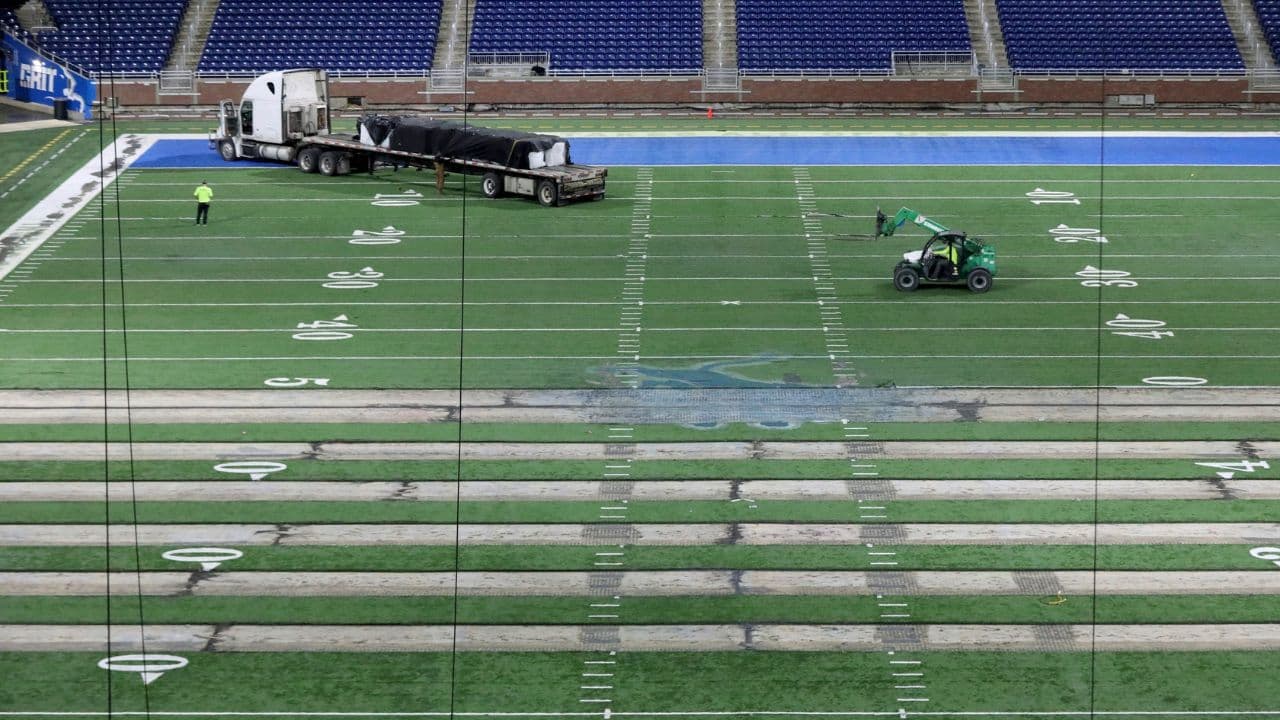
For years, NFL fans have instinctively linked torn ACLs and lower-body injuries to artificial turf, and rightly so. The logic feels simple: turf looks harder, stickier, and less forgiving than natural grass. And every time a non-contact injury occurs on a turf field, the debate flares back up. However, the 2025 NFL season has complicated that narrative.
Advertisement
While injuries are undeniably piling up in recent weeks, data through 15 weeks shows that the grass-versus-turf conversation is far more nuanced than it appears. As things stand, the NFL has already seen 30 torn ACLs, with more potentially to come.
That number might seem alarming on its own, but context matters. Since 2013, the league has typically hovered between the low 40s and mid 50s in ACL tears per season, peaking at 63 in 2013. Even with 30 already logged, 2025 is not currently on pace to become the worst ACL season of the past decade.
What has amplified the outrage this season is who has gone down. Superstars like Patrick Mahomes, Micah Parsons, and Nick Bosa suffering season-ending injuries have put the spotlight squarely on field conditions.
Looking specifically at some of the most high-profile ACL tears from this season helps explain why the discussion feels louder. So far, eight notable ACL injuries have dominated headlines:
More context pic.twitter.com/XR8jZCtT5E
— nav (@heynavnav) December 15, 2025
From that sample alone, five ACL tears occurred on natural grass, two on artificial turf, and one on a hybrid surface. Based on this data, the surface distribution directly challenges the assumption that turf is responsible for most ACL injuries in 2025.
But this is where data from the NFL Players Association becomes crucial. According to multiple NFLPA-backed studies, artificial turf still carries a significantly higher risk for non-contact lower-extremity injuries.
As per the report, players face a 28% higher rate of non-contact lower-body injuries when playing on artificial turf compared to natural grass. The risk becomes even more pronounced in the knees, where non-contact knee injuries occur 32% more often on turf.
The biggest gap, however, shows up in the feet and ankles, with non-contact foot and ankle injuries happening at a staggering 69% higher rate on artificial surfaces.
The reason behind these numbers simply comes down to how the surface behaves. Natural grass lets cleats dig in and then release by tearing up small chunks of turf, which helps reduce twisting pressure on the knees.
Turf, by contrast, grips the cleats more tightly, creating a “sticky” feel that can lock the foot in place and increase the twisting force on the legs during quick cuts.
So why does the narrative around the ACL injuries in 2025 look different? Part of it, as explained before, is exposure bias.
When franchise-defining players like Patrick Mahomes and Micah Parsons go down, even on grass, the debate gets much more spotlight. Another factor is sheer volume. With more explosive athletes and longer seasons, stress on joints has never been higher, regardless of surface type.
Perhaps, the hidden takeaway isn’t that turf is suddenly safe or grass is suddenly dangerous. It’s that injuries are multifactorial, and blaming one surface alone oversimplifies a growing problem.