
Patrick Mahomes or Travis Kelce, the faces of the Kansas City Chiefs dynasty, are the names that often feature prominently in conversations about the most disliked player in the NFL. Their constant presence in championship games, commercials, and highlight reels has made them easy targets for frustrated fans across the league. But according to data cited by Vegas Insider, neither of them sits at the top of the hate list.
Advertisement
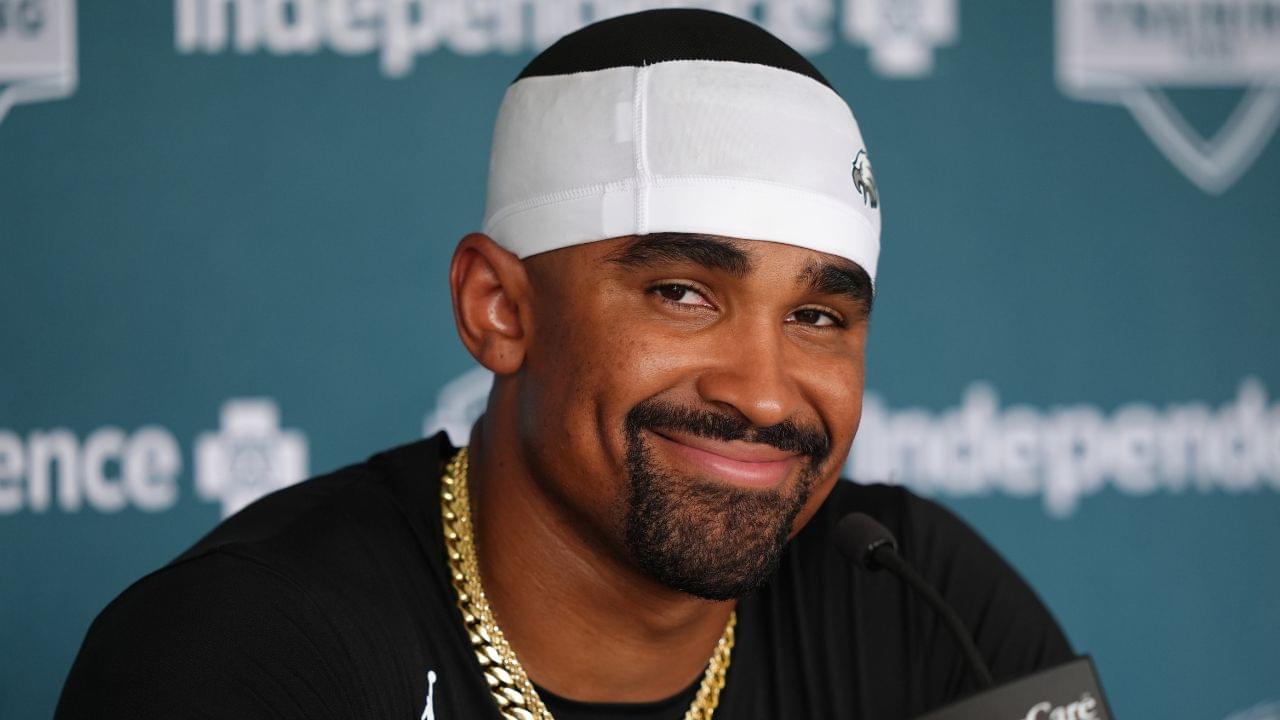
That distinction belongs to Jalen Hurts, the quarterback of the Philadelphia Eagles. The research, based on activity from NFL discussion boards on Reddit, ranked Hurts No. 1 in negative fan sentiment with a perfect Hate Score of 10.0.
Many observers found the result surprising. Especially since Hurts has stayed clear of controversy, earned praise from teammates and coaches, and built a reputation as a disciplined professional both on and off the field. There are no scandals attached to his name, no public feuds, and no history of locker room issues.
However, he somehow draws more criticism than anyone else in the league. Shannon Sharpe and Chad Johnson offered a straightforward explanation for this phenomenon.
In their view, Hurts is disliked for one primary reason: He keeps winning, and he does it in a way that doesn’t match what many fans expect from a superstar quarterback.
Johnson opened the discussion by pointing out that Hurts’ résumé speaks for itself. From his college days to his rise in the pros, winning has followed him everywhere.
“He’s been winning since Alabama,” Johnson said. “He came to Philly, and he’s been a winner since he got there.”
In Ocho’s view, the criticism has little to do with results and everything to do with style. Hurts does exactly what his coaches ask of him. He plays within the system. He prioritizes ball security, situational football, and efficiency over highlight-reel moments. It isn’t flashy. It isn’t always pretty. But it works.
“Even though it’s not aesthetically pleasing,” Johnson explained, “Jalen Hurts wins all the time.”
Because of that, Ocho believes Hurts is judged differently than most quarterbacks. Every limitation gets magnified. Every imperfect throw becomes a talking point.
When the Eagles struggle, critics are quick to point to what Hurts “can’t” do. “This is why they’re losing, because he can’t do X, Y, and Z,” said Johnson, describing typical comments from people. However, when they’re winning, those same issues are often brushed aside.
Sharpe, in his response, didn’t feel the need for much context. From his perspective, the situation is simple: Fans and analysts tend to compare Hurts to more visually dynamic quarterbacks such as Lamar Jackson and Josh Allen. Those players rack up jaw-dropping highlights with deep bombs, broken tackles, and improvisational magic.
Hurts, by contrast, wins through structure, discipline, and execution. He takes what defenses give him. He runs when necessary. He leans on his offensive line and play design. He doesn’t chase chaos.
“The objective is to win,” Sharpe said. “You don’t get more or less points for winning pretty.”
Sharpe also reminded listeners that each quarterback has their own style of play, which they employ for winning. Peyton Manning didn’t play like Tom Brady, and neither played like today’s dual-threat stars. Greatness has never had just one look.
Beyond style of play, both Johnson and Sharpe believe Hurts’ personality plays a major role in shaping public perception. He is famously reserved in interviews and public appearances. He rarely shows strong emotion. He avoids bold statements.
After winning the Super Bowl, Hurts quickly shifted his focus back to preparation and improvement. No long victory laps. No extended celebrations. Just “on to the next.”
For some fans, that comes across as distant or robotic. “People want personality,” Sharpe explained. “They want to see who you really are.”
Even Brady and Manning were seen as stiff early in their careers, pointed out Sharpe. It wasn’t until retirement that fans got to see their lighter, more relaxed sides. Hurts, still in the middle of his career, hasn’t reached that stage yet. What fans see is the franchise quarterback version: Focused, guarded, and hyper-professional.
Another element that feeds resentment is the Eagles’ dominance in short-yardage situations, especially through ‘tush push.’ With Hurts at the center, Philadelphia has turned quarterback sneaks into near-automatic first downs. The play is legal, effective, and brutally simple. It also frustrates opposing fans.
There is nothing glamorous about watching a quarterback get pushed forward by his linemen. For critics, it reinforces the idea that Hurts succeeds through physical efficiency rather than artistry.
What makes the criticism even more confusing is Hurts’ reputation away from the field. He is known for his charitable work and professionalism. Teammates speak highly of his leadership. Opponents rarely question his character. By most measures, he represents exactly what the league wants in a franchise quarterback. There is no clear personal reason to dislike him.
That is why Sharpe and Johnson believe much of the negativity has little to do with Hurts himself. Instead, it reflects discomfort with a player who challenges conventional ideas of stardom.
Hurts doesn’t chase attention. He doesn’t market a flashy persona. Hurts wins on his own terms. He studies. He prepares. He trusts his system. He plays within structure. He accepts criticism without responding publicly. And most importantly, he continues to produce results.