
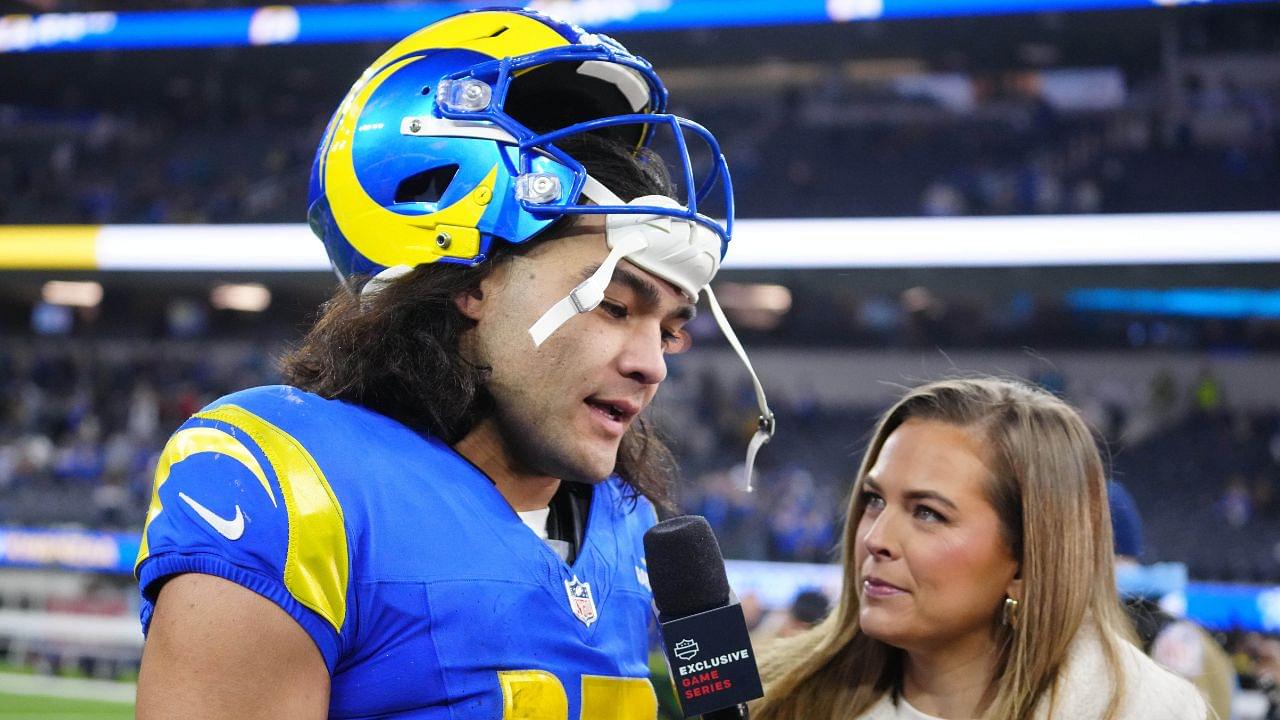
Los Angeles Rams star receiver Puka Nacua should be entering a straightforward extension cycle. He has, after all, had one of the most productive starts to a career in NFL history since getting drafted by the Rams in 2023. Instead, he finds himself at the center of a civil lawsuit and scrutiny.
Advertisement
A woman filed a case in Los Angeles alleging that Nacua made an antisemitic remark and bit her during a New Year’s Eve gathering. The complaint includes claims of gender violence and negligence.
The Rams have remained silent, but the timing of the controversy is critical. Nacua is eligible for a massive contract extension this offseason that could place him among the highest-paid receivers in the league. And T.J. Houshmandzadeh doesn’t think they should.
Instead, the former Pro Bowl receiver laid out what he believes the Rams should do if they want to avoid committing to a market-setting contract. “If you’re the Rams, do you want to stay in this business at the cost that it’s going to cost you to stay in this business?” he asked.
Houshmandzadeh pointed to Los Angeles holding a mid-first-round pick — “13th or 14th” — and argued that using that on another wide receiver would give the team leverage and flexibility rather than locking themselves into a massive extension.
“If they draft a receiver in the first round, I don’t know if they [are] signing Puka to an extension… I’m telling you,” said T.J., who then described a step-by-step roster approach that would allow the Rams to delay a decision while protecting themselves financially.
“Franchising next season, not this upcoming season, the following season, and trading,” added Houshmandzadeh.
The premise is simple: If a rookie receiver can produce close to what Nacua has, the team gains the option of moving on without ever committing to a long-term deal. “Let them draft a receiver in the first round. And this receiver shows them he can do what Puka was doing. Even if it ain’t that level, if it’s close enough,” explained T.J.
While Houshmandzadeh focused on roster construction, Emmanuel Acho addressed why Nacua’s situation has become so volatile in the first place. He stated that the receiver’s public behavior has amplified scrutiny around him.
“Is Puka being targeted? Yes. But did Puka paint the target on his back? Absolutely,” said Acho, who used a colorful analogy to explain his point.
“Puka found the red paint in the cupboard, took it out, found the paint brush… painted a whole circle around it… and then walked outside,” added Acho, pointing out that Nacua was someone who had drawn attention to himself through his actions.
Acho’s broader argument was that high-profile athletes with growing wealth and visibility are always going to be scrutinized, especially when controversy enters the picture. “Any uncareful, incredibly wealthy individual… is going to be targeted. And that’s Puka right now,” he said.
Nacua’s on-field résumé would have made this a routine extension under normal circumstances. He led the league with 129 receptions for 1,715 yards last season and carried that production into the playoffs. Players with that performance are typically extended early to avoid escalating market prices.
But lawsuits, public-relations concerns, and uncertainty about future headlines complicate that equation. Teams rarely commit long-term guaranteed money when there is even a small chance of reputational fallout.
Drafting a receiver in the first round would not just be about talent. It would be about having options. That will protect the team against both financial inflation at the position and the unpredictability surrounding one of its brightest young stars.