
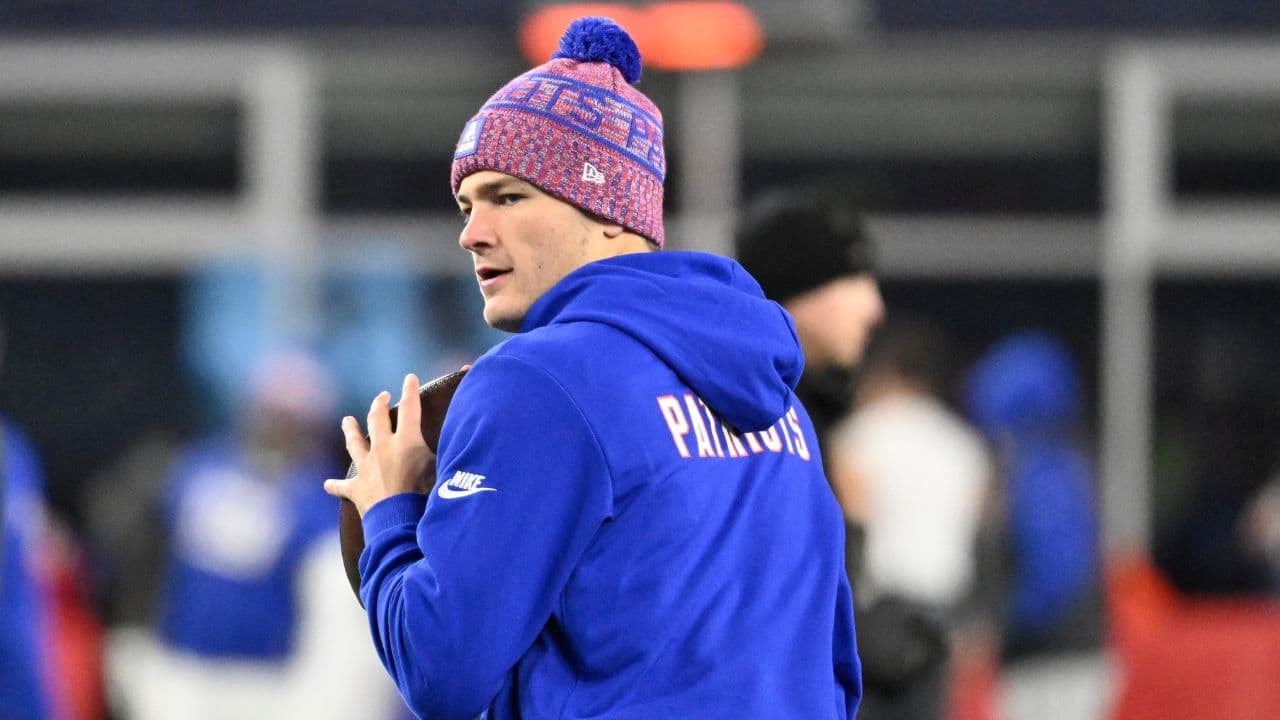
New England Patriots head coach Mike Vrabel tried to strike a calm, steady tone after the team’s first official practice week ahead of Super Bowl 60, but the injury report did just enough to raise eyebrows.
Advertisement
Patriots quarterback and NFL MVP nominee Drake Maye was listed as questionable eight days before New England is set to face the Seattle Seahawks, with Vrabel confirming the 23-year-old is dealing with both an illness and a shoulder issue.
“I try not to have a whole lot of concern,” Vrabel said following practice. “I just want to prepare the football team and make sure that everybody’s ready, and then we have a plan.”
Vrabel added that illnesses have circulated through the locker room for weeks, calling it something “a lot of guys” have dealt with recently. He stressed that Maye showed up to the facility and described him as “fine,” indicating the missed practice time was largely illness-related.
Still, the optics weren’t ideal. Maye was again listed as a limited participant and did not appear during the media-access portion of Friday’s practice. Given that the injury designation is issued as if the game were being played this Sunday, rather than a week from now, the label carries more ambiguity than urgency. Inside the locker room, teammates echoed that sentiment.
Backup quarterback Josh Dobbs called the situation “not a weird thing,” while veteran offensive tackle Morgan Moses dismissed the concern entirely, saying players tend to forget about aches and pains once the lights are on and the national anthem begins.
Outside the building, however, the discussion picked up steam, particularly on ESPN, where Hall of Famer Shannon Sharpe took a hard look at the timeline and raised a simple but pointed question.
“When did he hurt his throwing shoulder?” Sharpe asked on his podcast. “Because I don’t remember it being on the injury report.”
He noted that Maye threw extensively just days ago and never showed visible limitations during New England’s AFC Championship win over Denver. While Maye absorbed several sacks in that game, Sharpe pointed out that many of them ended with defenders landing on top of him, hardly unusual wear and tear for a quarterback in January.
“You going to the Super Bowl at the end of the season . Who the hell is 100 percent?” Sharpe said. “Ain’t nobody 100 percent unless you didn’t play all season long.”
Sharpe framed the situation as part reality, part gamesmanship, something teams routinely do when championships are on the line. To make his point, he drew a direct comparison to another high-profile quarterback situation earlier this postseason: Sam Darnold.
Darnold, Sharpe recalled, dealt with heavy injury speculation surrounding his oblique, missed practice time, and still went out and played without issue.
“We really worried,” Sharpe said sarcastically. “He went out and played.”
Sharpe went even further, explaining that shoulder injuries, especially for quarterbacks, are often manageable in the short term with treatment and adrenaline doing most of the heavy lifting on game day.
“You can shoot anything up,” Sharpe said, half-joking. “Ankles, shoulders, ribs — you won’t feel the pain when you’re throwing. After the game, when that adrenaline wears off? May God be with you. I’ve been there.”
That lived experience is exactly why Sharpe isn’t concerned about Maye’s availability or effectiveness. The Patriots quarterback has not missed a single game this season and insisted his Thursday work was “normal,” describing it as a jog-through where he was “moving around for a good bit.”
“We did a jog through, so I’m feeling good,” Maye said. “This is the game you dream of playing.”
When the context is laid out, a late-season illness, limited practice reps, a shoulder that hasn’t clearly shown up on film, and a quarterback who continues to say and do all the right things, the concern feels more procedural than physical.