


Kenny Wallace Given Reality Check About NASCAR’s True Motives Behind Introduction of Controversial Stage Format

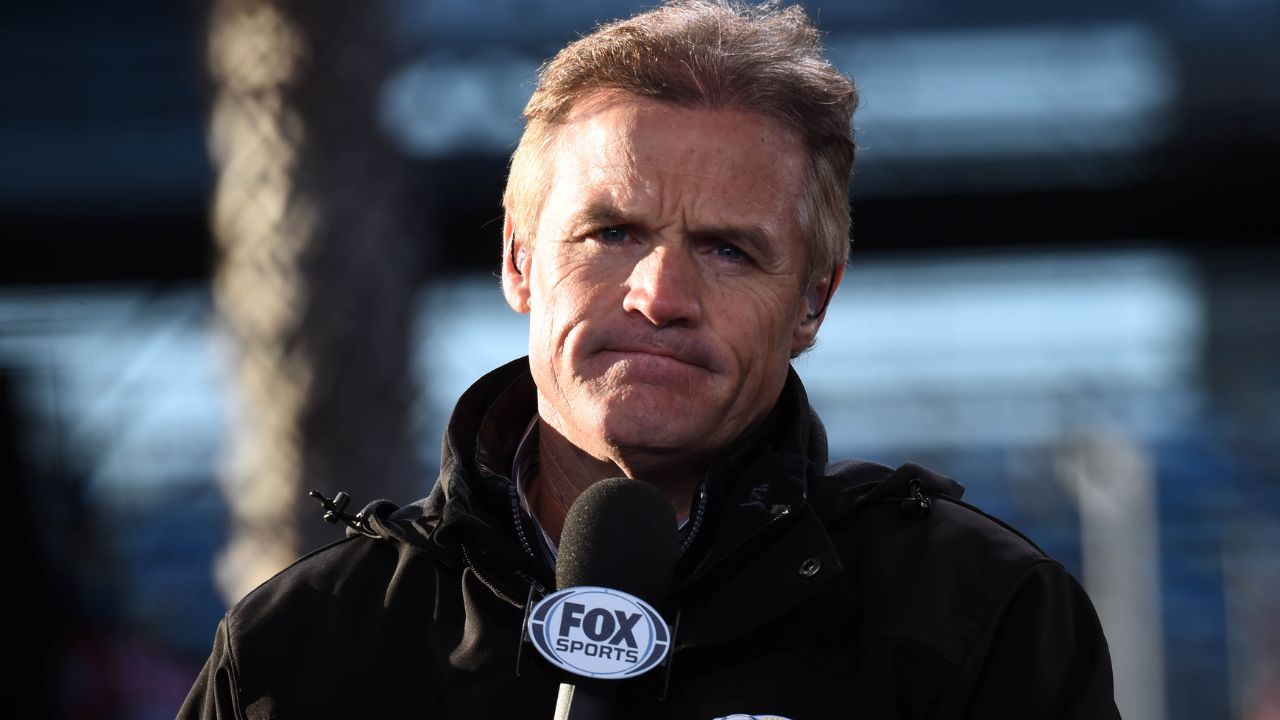
While Sunday’s All-Star Race will reveal how new tweaks shape flow and strategy, the absence of stage breaks promises a change of pace. This became a point of debate when Kenny Wallace chimed in on the matter.
Unlike standard Cup races that feature stage breaks, the All-Star Race will stretch to 250 laps — 50 more than last year — and will include a competition caution at or near Lap 100. Additionally, a promoter’s caution may be thrown before Lap 220 unless a natural yellow occurs after Lap 200, in which case it gets scrapped.
Wallace posted a video defending NASCAR’s Next Gen cars while downplaying broader fan criticism. However, when a viewer argued that, besides Next Gen cars, stage breaks have made races formulaic, Wallace pushed back.
He tweeted, “‘Stage racing’ was invented because the (new generation) could not sit still and watch a 500 mile race. The thought was: create three individual races. Give everybody a chance to take a piss and grab a beer and come back for a restart to make it exciting.”
That explanation didn’t sit well with many. One fan countered, “Has nothing to do with the new generation. It has a lot to do with tv, hype, product sales, commercials, and selling hot dogs and soda at the races.”
Another added, “That’s just the excuse that was used Kenny. They blamed the younger generation for something they made up so they could run more commercials.” A third echoed the sentiment: “No, they were invented to sell more advertising time.”
“Stage racing”
was invented because the (new generation) could not sit still and watch a 500 mile race. The thought was.
Create three individual races. Give everybody a chance to take a piss and grab a beer and come back for a restart to make it exciting https://t.co/nOrPIHf6tK— Kenny Wallace (@Kenny_Wallace) May 15, 2025
Another fan gave a detailed explanation on the introduction of Stage breaks, saying, “Completely disagree. Stage racing was implemented in order to provide media partners with controlled cautions so they could sell ad spots at predetermined intervals.
“Moreover, restart the greatest time of manufactured excitement and close racing, which NASCAR is looking for. By having multiple restarts allows for better perceived video package. To say that individuals lose attention for a 500 mile race is reprehensible because the race length haven’t changed with the introduction of stages.”
NASCAR implemented stage breaks in 2017, a move that has stirred debate ever since. While critics argue it disrupts the organic rhythm of the race, the format brings certain strategic benefits to the table, as per NASCAR. Each caution wipes away any lead a driver has built, bunches the field back together, and curbs the risk of runaway finishes.
From a broadcasting standpoint, stage breaks offer a built-in window for commercial airtime without cutting away from live green-flag action, aligning race structure with media obligations.
When Carl Edwards warned about the Stage Breaks
Although Carl Edwards stepped away from NASCAR in 2016 and never returned, not even for a part-time appearance, he had already sounded the alarm on the implications of stage breaks. Edwards emphasized that in his era, races unfolded naturally — with cautions waved only for safety, not scheduled by design.
He had cautioned that if NASCAR veers from its traditional format and throws a planned caution midway, it turns the event into two separate races, where the opening half becomes meaningless. The reset wipes the slate clean. So, “I go out there and I gain an advantage, maybe not this track, but at most tracks I gain a big advantage, that caution erases that advantage,” he added.
His words have aged well. Stage breaks have fractured race rhythm, curbing momentum for drivers mid-run. On superspeedways, they’ve also fueled a trend of strategic fuel-saving cruising, with teams gaming the early segments for stage points while placing their real bets on the final stage, where the outcome still hangs in the balance.
About the author


-

Neha Dwivedi •
Connor Zilisch Describes How ‘Letting Go’ Can Often Mean the Key to Success at Martinsville
-
Gowtham Ramalingam •
Denny Hamlin Makes Sensational Claim Around His NASCAR Win Count
-
Gowtham Ramalingam •
Ryan Blaney Reveals What Makes Martinsville Unique Despite Its Similarity to Another Popular NASCAR Track
-
Gowtham Ramalingam •
Chevrolet’s 2026 NASCAR Body Might Have ‘Thrown Them for a Loop’ According to Kevin Harvick
-

Gowtham Ramalingam •
“I Wish I Would’ve Done That”: Dale Earnhardt Jr. Gets Candid About the One Regret That Still Haunts His Racing Career
-

Neha Dwivedi •
Scott Speed Breaks Down What Sets NASCAR Drivers Apart From F1 Stars with Dale Earnhardt Jr.