


Denny Hamlin’s Hunch on How Team Penske’s ‘All-Out Speed’ Strategy Helped Joey Logano Clinch Atlanta Pole Last Weekend

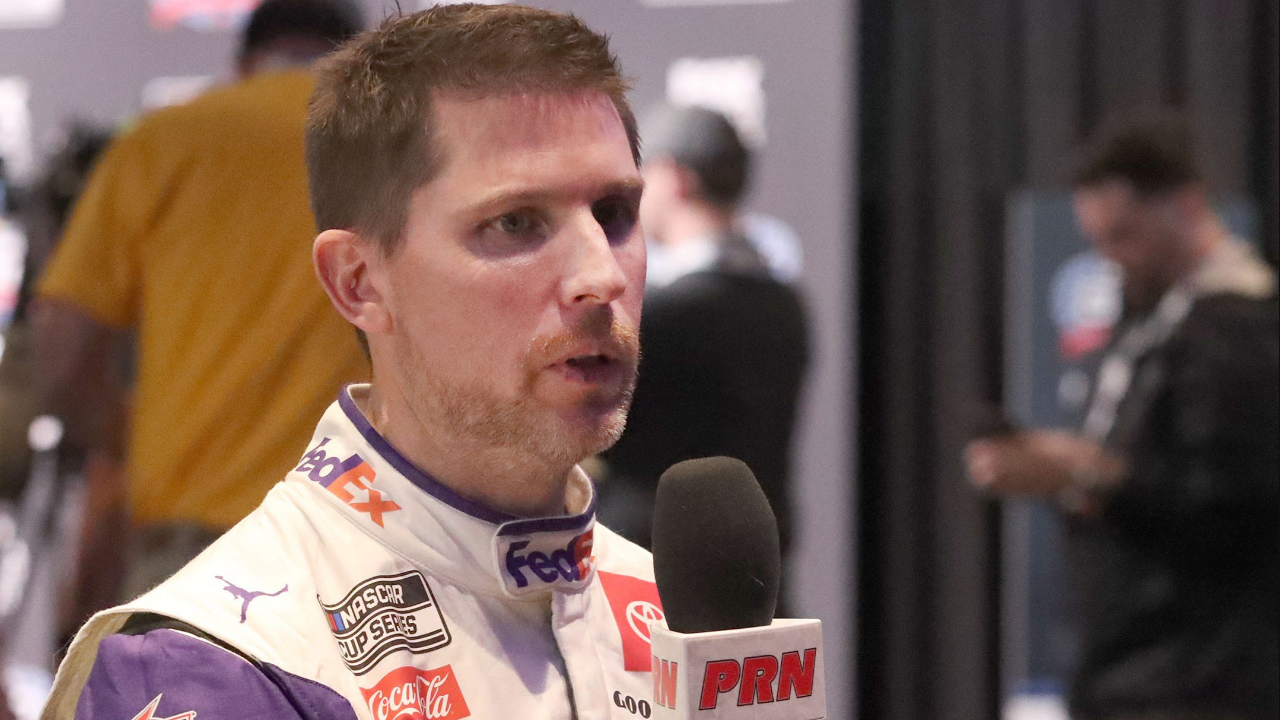
Before heading to the streets of Chicago, Denny Hamlin will face a double-duty challenge, improving the speed of his No. 11 Joe Gibbs Racing Toyota while ensuring his 23XI Racing operation rolls off the hauler ready to contend from the opening lap. But before that, he took a deeper dive into what unfolded at EchoPark Speedway in Hampton, Georgia, breaking down how Joey Logano nabbed the pole while all of the top-five finishers started sixth or lower.
Chase Elliott, for instance, started at P15 in the Quaker State 400 and clawed his way forward to win the race with a mix of raw pace and survival instincts, steering clear of the chaos that eliminated others.
Meanwhile, Team Penske’s Ryan Blaney started from third but saw his race fall apart after getting caught in a multi-car pileup, ending up 40th and last. Logano, however, had earned the pole by winning a tiebreaker over Josh Berry after both drivers posted identical lap times in qualifying.
Logano’s pole-winning lap clocked in at 30.979 seconds (178.960 mph) around the 1.54-mile oval. But in Hamlin’s view, Penske cars’ focus on qualifying speed came at a steep cost when the green flag dropped.
According to Hamlin, all the Penske team did was “Screw the grip. We want to be out front. We want to qualify one, two, three, four, and then control the race from there,” critiquing their all-in approach.
He pointed out that the Penske trio had a comfortable gap, about a tenth of a second, over the rest of the field in qualifying, a margin he called significant on speedways. Hamlin said, “A tenth in speedway qualifying is quite a bit. They had a gap to the next group of cars.
“So, to me, that says that they sell out for all-out speed. Don’t really worry about handling too much, which we were going to see had that wreck not happened.”
Hamlin was curious whether those same cars would have been able to rise back to the front after getting shuffled out of clean air, a scenario where things get tricky. He noted that it’s smooth sailing when leading, grip in hand, and track position secure.
But once drivers fall into the wake in the fourth or fifth, the handling becomes unsettled, and the air grows turbulent. That, coupled with the restarts and late-race cautions, exposes the tradeoff of sacrificing long-run performance for short-term gains.
According to Hamlin, it would’ve been telling to watch if the Penske cars could regain the lead. Despite both drivers starting up front, the drop-off was swift. By the end of Stage 1, Logano had slipped to third, while Blaney tumbled to 17th.
Their fate was sealed in Stage 2, when both drivers were collected in the multi-car wreck, cutting their nights short and leaving their aggressive setup choices open to second-guessing.
About the author


-
Jerry Bonkowski •
“This Is Embarrassing”: Shane van Gisbergen Voices Frustration Mid-race at Darlington as NASCAR Playoffs Kick Off
-
Neha Dwivedi •
“We Took Offense”: Dale Earnhardt Jr. Doesn’t Miss the Irony in Calling Kyle Larson for Xfinity Battle After Connor Zilisch Injury
-
Jerry Bonkowski •
Denny Hamlin Points to An All Too Familiar Achilles’ Heel Going Into the Playoffs
-
Neha Dwivedi •
“Jesse Love Should Be Ashamed”: NASCAR Fans React as Connor Zilisch Sits Out Texas Xfinity Race Due to Injury Sustained at Talladega
-
Srijan Mandal •
“Little Too Much Hoopla”: Martin Truex Jr.’s Kansas Drama Debunked by NASCAR Veteran
-
Gowtham Ramalingam •
‘Max Verstappen vs Kyle Larson Getting Closer’: Fans Go Gaga as Shane Van Gisbergen Introduces F1 Hotshots to Stock Car Racing