


“What Went Wrong?”: Why Michael Schumacher’s ‘Comeback’ to F1 via Mercedes Was a Failure

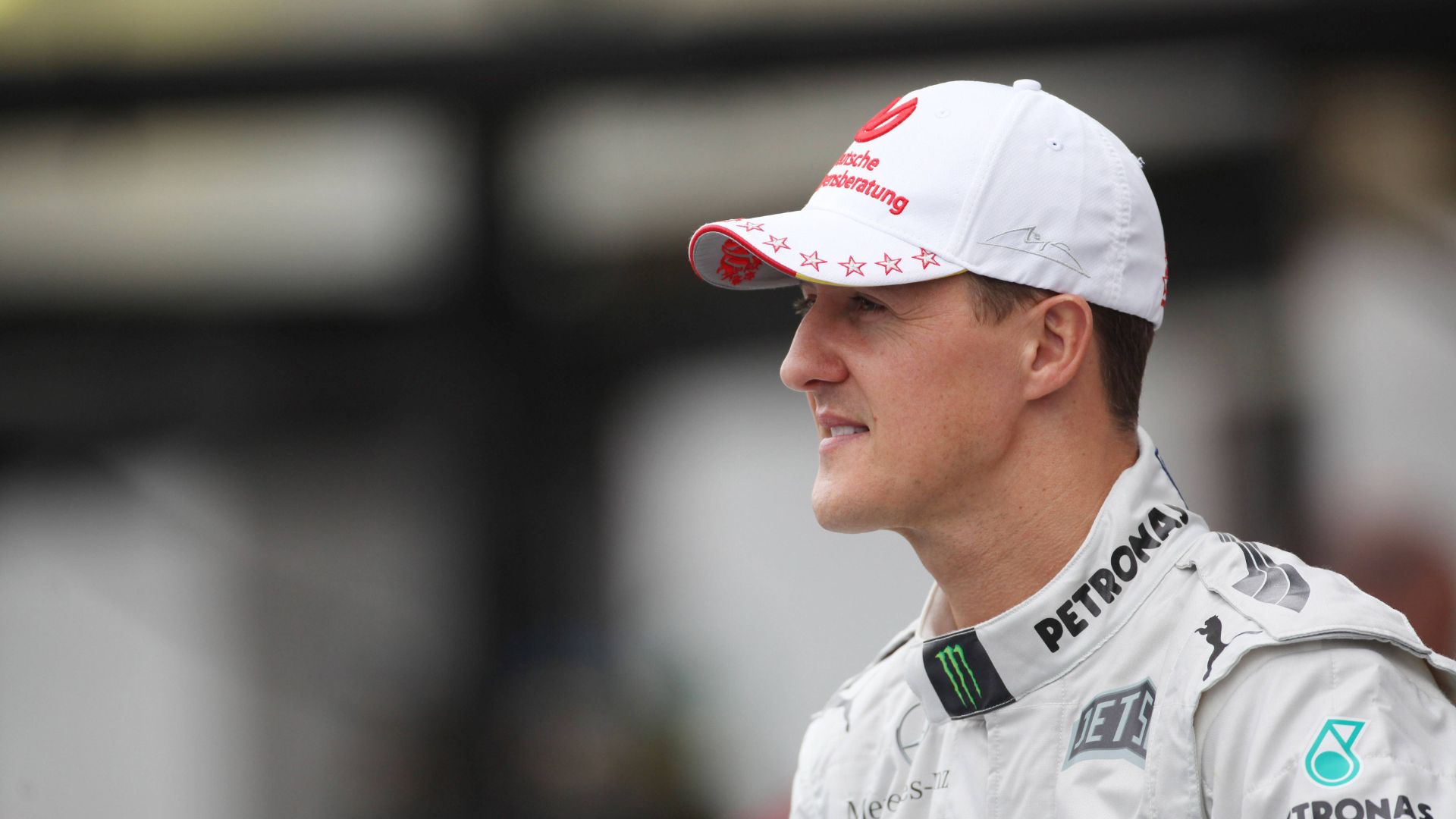
After a three-year hiatus, Michael Schumacher’s return to F1 with Mercedes was the biggest talk of town in 2010. It was a fairytale return of sorts for Schumacher since Mercedes was the institution that helped him launch his career in the first place. So, Schumacher could have viewed it as debt being repaid.
Schumacher was already in his 40s, but there were not many doubts over his ability to do well at Mercedes, who had only just started out in the sport. However, things didn’t plan out as they were hoped. The seven-time World Champion failed to register even a single win and across his three-year-long stint, he only achieved one podium finish in Valencia 2012.
His compatriot Nico Rosberg, despite being 17 years younger, did much better and even got Mercedes its first-ever win at the 2012 Chinese GP. So, all things considered, Schumacher’s return was a failure. But what caused it?
The Race’s Mark Hughes pointed out the reasons behind it in a recent YouTube video. Firstly, “With the control tire, he was no longer able to tailor the tires to his own demand. He used to do with Bridgestone with Ferrari.”
On This Day in 2012, Michael’s first podium with our Team in Valencia. pic.twitter.com/LnisCu7hsq
— Mercedes-AMG PETRONAS F1 Team (@MercedesAMGF1) June 24, 2023
“He could pretty much dictate the direction of tire development itself. That was a massive thing because Bridgestone were pretty much tailor-making for him. No driver had that facility,” Hughes added.
He argued that at Ferrari, Schumacher was able to balance the car in a way that complemented his ‘extreme driving style.’ However, at Mercedes, he didn’t have the same privileges. The Silver Arrows were still in their early years, and building a car that could fully allow the legendary driver to exploit its pace wasn’t possible. They simply couldn’t match the engineering excellence that allowed him to dominate the grid with Ferrari.
Plus, Hughes pointed to Schumacher’s bike crash in 2009. He fell from a 100cc superbike in Murcia, landing on his head. Although he emerged unscathed, three nerve pathways were severely damaged.
Hughes also opined that at the age at which Schumacher crashed, his body’s ability to recover had diminished. “I think it’s quite possible that he just didn’t have the same feeling within him as he had prior to his injuries,” he concluded.
In the end, Schumacher decided to retire again after the 2012 season.
Despite the lack of laurels during his tenure, Toto Wolff continues to laud Schumacher for helping the team find its footing in its formative years.
The Mercedes Team Principal has also credited Schumacher with having a big influence on the team’s dominance from 2014 to 2021 when they won eight consecutive Constructors’ titles. So, in hindsight, was his return a failure? On an individual level, arguably yes. However, Mercedes’ later achievements only serve to honor his legacy.
About the author


-
Anirban Aly Mandal •
Jarno Trulli Cites Michael Schumacher’s ‘Triumphs’ as the Reason Why He Never Got to Race for Ferrari
-
Vidit Dhawan •
Amidst Mohammed Ben Sulayem’s Call to Scrap, Zak Brown Hails “Gamechanger” Cost Cap for a “Healthy” F1
-

Neha Dwivedi •
Scott Speed Breaks Down What Sets NASCAR Drivers Apart From F1 Stars with Dale Earnhardt Jr.
-

Vidit Dhawan •
“I Tell Them That to Their Face”: Zak Brown Reveals How He Keeps Lando Norris and Oscar Piastri Grounded
-
Vidit Dhawan •
Adrian Newey-Lawrence Stroll Rift Could Derail Aston Martin’s 2026 Ambitions: F1 Analyst
-

Aishwary Gaonkar •
Ted Kravitz Spells Out Major Difference in Michael Schumacher and Fernando Alonso’s Media Interactions