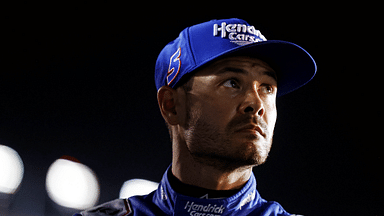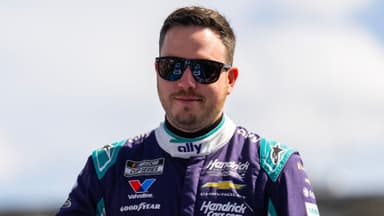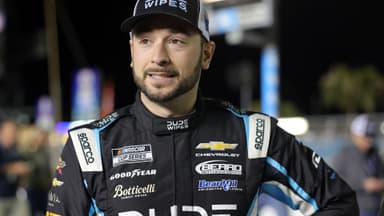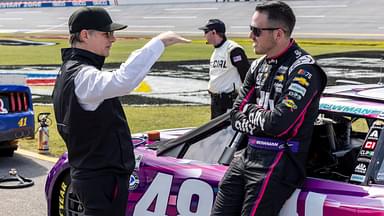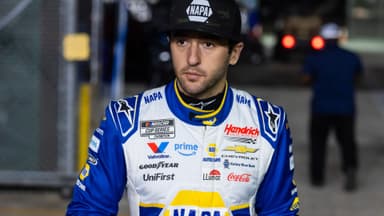
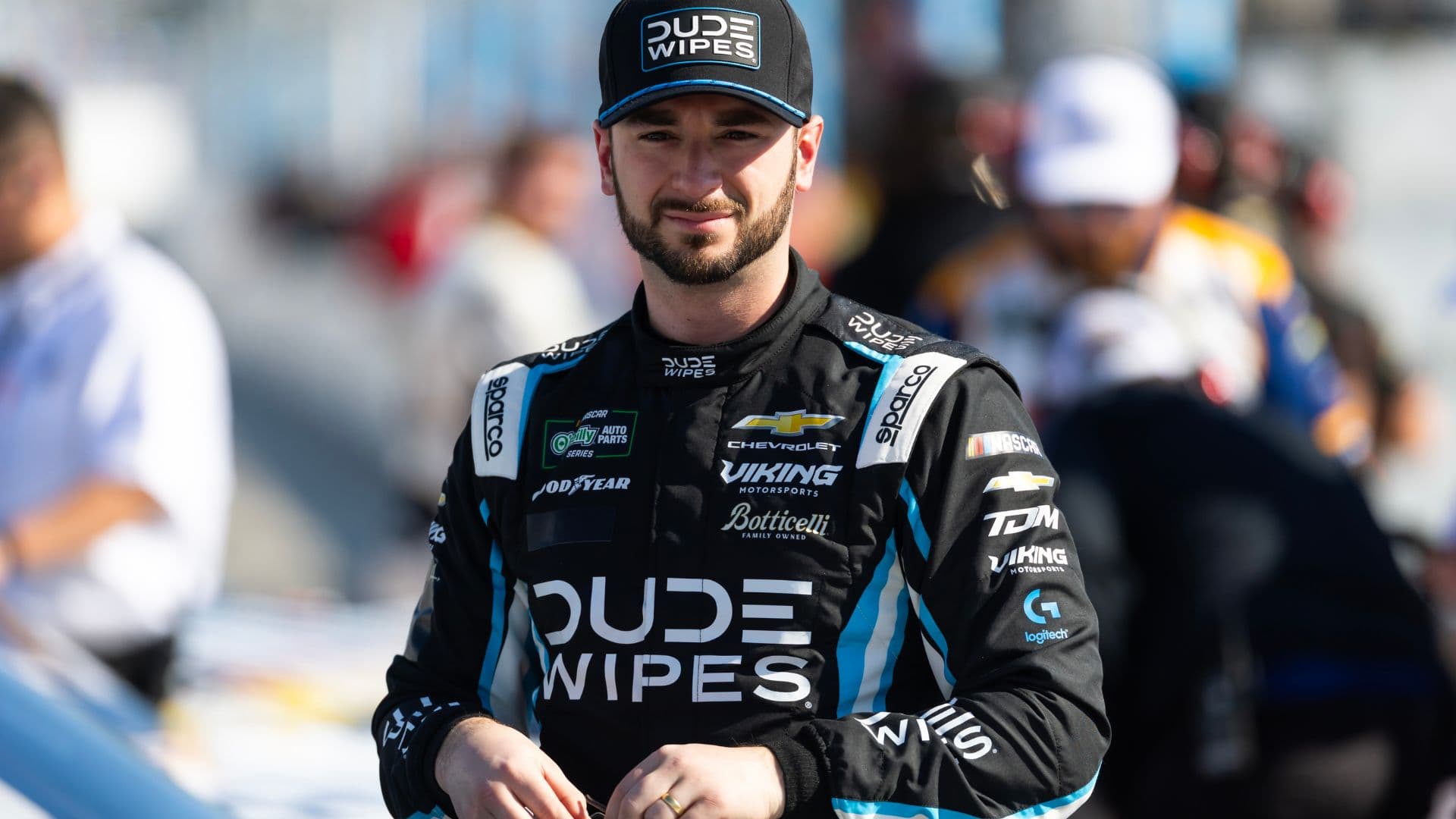
Anthony Alfredo might not have as much experience with the Cup Series cars of today, with 36 of his 43 starts coming before the arrival of the Next Gen car. But this weekend, he will have the chance to drive one for one of NASCAR’s most prominent teams, Hendrick Motorsports, filling in for Alex Bowman in the No. 48 after Bowman was diagnosed with vertigo.
Advertisement
Surely, the equipment will be of a much higher quality than what he has driven so far in the Cup Series with Front Row Motorsports, Live Fast Motorsports, or Beard Motorsports. Still, sliding into another driver’s cockpit can feel like stepping into boots that belong to someone else. Drivers build habits around pedal reach, steering wheel position, and seat posture, and even small shifts can feel off inside the car.
Ahead of the Phoenix race on Sunday, during the media interaction, Alfredo said as per Cup Scene, “So we’re actually really close. When he comes in to run some laps during the week prior to races, we don’t really move anything in the simulator.
“I got in his car; the pedals and the steering wheel are exactly where I would have chosen to have them. I’m wearing one of his fire suits, actually, so that was kind of a lucky fit, I guess,” he added.
Comparing the simulator environment with the real car, Alfredo continued, “They’re very close and realistic. But in the car, you have a lot of tools that you don’t use or have in the simulator, just switches and fans and all these things, obviously, you have to have for running a race. That’ll be a little bit different. But a lot of that comes through communication from the team throughout the race over the radio, so I’m not too worried about that.”
He also pointed out that simulator laps serve an important purpose. Even if the environment is controlled and lacks some real world factors, the simulator helped him learn the track layout, braking zones, and the general tempo required to drive the car. That preparation has helped build confidence before arriving at the circuit.
In the simulator, everything stays stable. The track temperature does not change. The air temperature remains constant. The racing surface does not evolve as cars lay rubber down during a race weekend. In reality, those factors shift constantly.
As more laps are run, the track gains grip because rubber builds up on the racing line. Temperatures can also change throughout the day, affecting tire performance and car balance. These variables force drivers to adapt on the fly.
However, Alfredo does not see those unknowns as a major problem. Alfredo mentioned the experience he has already gained racing in the NASCAR Xfinity Series. Competing in those races has exposed him to the same types of variables, such as changing track grip and shifting weather conditions. Because of that background, he believes he has a solid understanding of what to expect when he suits up for Hendrick Motorsports.