


Austin Dillon Reveals How NASCAR Racing on Concrete Differs From Asphalt Ahead of Dover Showdown

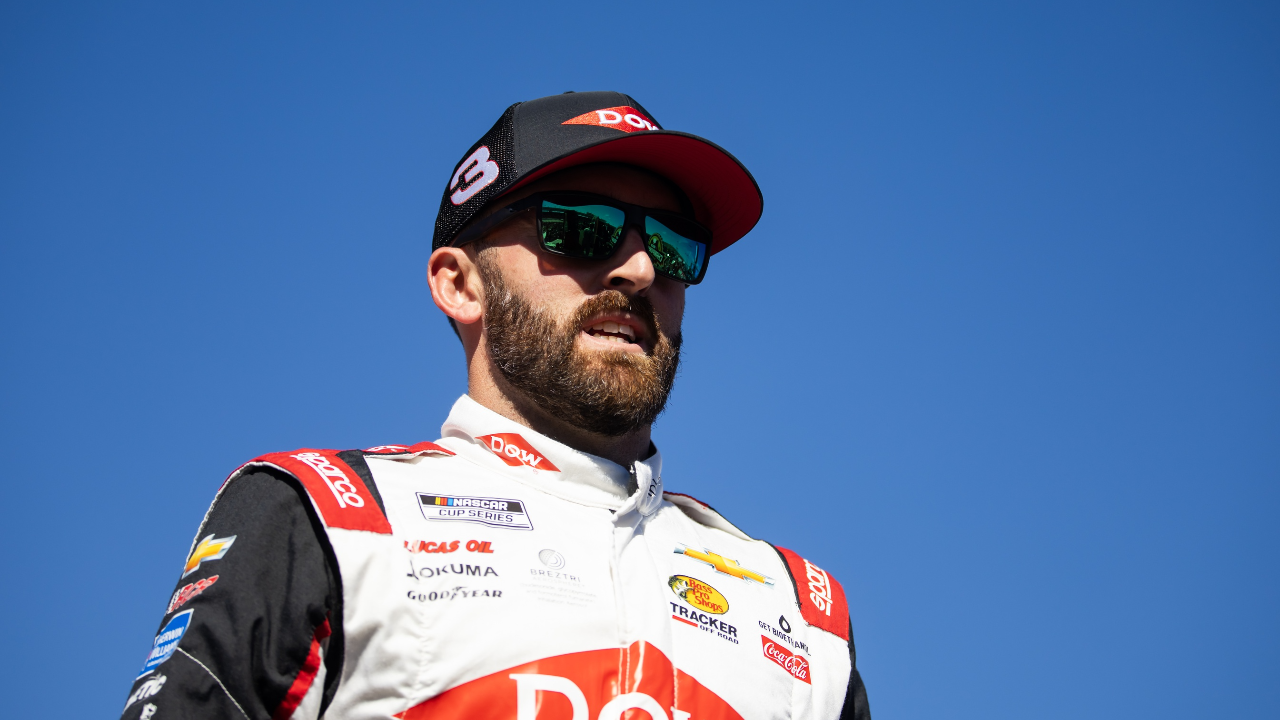
NASCAR returns to its bread and butter this Sunday, taking the green flag on the high banks of Dover Motor Speedway for the track’s 107th Cup Series race since it joined the schedule in 1969. The ‘Monster Mile’ last saw a full repave ahead of the 1995 season, replacing asphalt for concrete. That switch brought one key perk, durability, allowing the track surface to remain untouched for nearly three decades.
Still, racing on concrete brings its own set of quirks, especially when it comes to tires. Ahead of the weekend showdown, Austin Dillon, who pilots the No. 3 Chevy for Richard Childress Racing, offered insight into the stark contrast between asphalt and concrete tracks.
He said, “When the rubber starts to fill those crevices in the concrete, the best way I could explain it is your front tires feel very greasy, like they just kind of slide across the top of the track and you don’t really feel them ever take a good bite.”
Dillon continued, “You’re sliding up, and when it’s ready to go back left, you pick up the gas and try to get back going. On asphalt tracks, you always have that edge. You can feel the right front. At Dover Motor Speedway and Bristol Motor Speedway, you’re a little bit on top of the track as it rubbers up.”
Touching on the banking transition from 24 degrees in the turns to nine degrees on the straights, Dillon emphasized how critical Saturday’s practice session is for dialing in balance. Since the track evolves throughout the race, drivers must walk a tightrope during practice, preparing for conditions that may vanish once the rubber lays down.
Pit crews have to be on the ball, ready to adapt on the fly as lap times swing dramatically with the changing surface. As for Dillon himself, he’s all in. “As a driver, I’ve got to know that it’s not going to drive perfect at all times,” he said. “You look forward to when the rubber gets laid down, because you’re going to have a better car at that point in the race.”
Dover’s qualifying sessions have been few and far between, run only seven times in the past 15 events and just twice in the last six. Despite the track’s unforgiving nature, Kyle Busch has tamed the Monster Mile three times, with wins in 2008, 2010, and 2017, so it could be a race where he regains his winning touch.
About the author


-
Srijan Mandal •
“Unfortunate Right Then and There”: Kyle Busch’s Pre-Race Fears Impact His NASCAR Race in the Exact Way He Predicted
-
Gowtham Ramalingam •
Why Denny Hamlin Would Choose William Byron to Date His Sister
-
Neha Dwivedi •
“I Don’t Know How You Do It”: Dale Earnhardt Jr. in Awe of Kyle Larson, HMS Star Breaks Down Busy Schedule
-
Srijan Mandal •
“I Don’t Like That”: Dale Earnhardt Jr. Talks About the Moments That Gave Him a Reputation of Being Aggressive
-
Neha Dwivedi •
Denny Hamlin Reveals the Emotional Fan Interaction That Defined His Perspective After Crushing NASCAR Defeat
-
Jerry Bonkowski •
“You Guys See Races Different”: How the Likes of Dale Earnhardt Jr. & Jeff Burton Helped Former NBC Play-By-Play Rick Allen Master His Craft