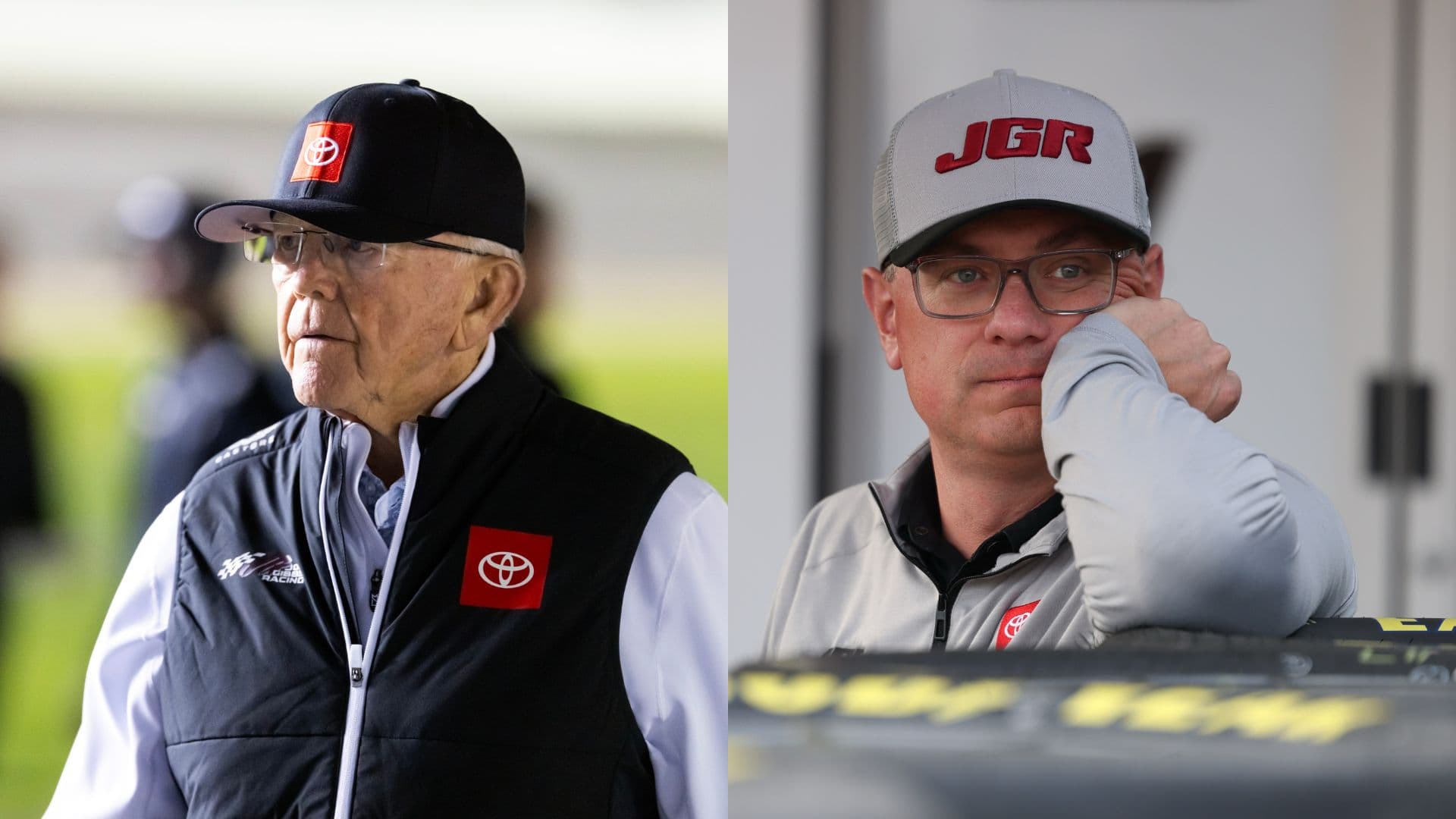
After Joe Gibbs Racing filed a lawsuit against former director Chris Gabehart, alleging a “brazen scheme” that resulted in $8 million in damages, the fallout has sent ripples through the NASCAR garage. The team claims the case involves setup files, payroll records, and pit crew data allegedly intended for Spire Motorsports. In response, former driver Brian Keselowski weighed in on what the situation could mean for the road ahead in NASCAR.
Advertisement
Keselowski, now 44, has seen the sport from all angles. He logged starts across Cup, Xfinity, Truck, and ARCA before stepping away, so he has been around the block and knows how the garage ticks.
But with the sport chasing parity since the arrival of the Next Gen car in 2022, Keselowski argued that cases like this may soon be part of the terrain. Responding to an update from Jordan Bianchi on X, he wrote: “This is going to become more common because of the nature of this car. It has no special race team-specific parts.
“So that means everyone has the same things to worry about with. Extremely more engineering driven, and easier to copy and paste amongst the field,” he added.
This is going to become more common because of the nature of this car. It has no special race team-specific parts. So that means everyone has the same things to worry about with. Extremely more engineering-driven, and easier to copy and paste amongst the field.
— Brian Keselowski (@KeselowskiBrian) February 19, 2026
When a fan asked whether the fallout depends on how Gabehart left, Keselowski said it comes down to the contract terms, which he does not know. Most teams build in guardrails, but those clauses can be difficult to enforce when push comes to shove.
Keselowski added, “No longer does the guy moving between teams have to build the car as he had somewhere else. Conversely, it’s so much easier to just use what you’ve been using for the last few years. Look for more non-compete clauses that are stricter than ever before.” Still, he raised the question of how teams draw the line between experience and trade secrets.
No longer does the guy moving between teams have to build the car as he had somewhere else. Conversely, it’s so much easier to just use what you’ve been using for the last few years.
Look for more non-compete clauses that are stricter than ever before.
— Brian Keselowski (@KeselowskiBrian) February 19, 2026
To make his point, Keselowski floated an example. If someone from one team learns that a 450 spring works in a certain shop, can he not carry that lesson to the next? That is where it becomes a slippery slope if teams try to police knowledge that exists in someone’s head.
He also noted that this playbook is not new. Big teams have danced around this issue before. When money flows into engineering, it can be easier to hire someone who already knows the ropes than to spend years learning the craft from scratch. In his view, that cycle has been part of the sport for ages and may now come under the microscope more than ever.