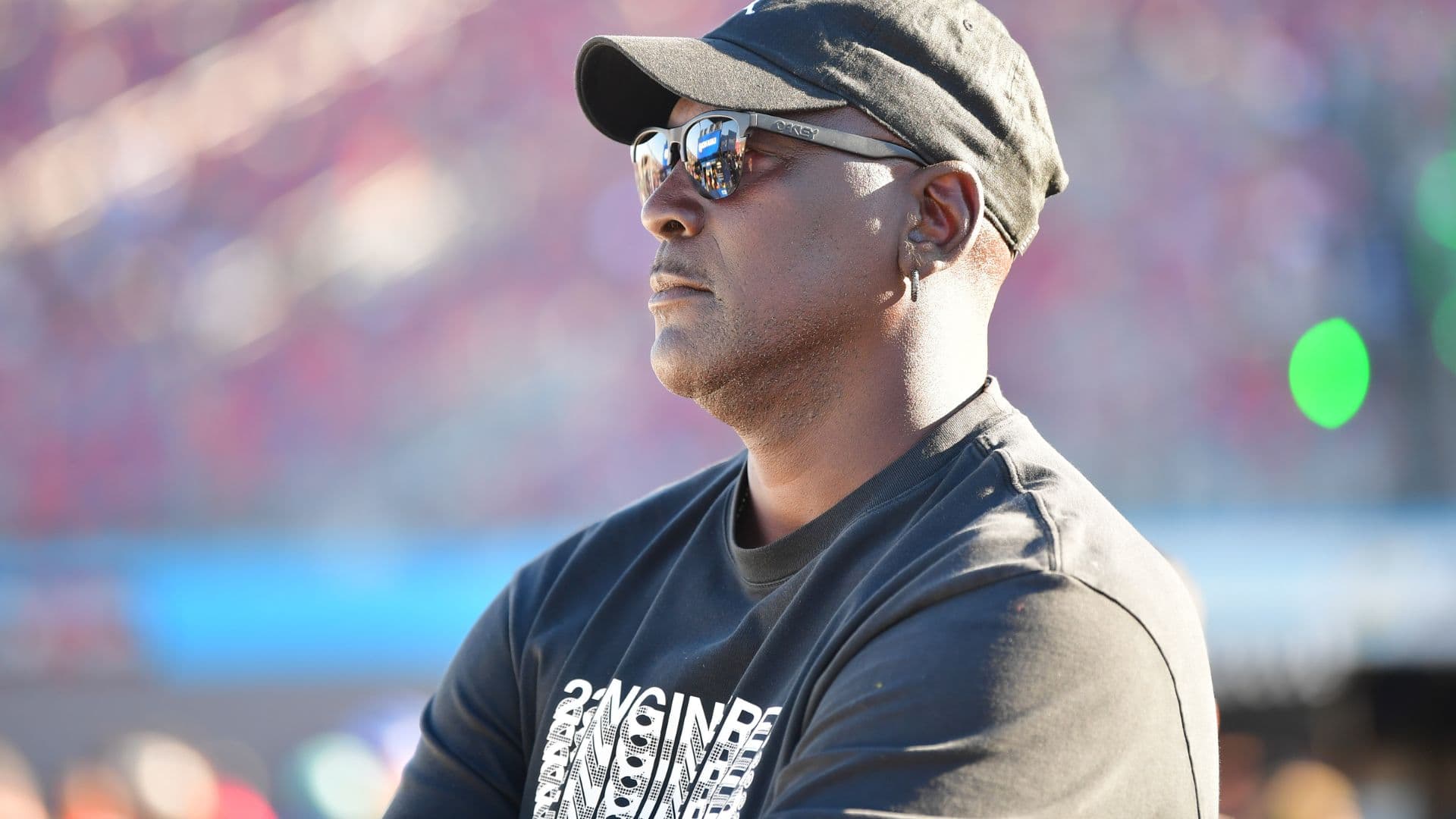
Michael Jordan took the stage on the fifth day of the antitrust trial, spending an hour fielding questions about his role in NASCAR and the motivations behind joining 23XI Racing in its lawsuit against the sanctioning body. Jordan, a lifelong fan of the sport, traced his connection back to childhood afternoons at Rockingham, Darlington, and Talladega.
Advertisement
The NBA legend admitted that while Richard Petty first drew him in, his fandom eventually gravitated toward the original No. 11 driver, Cale Yarborough. That early affection, he revealed, paved the road that ultimately led him from the grandstands to the witness stand.
Jordan told the court that the lawsuit was not about a personal vendetta but about fairness for “every person in NASCAR, for every team in NASCAR, that isn’t being treated fairly.” As he continued in the sport, he said he found the “nature of the business to be unfair,” frequently comparing NASCAR’s structure to the NBA’s model.
In basketball, the Chicago Bulls icon explained, the limited number of entry points elevates value, and the league’s economic balance shifts only modestly — 50.9% to players in strong business years and 49.1% in leaner ones. To him, that kind of equilibrium reflects shared responsibility and shared reward, something he believes NASCAR lacks.
Jordan joined the ownership ranks in 2021 alongside Denny Hamlin, with 23XI Racing quickly becoming one of the sport’s newest power players. He testified that he has invested between $35 million and $40 million into the organization. His involvement is not operational, he clarified, but his relationships and name recognition have helped land major partners, including McDonald’s and Upper Deck.
That financial commitment extended to purchasing charters. Jordan paid $28 million for a Stewart-Haas Racing charter effective after 2024, despite knowing there was no guarantee a new agreement would be reached. Asked why he made such a bold move amid turmoil, he gave a candid explanation.
“People who know me know I like to win, and I will pursue anything to win, and getting a third charter improves our chance to win the championship.” Few charters were available, Jordan added, and he believed the opportunity would not return.
The six-time NBA champion also acknowledged why he refused to sign NASCAR’s proposed charter agreement. He said he did not believe it was “economically viable,” and he received legal guidance that the no-sue clause raised antitrust concerns, stating, “We wanted them to know what is fair and not fair.”
Jordan’s hope, he testified, was to become a true partner with NASCAR. “We never thought we would get what basketball gets, but we thought we could get closer to 45 percent. I wasn’t afraid (not to sign). … I felt the need I could challenge NASCAR as a whole.”
Michael Jordan spent an hour on the witness stand
MJ says he grew up a Richard Petty fan but drifted towards Cale Yarborough, ‘the original No. 11, sorry Denny.’
(Laugher)Characterizing his ownership, MJ says he is ‘100 feet up,’ but he is ‘aware of everything that happens at…
— Matt Weaver (@MattWeaverRA) December 5, 2025
During cross-examination, NASCAR attorney Lawrence Buterman presented texts suggesting strategy, including an exchange in which Curtis Polk told Jordan, ‘our plan is to be a pest and have a mosquito bite every week,’ intending to push NASCAR during negotiations.
Still, MJ emphasized he had no desire to damage a sport he has cherished for decades, acknowledging the France family’s contributions. But he felt he could be the owner willing to push for overdue change.
While he admitted he did not read every line of the charter agreement himself, he said he understands the provisions and believes drivers, who shoulder the greatest risk, deserve a larger share of the value. Even though 23XI has posted operating profits in most seasons, he testified that NASCAR’s revenue split remains far below any of his other business ventures.