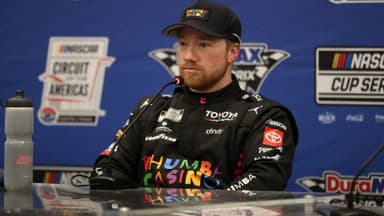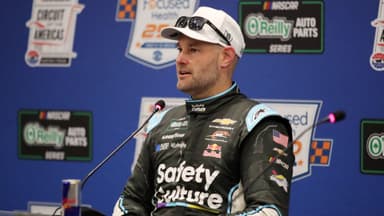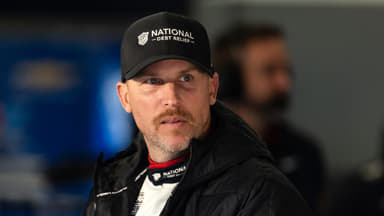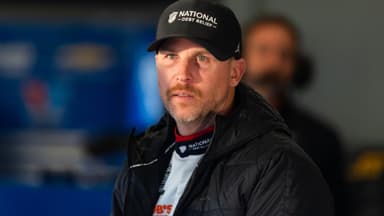
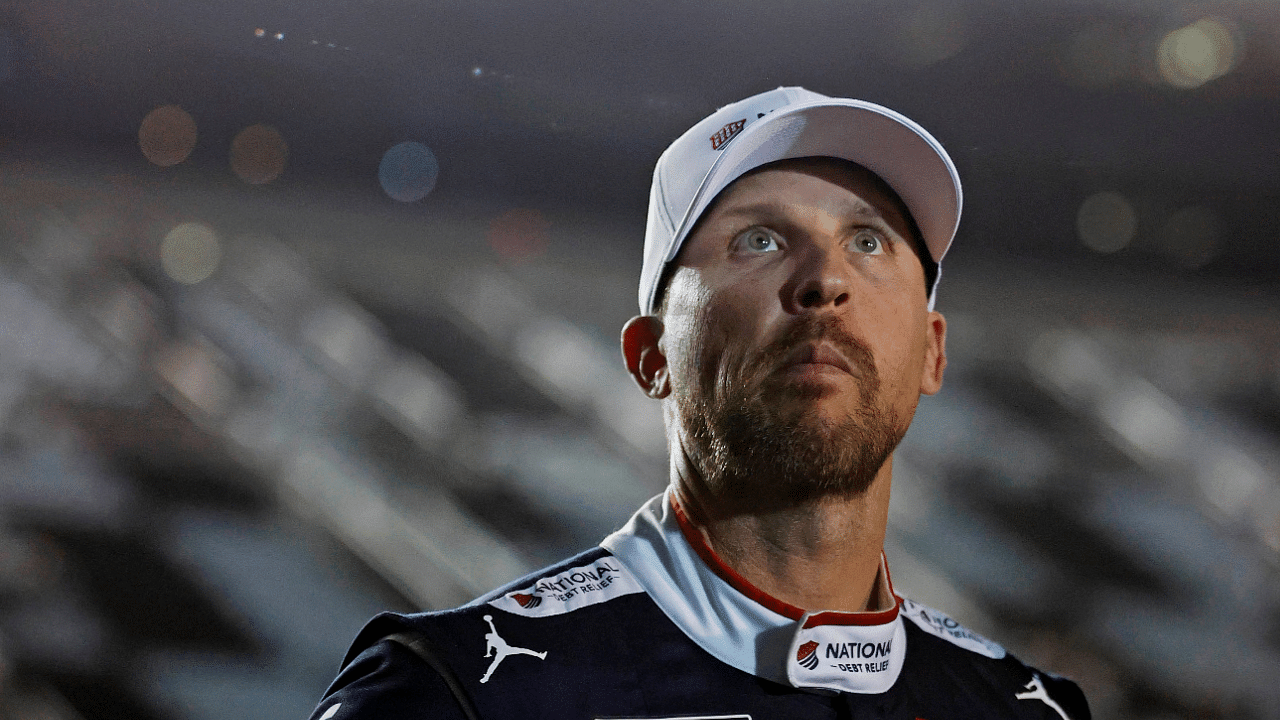
The opening day of the antitrust trial offered an emotional snapshot of Denny Hamlin’s frustrations, but day two shifted into a far more granular dissection of his claims, his finances, and the business dynamics behind 23XI Racing’s grievances.
Advertisement
After spending the first day recalling his father’s declining health and outlining the sponsorship battles teams face not only against one another but also against NASCAR itself, Hamlin returned to the stand for more than three hours as attorneys pressed him on past statements, investment expectations, and the financial foundation of his organization.
Hamlin testified that he earns roughly $14 million annually as one of NASCAR’s top drivers. Yet, he emphasized that his position as a 40% co-owner of 23XI Racing is grounded in a long-term commitment to the sport.
He stated that he invested $45 million into the team and has personally contributed more than $10 million so far, with the remainder tied to loans. In his prospectus, Hamlin predicted a first-year profit of $900,000; the team exceeded that projection, clearing more than $3 million in 2023.
The questioning then turned to the $35 million that Hamlin and Michael Jordan invested in the team shop, Airspeed, that opened in 2024. NASCAR’s attorney argued that Hamlin had budgeted closer to $9–10 million and accused him of extreme overspending, even citing company holiday-party expenses.
Hamlin countered that the original budget was written before COVID-19 and did not include the full cost of outfitting the facility. NASCAR attorney Lawrence Buterman also questioned why 23XI Racing is seeking $205 million in damages, given that internal correspondence suggested that a 10% return on investment had been considered acceptable. Hamlin deferred those figures to expert analysis.
The cross-examination intensified when Buterman referenced Hamlin’s own podcast, noting that he had praised NASCAR and the Next Gen car for tightening competition during his pitch to Jordan, which touted the charter system and the new car as compelling reasons to invest.
Yet in court, Hamlin now argues those structures serve as pillars of NASCAR’s anti-competitive strategy. Hamlin responded that he was sharing the “positive talking points” NASCAR provided each week.
Buterman then pressed Hamlin on why his own contracts contain exclusivity clauses and intellectual property controls, while he criticizes NASCAR for similar practices. Hamlin argued that drivers have choices, NASCAR teams do not, making the comparison uneven.
He was also asked about likening charters to apartment rentals because they expire. Buterman pushed back, saying rented homes cannot be sold, whereas charters can.
Hamlin further recalled a meeting with NASCAR Chairman Jim France, who allegedly told him teams should be spending $10 million per car. Hamlin said he replied, “Cutting is not growth. I can’t cut my costs in half. It’s not realistic.” He left the meeting discouraged, saying France had no explanation for how teams could secure a return on investment.
Attorney Jeffrey Kessler reiterated Hamlin’s Day 1 testimony: teams wanted $20 million per car but received $12–13 million, and there were no guarantees that the 2032–38 extension would increase payouts. Hamlin testified that, under those terms, “I don’t believe we would be in business in 10 years if we signed this.”
He said he recognized the charter agreement was fundamentally flawed even before filing suit, but did not initially know how to challenge it. Now, he said, “it’s time for a change,” noting he has spent 20 years trying to help the sport grow.
Beyond Hamlin’s testimony, NASCAR Executive VP Scott Prime was questioned about early charter negotiations and how he and NASCAR President Steve O’Donnell reacted to LIV Golf comparisons and team demands.
When Steve Phelps took the stand, he addressed internal texts insulting SRX and Richard Childress, calling the proposals “insanity.” O’Donnell, in the same exchange, labeled them “Close to a comfortable 1996, f— the teams, dictatorship, motorsport, redneck, southern, tiny sport.”
Prime said those texts reflected frustration rather than strategy and maintained that NASCAR did attempt to craft a better charter deal. That wrapped a tense and revealing second day.