


“I’d Do Something Stupid”: Corey Day’s Dirt Background Was Responsible for HMS Ace’s Frustrations in NASCAR

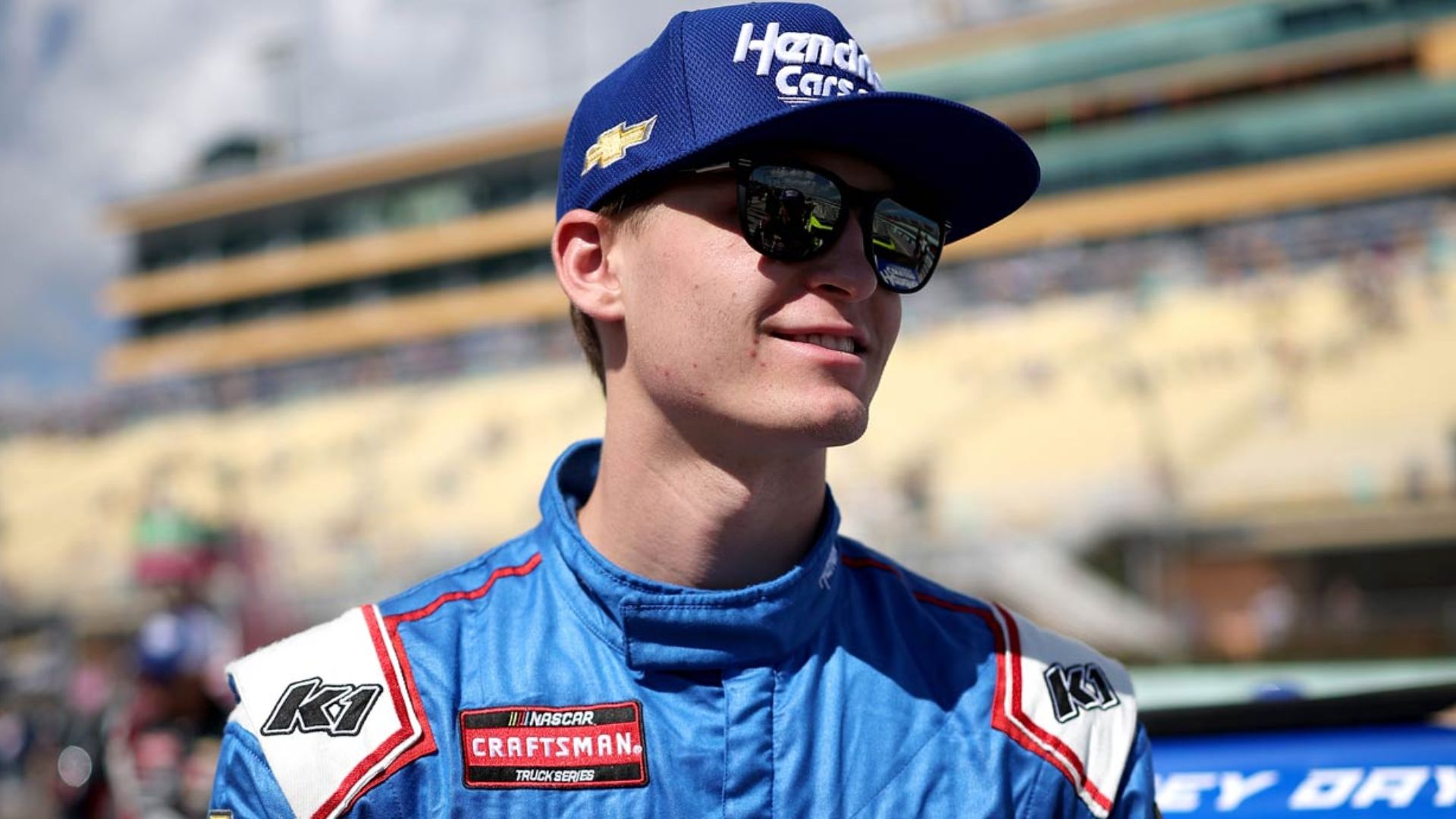
Drivers who grow up on dirt often enter NASCAR with an edge, able to muscle through speed and cornering in ways that pure stock-car racers spend years learning. But for Corey Day, that same dirt-track DNA created frustration early in his NASCAR stint with Hendrick Motorsports. The habits that made him tough to beat on clay did not immediately translate to long-run discipline or the chess match that defines stock-car racing.
One of the biggest hurdles Day discussed involved trading short-run explosiveness for late-race execution. Dirt racing conditions drivers to attack in brief, intense sprints, but NASCAR demands patience, pit-road strategy, and the willingness to let the car evolve over the course of a race.
Understanding that adjustments and timing can shape a finish just as much as raw speed became a key part of Day’s evolution.
The Hendrick Motorsports driver said, “I’m used to 30-lap sprint car races, and I caught myself in the middle of the year getting mad in the car if we weren’t good stage one or if I was backing up, I’d do something stupid. Telling myself, ‘Just hold on until a pit stop.'”
In sprint cars, what a driver brings to the grid is what he has for the night. In NASCAR, a driver’s fate is shaped by multiple variables beyond pure throttle control.
Day highlighted how much that shift challenged him. Sprint-car racing places everything in the driver’s hands, but NASCAR adds layers: three pit stops, adjustments, the possibility of gaining ground on pit road, or the danger of losing several positions if a stop goes wrong. Countless factors can tilt a race in a driver’s favor or unravel it in seconds.
Because of that, Day has spent the season learning to take a breath, slow his approach, and allow the race to unfold rather than forcing the issue. He said that settling into that mindset was a significant step. He competed in 11 Xfinity Series starts with Hendrick Motorsports this season, earning one top-five and two top-ten finishes. Though he is still adapting, the experience gave him a broad sample of what the HMS No. 17 requires.
“I’d say the comfortability of the car, learning the car, learning its tendencies, all that. It’s hard to get eight-to-10 races in something and figure it all out. You go to a bunch of different places in those eight races, and the limits of the car are different at a short track than they are at a mile and a half than they are at a road course … it’s all different,” he said.
Day tackled short tracks like Martinsville, intermediate tracks such as Phoenix, and road courses, including Gateway and Sonoma. Throughout those varied layouts, he learned how the car responds when the terrain shifts.
His lone top-five came at Las Vegas, an intermediate circuit, while his top-ten finish arrived on a road course, Gateway. The 19-year-old knows it will take more time in a stock car to fully bridge the gap between his dirt-track instincts and NASCAR’s demands, but he understands that each run will bring him closer to subjugating the transition.
About the author


-
Neha Dwivedi •
Daniel Suárez Praises Spire’s ‘Incredible Culture,’ Looks Ahead to Unlocking Full Potential
-
Neha Dwivedi •
Denny Hamlin Isn’t Convinced NASCAR’s New Darlington Aero Package Can Fix ‘Track Position’ Racing
-
Gowtham Ramalingam •
Dale Earnhardt Jr. Makes Strong Case for CARS Tour Being Better Than Any Other Racing Series
-

Neha Dwivedi •
Alexa Reddick Opens Up on Parenting in NASCAR, Says Raising Kids at the Track Is Like Giving Them a “Hard, Addictive Drug”
-
Neha Dwivedi •
Dale Earnhardt Jr. Likes the Direction NASCAR is Taking With Darlington Changes
-

Gowtham Ramalingam •
“Read Between the Lines”: Darrell Waltrip’s Darlington Appearance Has Fans Talking About His Take on Modern Day NASCAR