


Kyle Busch Wonders “What’s the Limit” After NASCAR’s Major Strides in Next Gen Safety

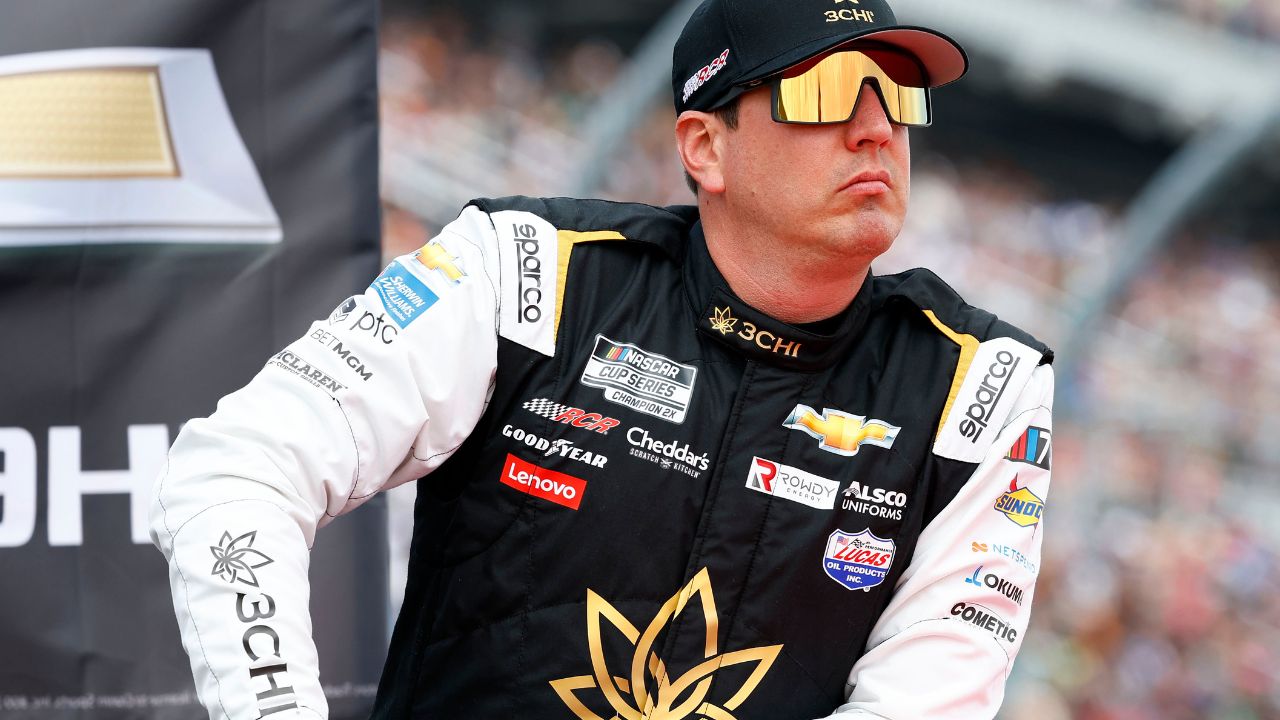
In the wake of a harrowing crash at the Talladega Superspeedway where Kyle Larson’s Hendrick Motorsports car sustained a severe hit to the passenger’s side, NASCAR declared several significant safety enhancements for the Next Gen car. Yet, these improvements came with an undesirable byproduct.
Addressing this concern, Kyle Busch voiced his thoughts during the driver’s press conference at Sonoma Raceway. He questioned NASCAR’s long-term strategy for the car, particularly as they seek to make substantial progress in the realm of safety.
Kyle Busch questions NASCAR’s strategy of making the cars safer
Busch presented a reasoned argument, acknowledging that while advancements in safety are a positive development, the resulting increase in the weight of the Cup cars could impede their speed and handling. Consequently, he questioned the acceptable limit to this trade-off.
During the press conference, Busch stated, “The safety advances of the car and things like that – that’s all great, right? We needed to withstand big hits and hits like that and whatnot. I feel like we keep adding material and keep adding material and keep making these things heavier. We used to run 3,400-pound cars and now we’re at 3,600-pound cars, so what’s the limit? What’s the level of how heavy is too heavy?”
While NASCAR’s swift implementation of safety upgrades is commendable, Busch’s concerns about the cars becoming heavier also warrant serious consideration. Cars that carry more weight but maintain the same power levels could lead to generally slower vehicles for the drivers. So how might NASCAR address this? Could an increase in horsepower be the solution? Or maybe they could seek inspiration from other forms of motorsport to find a viable answer.
Kyle Busch Discusses the Impact of Modifications on Safety and Performance
Subsequently, in the same interview, Busch shared his insights after discussions with some engineers, stating that certain parts of the car are excessively rigid. This results in lacking the crush zones that older models had, which he believes led to the breaking of the bars.
He also pointed out that no measures were taken to mitigate this issue. No elements were removed to soften the frame rail or allow it to flex. Instead, stiffeners were added, which only increased the car’s weight and rigidity. He concluded his argument by stating, “I’m not a genius, but at some point, we all have to reimagine some things.”
Busch certainly raised thought-provoking questions. The continual addition of weight to the cars could potentially become a setback for NASCAR. For the moment, it may result in slower vehicles that are more challenging to navigate around the tracks. However, unless NASCAR devises an alternative strategy, one has to wonder how long they will persist in augmenting the car’s weight for safety improvements.
About the author


-

Gowtham Ramalingam •
Cody Ware Applauds NASCAR Next Gen Safety Updates, Looks Back on Scary 2022 Texas Crash
-
Jerry Bonkowski •
What Left Dale Earnhardt Jr. Divided Over Kyle Larson’s Controversial Comments After Bristol
-

Nilavro Ghosh •
NASCAR Veteran’s Hot Take on How ‘Legacy Fans’ Expect Too Much From the Sport
-
Shaharyar •
“I’ve Not Won as Often”: Kyle Busch Decodes Newly-Gained NASCAR Fan Support After Years of Boos
-
Rahul Ahluwalia •
“I Would Expect More During the Super Bowl”: NASCAR Executive’s Blunt Response to Concern Around Fox’s IndyCar Focus
-
Gowtham Ramalingam •
Brad Keselowski Not Far Behind Teammate Chris Buescher Even if Results Suggest Otherwise