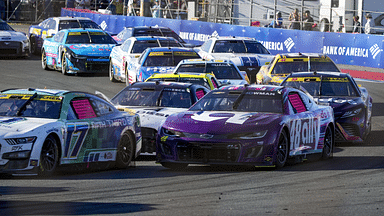
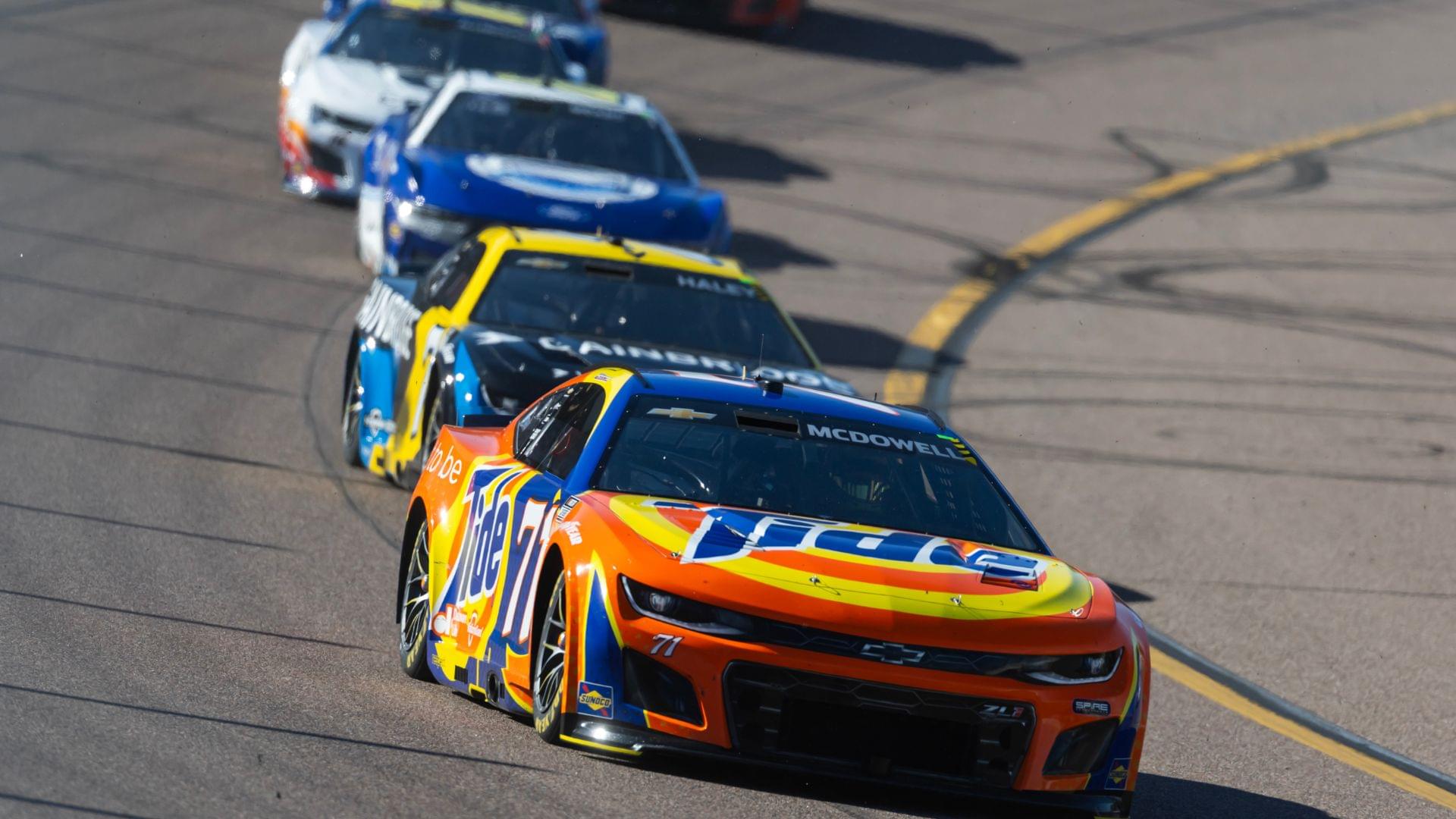
For much of the Next Gen era, NASCAR Cup Series drivers such as Denny Hamlin and Kyle Larson have pressed for more horsepower, arguing that races should hinge less on pit strategy and tire cycles and more on what drivers can do with their right foot.
Advertisement
With parity tightening the field, the chorus only grew louder. In October, competition officials responded by confirming that Cup events on road courses and ovals shorter than 1.5 miles will move to a 750-horsepower package beginning in the 2026 season. That target is a step up from the current 670-horsepower baseline governing NASCAR’s top tier.
The bump is designed to put greater responsibility back in the cockpit, sharpening throttle control while rewarding drivers who can balance aggression with restraint. Officials expect the added output to intensify tire management demands and widen passing windows through varied throttle application phases.
Explaining why the line stopped at 750, NASCAR Executive Vice President and Chief Racing Development Officer John Probst detailed a process that mirrored the league’s playoff discussions. Over the course of a season, officials met with drivers to weigh the impact of additional power and to understand how far the sport could push without breaking its economic model.
From a rules standpoint, Probst acknowledged that adding horsepower can look deceptively simple. “We just say instead of tapered spacer size X, I’m going to go to taper spacer size X plus whatever I want. And I can add as much air to it as I want,” he said.
But the complication emerged when that increase forces engines to operate outside their current limits. At that point, engine price tags escalate quickly, with potential costs reaching tens of millions of dollars across the industry.
To avoid that outcome, he said NASCAR engaged in a heavy dialogue as he narrated, “So we obviously engage heavily with our OEMs and our engine builders and have done that now for the better part of a year with respect to adding horsepower.” Those conversations centered on finding a level that elevated competition without triggering a costly development race.
Hence, NASCAR commissioned durability testing with its engine partners to determine how far existing packages could be stretched without major redesigns. The data pointed to 750 horsepower as the ceiling. That number, Probst explained, delivered the desired competitive lift without demanding engine re-development.
When the series transitions to that configuration, NASCAR does not expect sweeping changes to engine seal regulations. The plan would call for teams to swap tapered spacers and allow builders to adjust ECU mapping. In practical terms, the shift amounts to refinements in hardware and software rather than a major mechanical overhaul.
Horsepower, however, represents only part of the equation. Tire behavior would also play a part in the competition again, and Goodyear has played a key role in that balance. Increased wear and falloff have already forced teams to manage runs more carefully, a trend supported by NASCAR’s internal metrics. More degradation places strategy and discipline back at the forefront.
Combined, the added power and evolving tire profile aim to restore control to drivers while amplifying the physical demands of managing pace over a run. For NASCAR, the 750-horsepower decision is a calculated move to raise the competitive bar without opening the door to unsustainable costs.