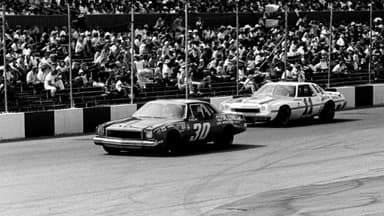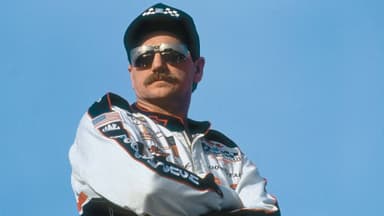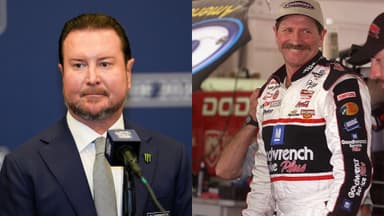

NASCAR drivers climb into their cars knowing danger comes with the job. Crashes are an accepted reality, and it is rare to find anyone in the garage who has not been involved in or close to one. Over time, the sport has worked to reduce those risks by introducing safety measures like SAFER barriers, which absorb impact more effectively than concrete walls. Even so, certain incidents still see cars lift off the ground. That level of protection, however, was not always in place.
Advertisement
In earlier eras, both vehicle structure and track safety lagged behind the demands of the sport, a shortcoming that contributed to multiple on-track fatalities, including the death of Dale Earnhardt.
Today’s safeguards are extensive, but Bill Elliott believes many of them arrived too late.
The years leading into the 21st century were particularly unforgiving when driver deaths were not isolated incidents. In 2000 alone, four competitors lost their lives within a span of nine months. Adam Petty, Kenny Irwin Jr., and Tony Roper were among them, each suffering the same basilar skull fracture injury that later claimed Senior.
Those losses cast a long shadow over the sport, but Dale Sr.’s death in 2001 became the moment that forced sweeping change.
At that time, the HANS device existed as a proven safety tool, yet it was not mandatory. During the Daytona 500, in which Dale Sr. was killed, only seven of the 43 drivers wore one. The tragedy exposed a gap between available technology and required standards. But after that, NASCAR shifted its posture from reactive to proactive.
The HANS device became compulsory, SAFER barriers appeared at tracks, and several improvements followed, spanning car design, equipment standards, and overall safety protocols. Those changes reduced the risk of fatal injuries.
Back in 2008, Elliott acknowledged the progress NASCAR had made since Dale Sr.’s accident, even as he reflected on the cost that preceded it. “I think the most important change we’ve had has been the safety aspect,” he said.
At the same time, he added, “The sad thing is it took Dale Earnhardt‘s death to really get that rolling. But I will say this; NASCAR has stepped up to the plate on that.”
He continued by pointing to the collective effort behind those advances. “The things they have implemented at the tracks, and everyone has pulled together on – I think that is the biggest thing I’ve seen over the years.”
Tony Stewart, who competed during the same period, shares a similar perspective. He raced at a time when head-and-neck restraints were absent, containment seats were not standard, and protective measures were limited. Stewart believes the sport took decisive action only after Dale Sr.’s crash at Daytona in 2001, but he also recognizes how far safety standards have evolved since then.
From Stewart’s viewpoint, the impact extended well beyond NASCAR. He noted that safety development became an industry-wide priority. IndyCar, sprint car racing, the NHRA, and drag racing followed similar paths, reassessing car design and structural protection.
Series across motorsports have been committed to reducing injury risk without compromising competition. Stewart sees that unified push as evidence that Earnhardt’s death reshaped how racing confronts danger. While risks remain inherent, the sport no longer accepts preventable loss as the cost of competition.