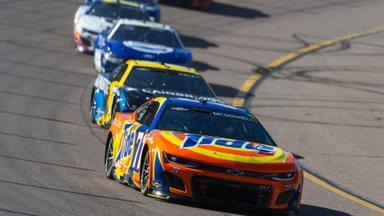
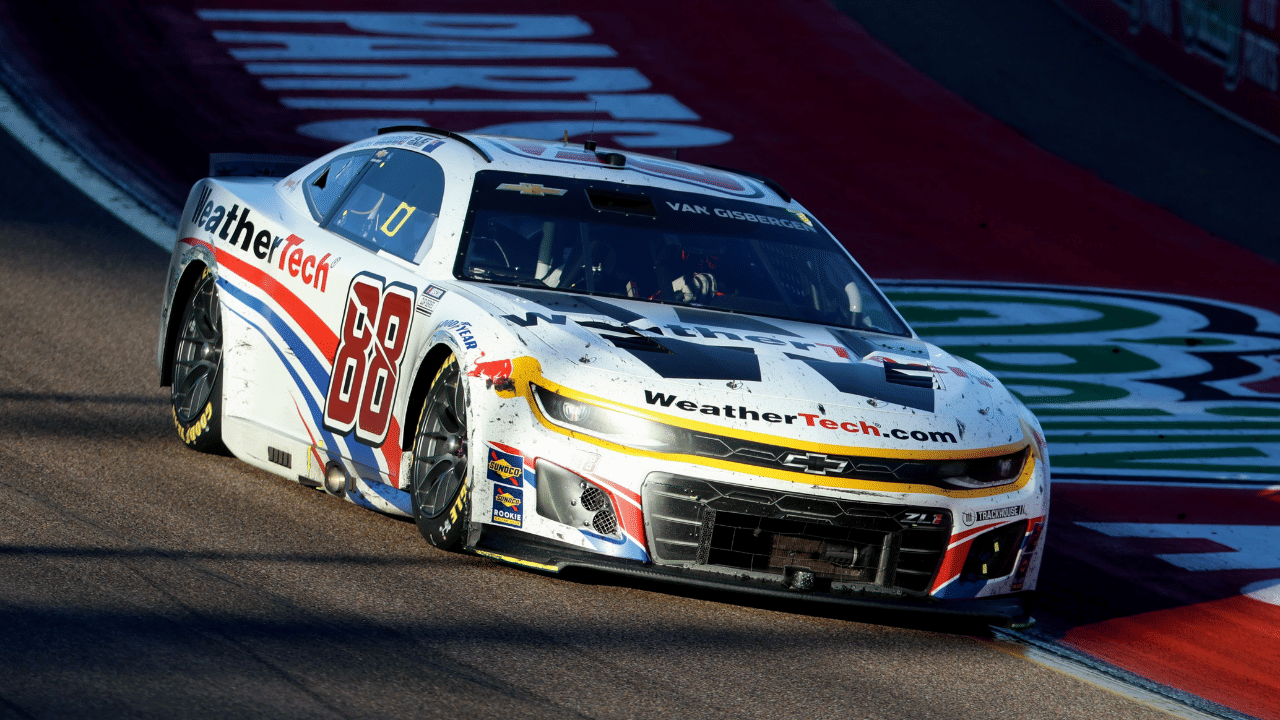
NASCAR’s Next Gen car debuted in 2022, carrying the label of the safest Cup Series machine ever produced, and in many respects, it lived up to that billing, if not right out of the box. Parity also arrived noticeably, though not without trade-offs. While the field tightened and equipment gaps narrowed, on-track racing, particularly on short tracks, suffered at times as passing became more difficult.
Advertisement
Even with those growing pains, NASCAR Executive Vice President and Chief Racing Development Officer John Probst has remained persistent in his assessment. In a recent interview with Epartrade, Probst described the Next Gen (Gen-7) project as nothing short of an overwhelming success.
Probst framed his evaluation by revisiting the long-term vision behind the Gen-7 platform. NASCAR, he explained, needed more than an incremental update. The sport required a foundation capable of serving multiple masters at once. That meant a car attractive enough to lure new OEMs, engaging enough to hold existing fans, and accessible enough to bring new teams into the arena.
At the same time, the car had to support a sustainable business model for current teams while lowering barriers for organizations. He emphasized that those principles were not theoretical goals but measurable benchmarks. “We needed to make sure that we were getting the business model right for the race teams that were with us now and the race teams that we wanted to attract.”
“And I think that when you step back and say, okay, four years into this, how are we doing? I would say that, you know, we’d say it’s an overwhelming success.”
To support that claim, Probst pointed to a few examples. Trackhouse Racing stands as a clear case study. As a relatively new organization, Trackhouse has not only found its footing but also emerged as a consistent front-running presence.
The rise of its New Zealand standout Shane van Gisbergen, combined with competitive performances from Ross Chastain, Daniel Suárez, and emerging talent Connor Zilisch, showed how quickly new teams and drivers can contend in the Next Gen era.
Probst also highlighted 23XI Racing as further proof that the model works. The team has routinely battled at the front, with Bubba Wallace contending in the 2025 postseason, the second time doing so in his career.
Probst was also quick to note that no race car, from Gen-1 through Gen-7, ever reaches a finished state. “The cars will always be a work in progress, and that’s the work in the back here, of Dr. John Padillac and Brandon Thomas, and Eric Jacuzzi, and his group, constantly working to make the car better.”
From Probst’s perspective, the Next Gen era has also reshaped fan expectations. Audiences now demand more from what they see on race day, and NASCAR responds by combining fan feedback with internal metrics to identify areas for continued improvement. That feedback loop, he explained, remains central to ongoing development.
Even with continued changes, Probst reiterated, the sanctioning body is “very happy with where it is right now” and continues to view the Next Gen car, despite its challenges, as an overwhelming success.
How much technical latitude will NASCAR grant teams moving forward?
Probst explained that the sanctioning body continues to walk a fine line between preserving the efficiencies created by standardized components and protecting the quality of the on-track product, all while keeping long-term costs in check.
According to him, the challenge lies in weighing competitive parity against race quality. Common parts deliver cost control and stability, but NASCAR remains mindful that competition must still breathe. The objective, he noted, is to maintain the economic advantages of shared components without dulling the spectacle or limiting a team’s ability to respond to track-specific demands.
That philosophy will come under the microscope during an upcoming test scheduled for next year in January at North Wilkesboro Speedway. The venue, a short track, will help them gather data in a controlled environment.
“When we say open up, there’s different flavors of ‘opening up’ for us that may stop short of customizing parts, but may open up the team’s ability to adjust the car beyond what they can today,” added Probst. These adjustments, he suggested, may offer crews additional tuning options without undermining the standardized framework that underpins the Next Gen era.