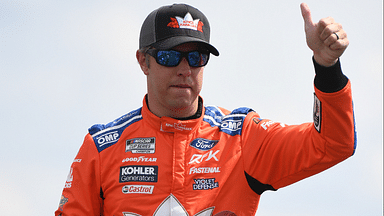
The Burton family has carried NASCAR’s name across decades, and their presence stretches back to the early 90s and continues through the current grid. Today, Jeb Burton and Harrison Burton are driving on the NASCAR tracks to establish themselves in the Cup and Xfinity Series. But long before them, the Burton name had already settled into the sport’s fabric, most visibly through Jeff Burton, whose profile rose higher than any other in the family. Yet his older brother, Ward Burton, stood alongside him, making a career that definitely had moments that refused to fade.
Advertisement
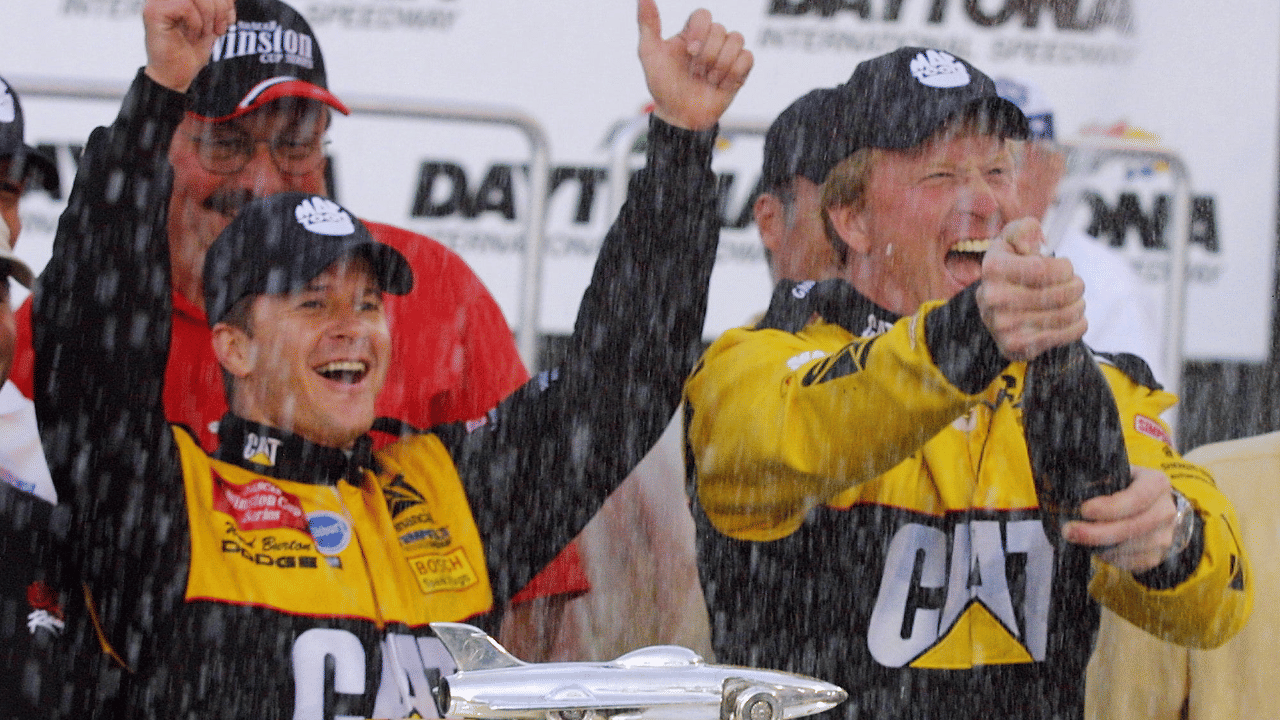
Ward Burton collected five wins in the NASCAR Winston Cup Series, and among them sit the 2001 Southern 500 and the 2002 Daytona 500, results that secured his place in NASCAR’s record book. Even now, introductions often begin with his Daytona triumph.
At the time, however, Burton viewed the achievement through a different lens. He explained that while fans elevated the moment, the race itself felt no different from others he had run. That perspective recently resurfaced when Crossroads With The Burtons, a YouTube channel centered on the family, dug up an interview from nearly two decades ago.
In it, Ward Burton reflected on the trail of his Daytona win. “I knew it was a big day. I actually had to take an extra lap to get my composure together and get in there and see my team and my family. Jeb was obviously with me, and wherever I go, whatever I do now, I’m introduced in two ways. Daytona 500 champ and conservationist, and there could be a hell of a lot more things to have a title on.” He continued by describing how the scale of the moment took time to register.
“I really didn’t have a sense of the history and being a part of one of those 30 guys that won that race. But y’all and the fans make it even a more of a bigger deal than it was to me personally. So I think people that followed the sport of NASCAR make it a really big deal, and that probably makes it more special for me.”
For Burton, the race represented success for himself, his team at Bill Davis Racing, and his sponsors. The larger meaning of the same followed later, mainly because of fans and media who continued to tie his name to that Sunday in February.
While Burton treated it as another race, many labeled the 2002 Daytona 500 as one of the wildest in the event’s first 58 years. NASCAR had introduced a new aerodynamics package that encouraged aggressive overtaking and blocking, all happening merely one year after Dale Earnhardt lost his life at the famed venue.
For much of the afternoon, Sterling Marlin appeared in control. Burton’s path to the front came through circumstances after Marlin’s Dodge sustained damage after contact with Jeff Gordon’s Chevrolet during an aborted restart. The incident sent defending Daytona 500 winner Michael Waltrip sliding across the grass and nearly into the pace car on pit road with six laps remaining.
The damage to Marlin’s car forced a decision during the red flag. Chip Ganassi Racing team manager Tony Glover instructed Marlin to exit the car so that the team could inspect the damage.
But as opposed to the new rules, that move violated a rule forbidding team members from working on a car under red-flag conditions. When officials in the pace car reported the infraction, NASCAR penalized Marlin by sending him from the front to the rear for the restart.
Gordon also fell to the back, pitting while pit road stood closed following his incident. Those penalties completely reshuffled the running order. And eventually, when the green flag waved again, Burton sat at the front. Three laps later, he crossed the finish line and bagged one of NASCAR’s crown jewels.