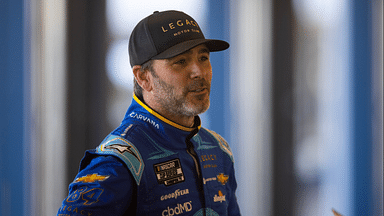
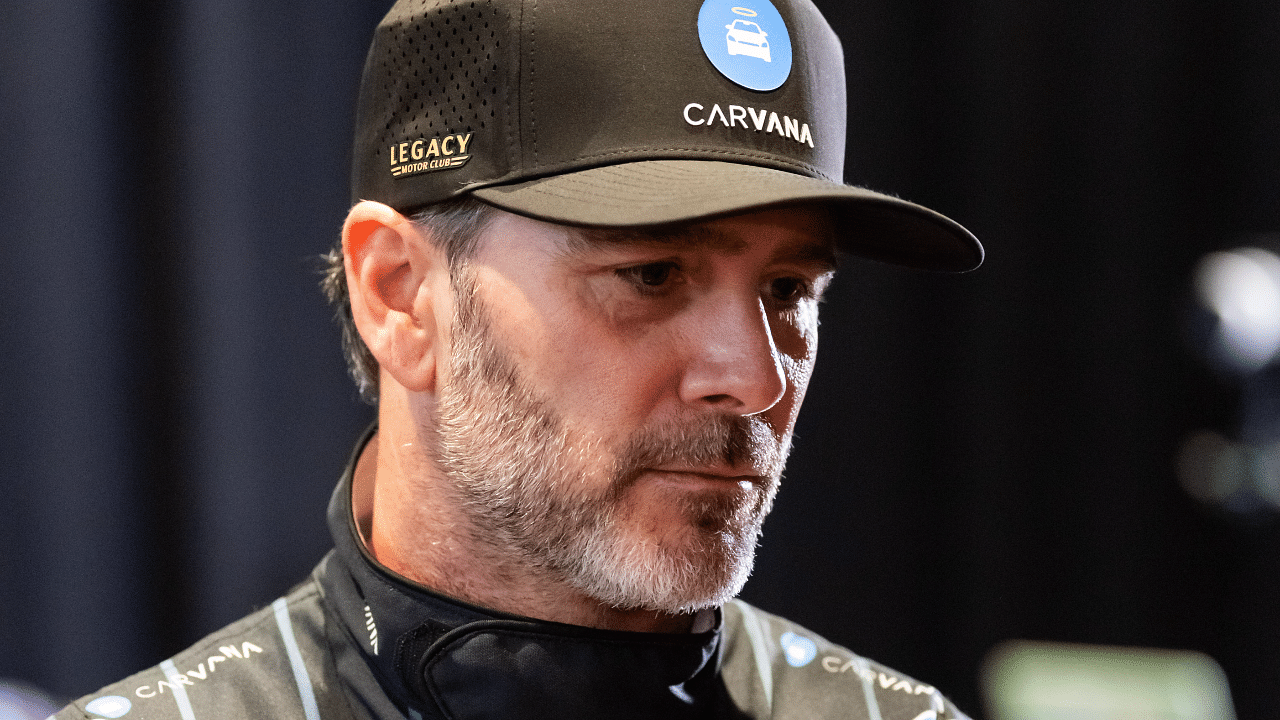
There have been plenty of instances in the past when drivers from NASCAR and the IndyCar Series crossed into each other’s boundaries. After winning seven Cup Series championships, Jimmie Johnson had the desire to do the same, and he ventured into open-wheel racing in 2021. But adjusting to Chip Ganassi’s No. 48 Dallara DW12 wasn’t as easy as he had expected.
Advertisement
When a driver gets close to pace in a stock car, and it begins moving around a bit, it is a signal that he needs to back off the throttle a bit and get things back under his control.
But it’s quite the opposite in an open-wheel car. Johnson said, “In an IndyCar, you’re just getting into the bottom side of the performance window. And when it moves around, you’ve got to commit more. And there’s more if you’re going faster. And so to almost bust your a** and like, ‘Oh, okay, I just got to go faster, and it’s going to fix that. It is so much easier said than done.”
He added in admiration that committing his hands and feet to do that was just something incredibly hard and time-intensive. He spent two seasons in the IndyCar Series driving for CGR. Admittedly, he had a lot of fun in this period and secured the best result of fifth place at the Iowa Speedway in 2022. But the troubles he faced in adjusting to the new platform weren’t simple.
The issues Johnson faced in the IndyCar Series
Johnson has always been a professional who focused a lot on his physical fitness levels. He kept himself in peak form throughout his Cup Series career and even participated in highly demanding marathons outside the race track. But everything that he was came into question when he got to IndyCar.
In his first offseason, his team had put him through a lot of heart-rate-intensive workouts. He hadn’t known the need for all that work until he got to his first test session. He said, “I think my first test at Barber is when I realized the physical requirements and the intensity, the high heart rate intensity that went with it. Just such a physical challenge in those cars.”
“Even hitting the brake pedal! Like, we don’t have any brake pedal assist in IndyCar. So yeah, that is 1400 to 1600 PSI. I mean, you’re generating that through your leg.” This experience, despite all the difficulty it presented, was a crucial part of his legacy.