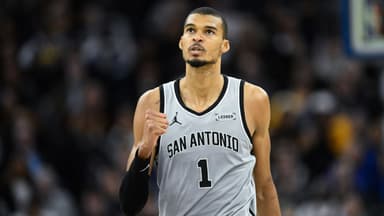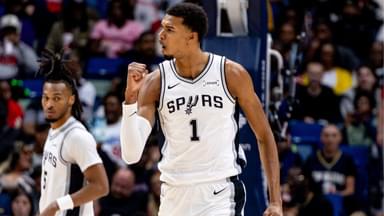
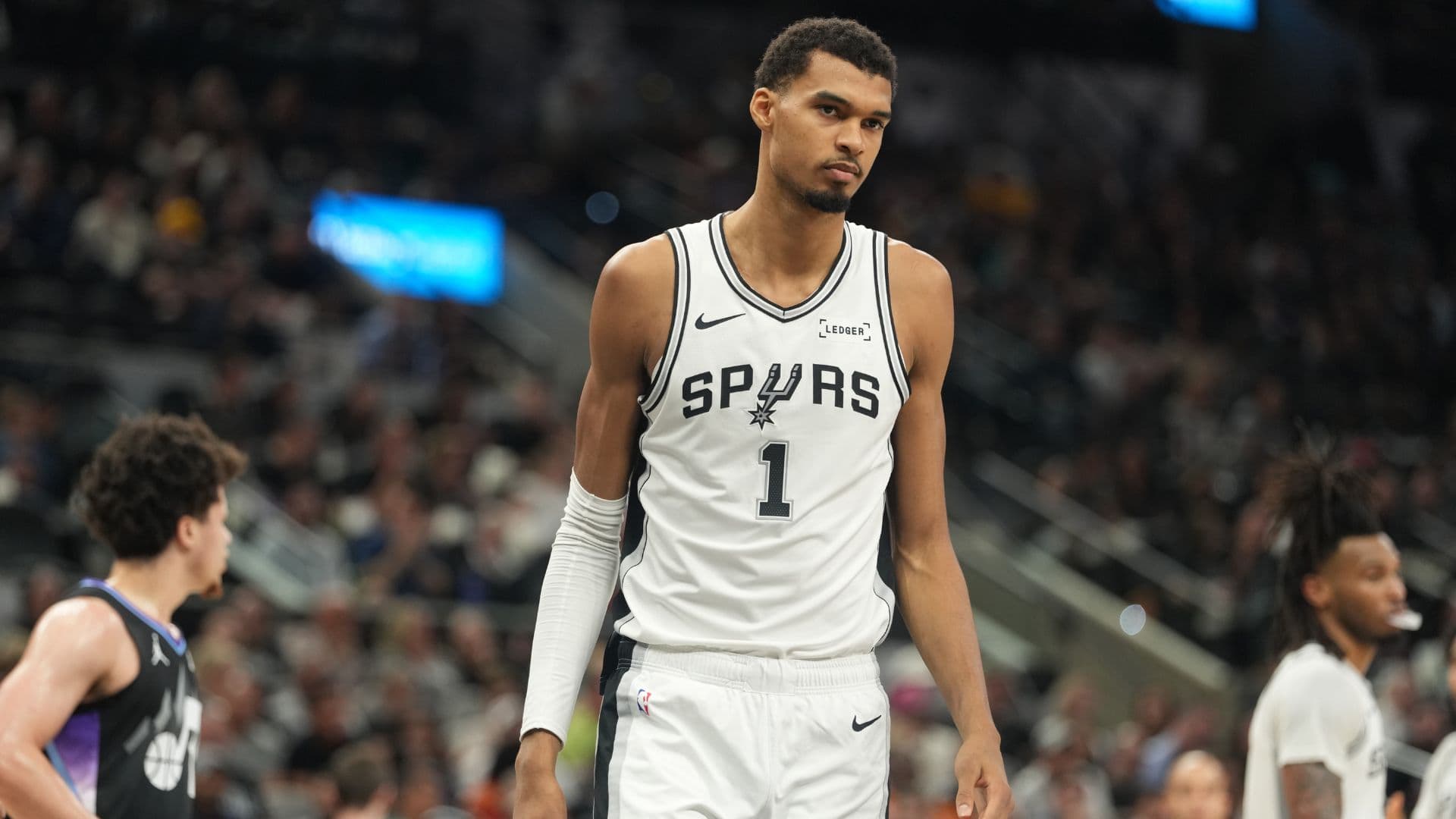
The San Antonio Spurs have been one of the best teams in the first half of this young NBA season, but the Western Conference powerhouse showed its human side during Saturday’s matchup against the Jazz. Utah simply had more juice on a night when San Antonio did not, picking up just its 12th win of the year. While games like this happen even to top teams, one noticeable detail was that Spurs superstar Victor Wembanyama did not address the media after the loss.
Advertisement
It is hardly the worst thing in the world, but the face of the franchise skipping his media availability does not reflect well, especially when he often preaches “beautiful basketball” after victories.
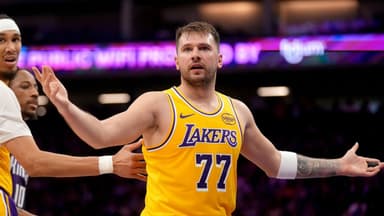
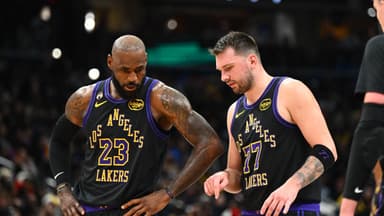
Wemby’s absence from the media became a topic of discussion on a recent episode of Brian Windhorst & The Hoop Collective podcast. Analyst Tim Bontemps did not shy away from calling out the 21-year-old Frenchman for skipping his media duties, with a co-host even drawing a comparison to a young Luka Doncic.
“If you’re going to brag after wins, don’t disappear when you lose in Utah,” snarked Bontemps.
Fellow analyst Tim MacMahon later explained why it is vital for Wembanyama to always show his face in the media room, regardless of the box score at the end of the game.
“Being the face of the franchise is a full-time job. I would even say it’s more important for the face of the franchise to be accountable in that spokesman role after a loss than it is after wins. And this is not unique. A lot of young guys do this,” stated the insider.
On the one hand, it feels like a reach to say that this is a pattern with Wembanyama. It’s a game San Antonio should have won, which is probably all he would have said to the media anyway. On the other hand, if a LeBron James or Steph Curry or Kevin Durant did the same move they would be crucified by certain sections of the NBA media. MacMahon even brought up a deal that the Mavericks’ old PR person had to enforce when Doncic was still on the squad.
“Scott Tomlin, the former Mavs PR guy, came to an agreement with Luka when this was something Luka would do. He’d get mad and blow the media off after losses.”
“The agreement was, ‘Hey, there can be some times when you don’t talk postgame but it’s got to be after a win when you weren’t the main character of the game. After losses, you have to be there every single time because you the guy who everybody wants to hear from.”
And to further drive home the point, MacMahon brought up reigning MVP Shai Gilgeous-Alexander and how he’s done his post-game media duties, even when the Thunder lose. “After every Thunder loss, unless Shai is in street clothes, he’s going to be talking,” he said. “Shai sat there after they lost three in a row to the Spurs and said, ‘They’re better than us,” added Bontemps.
Moments like this are part of the growing pains that come with superstardom, especially for a 21-year-old carrying the weight of a historic franchise on his shoulders. Wembanyama doesn’t need to be perfect, but the league has a long memory when it comes to who shows up when things go sideways.
Losses in places like Utah will happen, even to elite teams, yet how a star handles those nights often matters as much as the stat line. If Wembanyama truly wants to embody everything he preaches about accountability and “beautiful basketball,” that standard has to apply just as strongly when the music stops and the questions get uncomfortable.