January in the NFL is all about the playoffs. But for most of the clubs in this 32-team league, it’s more about preparing for the next season. And more specifically, hiring new staff to fix what went wrong in the previous season. Nowadays, teams must announce all of their interview candidates for their top jobs. And that’s because of the Rooney Rule.
Advertisement
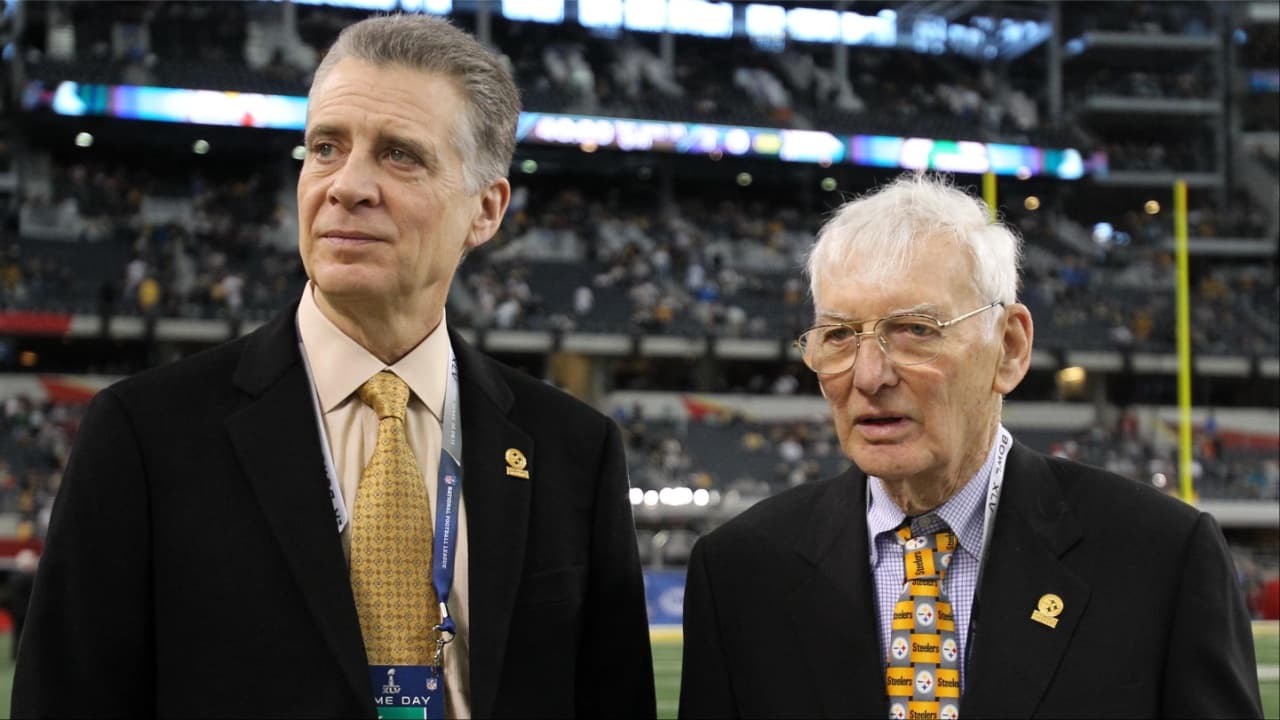
It was implemented back in 2003 and named after the late Dan Rooney, the former owner of the Pittsburgh Steelers, as well as the chairman of the league’s diversity committee. At its inception, the rule basically meant that all teams with head coaching vacancies would need to interview at least one Black candidate. Since then, the rule has been slightly tweaked a few times.
In 2009, it was expanded to include not just head coaches but all senior football operations positions and extended to include all visible minorities, not just African-Americans. In 2022, its purview was widened again to ensure at least one minority on each team’s offensive coaching staff (the pool from which most head coaches are sought, sorry, defensive guys) and to include women as well. Teams are not required to interview a woman for a job, but if they do, it counts towards their Rooney Rule requirement. Here is the official language:
“In recent years, the DEI Committee has proposed additional changes to strengthen the Rooney Rule, including:
- Clubs must conduct an in-person interview with at least two external diverse — minority and/or female — candidates for any GM or head coaching interview.
- Clubs must interview at least two minorities and/or women for all coordinator positions.
- Clubs must interview a least one diverse candidate for the QB coach position or any senior-level executive position at the club.”
It’s a rule that has also been adopted by other sports industries across the world. In England, many people involved with their top sport, soccer (or football to them and the rest of the world), want a similar process for their managers. Companies like U.S. Bank, Pinterest, Facebook, and Patreon have implemented similar practices.
In 2020, the NFL also passed Resolution JC-2A, which rewarded teams for developing minority coaches by giving those teams a compensatory third-round pick if those minorities are hired away by another team in a senior football position.
Some may writhe in disgust at this use of affirmative action. And there have been many cases where teams have interviewed minority candidates without giving them real consideration just to fill their quota. There were overall issues in 2012, and with Eric Bieniemy in 2020 and Brian Flores in 2022.
But overall, it’s hard to argue that it hasn’t had an impact.
There were just 7 minority head coaches for the first 80 years of the NFL
Fritz Pollard was the first non-White head coach in the NFL back in the 1920s. However, from Pollard to the Rooney Rule, an era of about 80 years, only six other minority head coaches were hired, three of whom have been involved in Super Bowl championships.
The impetus for the rule came in 2002, when two black head coaches, Tony Dungy and Dennis Green, were both fired. Dungy’s firing was inexplicable considering his success, and Green was coming off his first losing season in a decade.
In response to this, a pair of U.S. civil rights attorneys proved that Black head coaches were, in fact, winning at higher percentages than their white counterparts while also being less likely to be hired or avoid firing than them. Hall of Famer Kellen Winslow and others then put together an action group to get something like the Rooney Rule implemented.
Considering that Black men have made up the vast majority of the NFL player workforce for half a century now, they were extremely in favor of this rule’s implementation. And the next year, there it was.
It was really the plights of Tony Dungy and Marvin Lewis that served as the catalyst. Dungy had been promoted by Hall of Famer Chuck Noll as a head coaching candidate on a regular basis as early as the 1980s, when he worked under Noll with the Steelers. He would not get a head coaching gig until 1996.
Lewis, meanwhile, served as the defensive coordinator of perhaps the greatest defense of all-time with the Baltimore Ravens from 1996-2001. And yet, even after that historic 2000 Super Bowl-winning season during which Lewis’ defense carried the team, he couldn’t get a head coaching job. He had to wait until 2003, after the Rooney Rule went into effect.
For those claiming it doesn’t work, the proof is in the pudding. Entering the 2025 season, there were seven minority head coaches in the NFL, and about the same number of minority general managers. Not to mention the high-level execs as well.
We would note, however, that the fastest track to a head coaching job in the NFL—an offensive coordinator job in the NFL—is still a job held nearly exclusively by white coaches. Hopefully, the recent updates to the rule will change that.