


What Are Track Limit Warnings in F1?

Formula 1 is often known for being the pinnacle of speed and precision. And in the modern age of the sport, the rule makers take this reputation quite seriously. Hence, the Sporting Regulations — dictated by the FIA — have penalties in place for drivers violating the track limits at the Grands Prix.
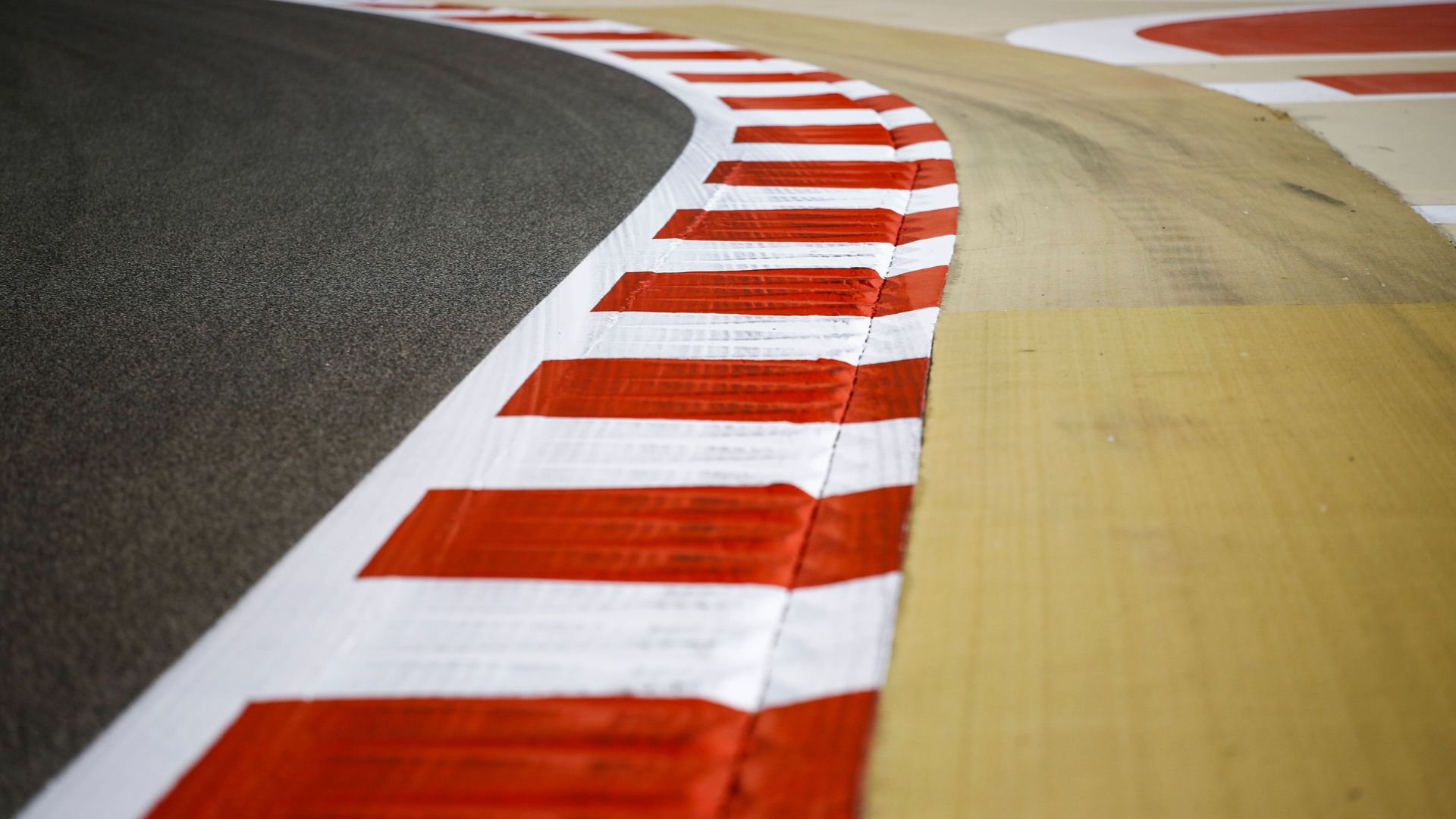
In simple words, drivers are not allowed to go beyond the confines of the track when in qualifying and race sessions. As per the regulations, the painted white lines at the edge of the tracks are designated as the ‘end’ of the track. Therefore, drivers are not allowed to exceed that marker on their timed laps.
Whenever Formula 1 arrives at the Red Bull Ring, there’s one topic guaranteed to generate heated discussion: track limits.
And while the FIA is tackling the thorny issue in a number of ways, this weekend a few simple circuit changes that have proved effective elsewhere are… pic.twitter.com/l0jwCojXjq
— FIA (@fia) June 28, 2024
The Stewards will judge a driver to have exceeded track limits if all four tires are beyond the painted white lines. Now, every driver gets three strikes during a race session. The first two strikes, however, are without consequence.
That said, on the third strike, the driver in question will be shown a black and white flag. This is generally a final warning to the driver — also known as a driving standards warning. If the driver is in contravention of the rules once again, there is a slam dunk penalty.
As seen in the 2024 Abu Dhabi Grand Prix, Lance Stroll has been shown a black and white flag, meaning that he has exceeded the track limits for the third time during the race. One more time and he will be handed a 5-second time penalty.
A fifth time, he will be handed a 10-second time penalty, and so on. From the sixth infringement onward, the cycle of warnings begins again.
Track Limits violations at the Abu Dhabi GP
In the past, these penalties have been dolled out by the Stewards as a matter of practice. In Saturday’s qualifying, the likes of Sergio Perez and Charles Leclerc were on the wrong side of the ‘law’ when they had their lap times deleted for these transgressions.
While Perez’s lap time was restored instantly as he was within the limits by a whisker, Leclerc’s deleted lap time worsened his situation, as he ended up only P14.
When it comes to qualifying, the standard penalty for a track limits violation is the deletion of the lap time. At the 2023 Austrian GP, there were 1,200 (yes, you read that correctly) incidents where the Stewards noticed drivers exceeding the demarcated track limits, particularly at the exit of the final corner.
At the end of the day, 83 lap times were deleted. Eventually, they had to modify the track limit lines and kerbs at that final corner of the Red Bull Ring in Spielberg.
Safe to say, track limits are one of the most commonplace penalties in the sport today. Drivers naturally have a dim view of these penalties as they compromise their progress, but paddock insiders state that it does enforce a strict benchmark of fairness in keeping the cars on the tarmac.
About the author


-

Veerendra Vikram Singh •
What’s the Name of the $300,000 Fighter Jet Lewis Hamilton Flew for IWC?
-

Sabyasachi Biswas •
Red Bull Finally Free From the Chains of 2021 Mistake
-
Subham Jindal •
“They are struggling” – Red Bull acknowledge Mercedes’ poor early-season form but expect a three-horce race for the title
-

Samriddhi Jaiswal •
Max Verstappen once quipped with $130 Million worth Chris Hemsworth at 2019 Singapore Grand Prix
-

Srijon Jana •
Red Bull’s Brand New $42 Merchandise Backfires As Sergio Perez Fans Disapprove The Design
-

Janmeyjay Shukla •
“It will be a dream to go to the second McLaren team”: Lewis Hamilton predicts his 2007 move to McLaren while being compared to Nico Rosberg