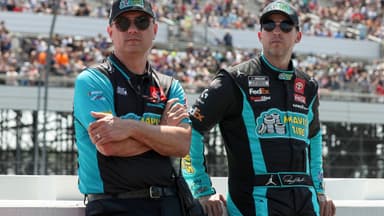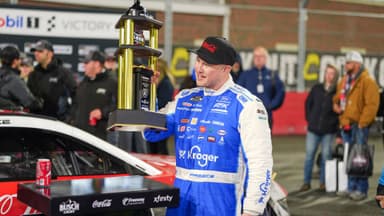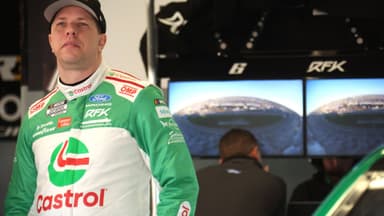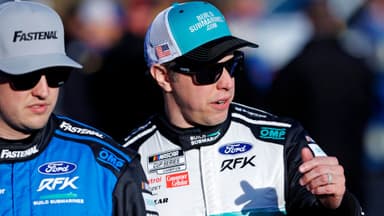
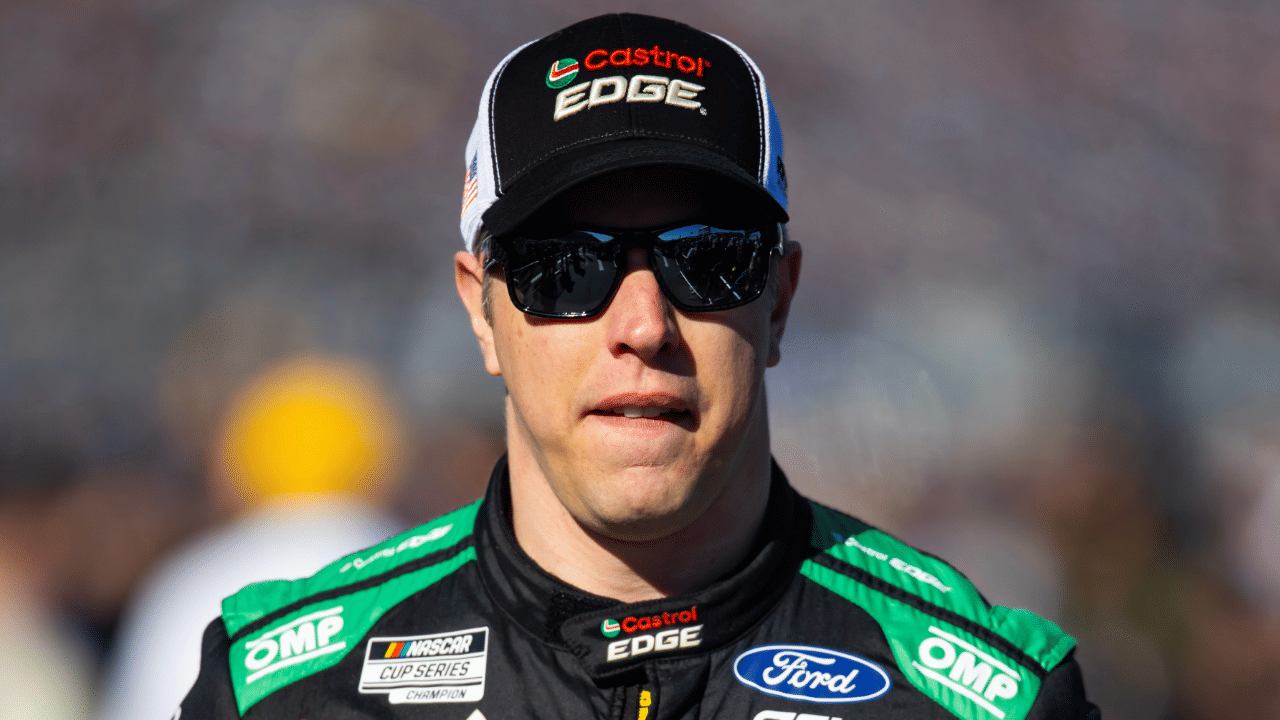
After confirming that Corey LaJoie will step into the No. 6 Ford for the Clash at Bowman Gray Stadium on February 1, 2026, Brad Keselowski used his official X account to provide a further update on his recovery and where things currently stand.
Advertisement
He shared how his rehabilitation is molding the early weeks of his season. Keselowski’s setback traces back to an incident on a ski trip where he slipped on ice while exiting his vehicle. The fall resulted in a broken right femur, causing an injury severe enough to require emergency surgery in Boone, North Carolina. At this stage, Keselowski remains deep into the recovery process.
While medical timelines suggest his leg could be healed by the time the Clash arrives, he acknowledged that healing alone does not equal readiness. The RFK Racing co-owner would not have the opportunity to test his body under race conditions or push through a run to measure how his leg responds to several hours inside a stock car.
That uncertainty prompted the call to hand the wheel to LaJoie, while Keselowski focused on making a Daytona 500 comeback. Addressing his progress and mindset, Keselowski said, “I’m active with rehab. The doctors told me, after the surgery, the fastest you could be back is six weeks, and normally it’s eight to twelve. I had emergency surgery the same day as my injury.”
He continued, “If you do that math backwards, that puts me perfectly aligned for being ready for the Daytona 500. Three hurdles I need to climb. The first one is: I need to get my pain to a place where I don’t need any medication, or at least normal medication, over-the-counter. So I gotta get that. Second is I need to be able to walk at a reasonable level and get in and out of the car.”
“And then third is I need on my X-rays to show some bone growth, regeneration, fusion. Those three things will put me in the spot. So, as far as timeline is, there’s no reason to think that we’re not gonna be able to do all three of those things. “
Keselowski clarified that the injury was a single, big fracture rather than a compound break, meaning the bone did not pierce his skin. The complication, however, came from the extent of nerve damage involved. As a result, his rehabilitation has revolved not only around bone recovery but also around encouraging the damaged nerves to reconnect, a process his medical team continues to address.
Recounting the immediate after-effects of the injury, Keselowski explained that he initially had no sensation in his right leg from the knee up to the hip. His foot, ankle, and calf remained responsive, but his quadriceps went numb.
But now the nerves in that area have begun to reawaken gradually, gradually restoring function. The progress has moved him to a point where he can nearly walk unassisted and can almost lift his leg under his own power.
Keselowski currently dedicates six to eight hours each day to rehabilitation. According to reports, he plans to undergo a medical evaluation on February 5 at Charlotte Motor Speedway, where he hopes to receive clearance to resume competition.
Even for a driver hardened by years of high-speed impacts and broken bones, the pain proved startling. Keselowski admitted that none of his previous injuries matched the intensity of a fractured femur, describing it as a brutally painful experience.
Keselowski has not missed a points-paying NASCAR Cup Series race since October 2009, a streak that stands at 581 consecutive starts. The Clash, being an exhibition event, that run can remain intact unless he were to miss the Daytona 500. It now remains to be seen if he can make the recovery in time or not.