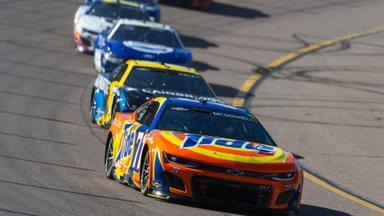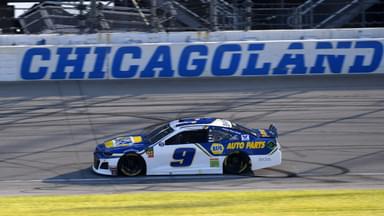
NASCAR formally expressed its electric vehicle ambitions in July 2024, rolling out an EV prototype during the Chicago Street Race. Part of the sport’s broader sustainability push, the project remains in the experimental lane. So far, it has only been positioned as a prototype and demonstration effort rather than as steps toward a competitive championship.
Advertisement
Even so, its unveiling kindled conversation across the garage and the grandstands. Many spectators considered it a long-term, environmentally conscious direction the sport could take.
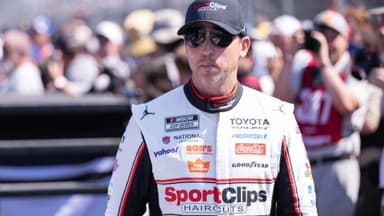
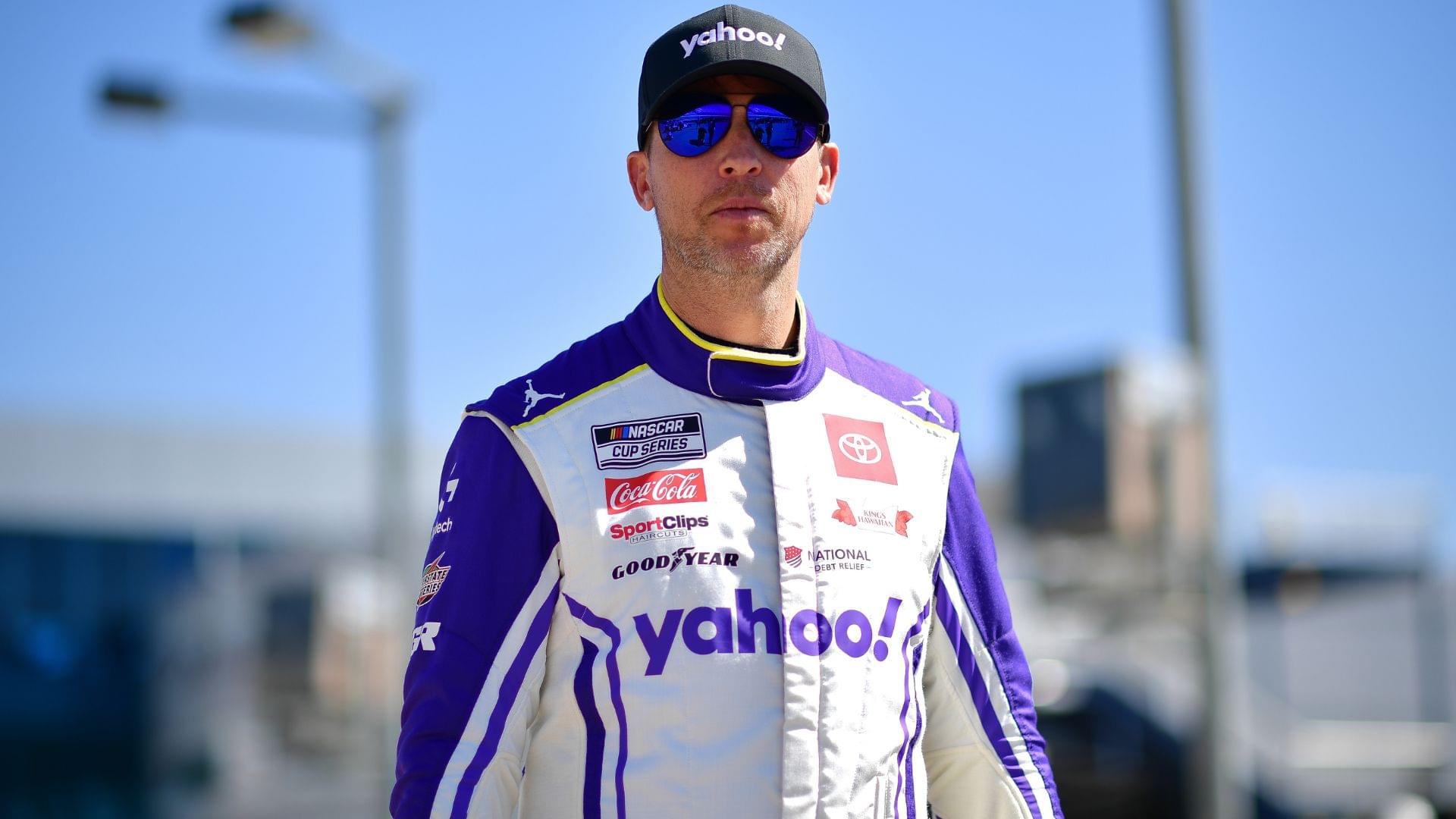
However, Denny Hamlin believes the path forward appears anything but straightforward. Stock car racing, after all, is protective of its culture built on noise, speed, and mechanical spectacle.
With many in the community anticipating the inclusion of electric cars in NASCAR at some point, Hamlin addressed the topic during the Digital Social Hour hosted by Sean Kelly, offering a direct assessment of how the core audience might respond.
“I think the NASCAR fans will be very apprehensive to embrace that. I think that NASCAR fans are the ones that have been around for a very long time, and even the new ones. And I think even consumers themselves in street cars like to hear sound 100%,” said Hamlin, who also feels the resistance will not be limited to racing circles.
Hamlin pointed to the broader American driving culture, noting that while electric vehicles once carried substantial momentum, that enthusiasm has cooled. According to him, some consumers have probably started questioning the cost savings they expected. And, regardless of economics, many drivers still associate the thrills and fun of driving with audible feedback.
Hamlin also acknowledged NASCAR’s ongoing efforts to tighten race windows, often aiming for events to land within a three- to three-and-a-half-hour broadcast span. While some may see electric platforms as a tool to support that mission, Hamlin raised a practical concern.
“Can you make a [electric] car make [an] ample amount of energy, you know, 1,000 horsepower for 3 and 1/2 hours? I don’t think so,” said Hamlin, who then went on to suggest how electric cars can be included in the NASCAR ecosystem.
Hamlin felt, they could be presented as an exhibition or special-format series. However, he cautioned that convincing fans to embrace silent speed will be an uphill battle.
The all-electric prototype NASCAR displayed in Chicago materialized from a joint effort between the promotion’s engineers and its OEM partners, Chevrolet, Ford, and Toyota, with technology support from ABB. The result is a machine designed to turn heads on paper.
Equipped with a tri-motor, all-wheel-drive layout featuring one motor up front and two at the rear, the car can generate up to 1,000 kW of peak output, translating to more than 1,340 horsepower. From an acceleration standpoint, that number eclipses what current Cup Series cars deliver, placing the prototype in uncharted territory.
But despite those figures, NASCAR has drawn a clear line in the sand. Officials have emphasized that there are no immediate plans to introduce a standalone all-electric series, nor to replace the combustion-engine foundation of the Cup Series anytime soon.
The thunderous V8 soundtrack remains woven into the sport’s identity. And early fan reaction to the EV concept has reflected that reality. For a sport defined as much by its sound as its speed, asking spectators to accept cars that fly without the roar may prove to be the steepest challenge of all for NASCAR.