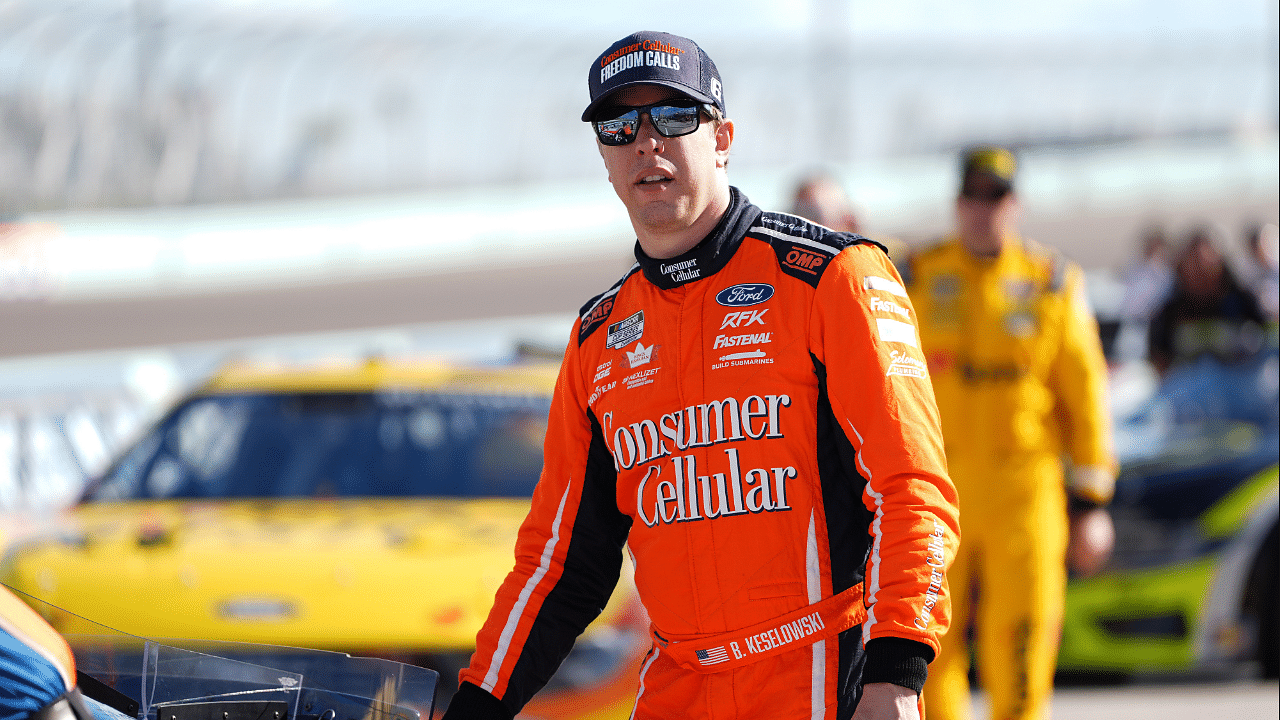
This year, Brad Keselowski’s offseason brought an unforeseen twist when a skiing accident left the veteran with a broken leg. The initial surgery has already been completed, and early medical feedback suggests Keselowski should regain full fitness in time for the Daytona 500 in February next year.
Advertisement
Still, the incident has reopened a familiar debate inside the NASCAR garage about how much risk elite drivers should assume away from the racetrack, especially when livelihoods extend far beyond the individual behind the wheel.
That discussion gained fresh momentum when veteran NASCAR voice Kenny Wallace weighed in, questioning whether high-profile drivers fully acknowledge the ripple effects of offseason injuries. Wallace’s concern stretches beyond the driver’s personal recovery.
He emphasized that entire organizations, including crew members and their families, rely on the availability and performance of a Cup Series driver. When a star goes down, the financial and competitive consequences can travel fast and hit hard.
“I think you got to live your life. But I will say that when you’re a Brad Keselowski, and you are these great drivers like a Chase Elliot and Alex Bowman and a full cup team, a lot of these cup teams got 50 employees, 50 families.”
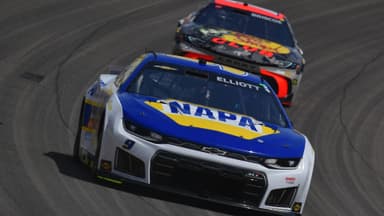
Wallace pointed to a recent example that still resonates inside the sport. Two years ago, Chase Elliott suffered a broken leg that forced him to miss six races. On the surface, Elliott’s absence opened the door for Josh Berry to showcase his ability at the Cup level in the No. 9 car. From a broader lens, however, the situation carried an unspoken cost.
Elliott’s established chemistry with his crew chief and team could have positioned the car for stronger finishes than Berry could deliver under challenging circumstances. Better results could have translated into increased earnings for both Elliott and the team, showing how injuries shift the financial balance across an organization.
In Wallace’s view, carrying the mantle of a Cup driver, like Keselowski, demands more than speed and skill. It brings responsibility. “We just found out that Denny Hamlin made 14 million a year and there’s crew members depending on you,” he said.
According to him, an injury does not exist in isolation. It affects crew chiefs, engineers, mechanics, support staff, and their families, whose income hinges on competitive results. While Wallace stopped short of calling for strict boundaries on personal activity, he suggested that heightened awareness comes with the territory when bets reach that level.
And that scrutiny intensifies in Keselowski’s case even more. Unlike most drivers, Keselowski carries dual responsibility as both competitor and co-owner at RFK Racing. Wallace raised the ethical dimension of that reality, asking whether someone in Keselowski’s position should exercise additional caution given the leadership role he holds within the organization.
The conversation does not deny drivers the right to live full lives. Wallace acknowledged that balance matters. Yet his broader point was that when margins decide careers and payrolls, the consequences of a single misstep can stretch far beyond an injured leg.