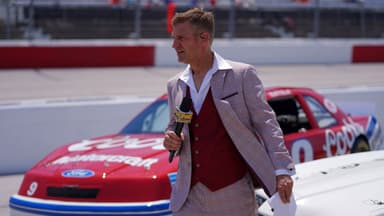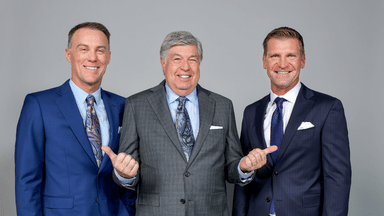
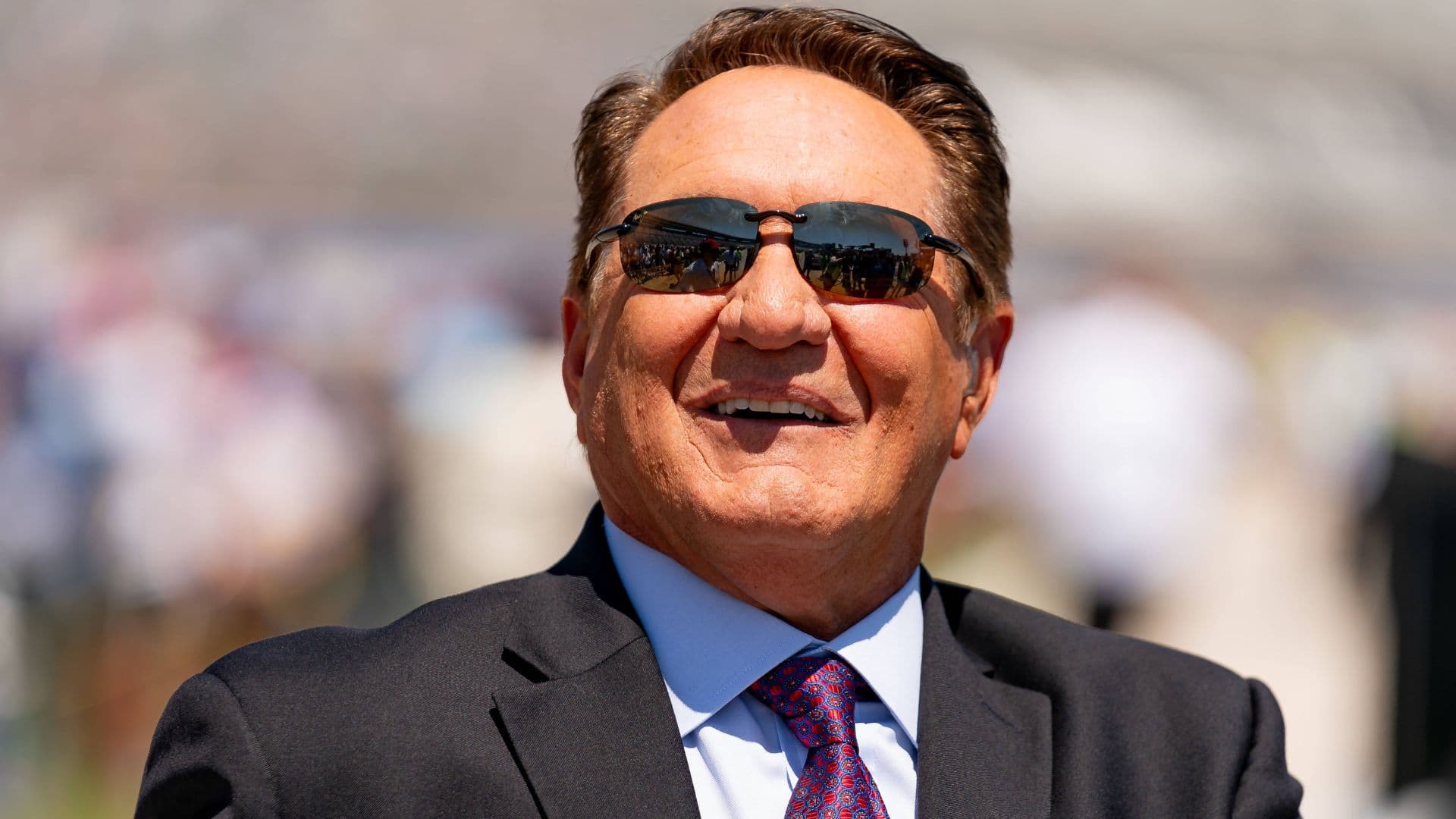
For more than half a century, Mike Joy has occupied the broadcast booth in NACAR. And while he is primarily known for his work in the sport, his resume stretches far beyond motorsports, with play-by-play calls across more than a dozen disciplines, including lacrosse and soccer.
Advertisement
Yet racing has always been his gravitational pull. Motorsports, and especially sports car racing, never loosened their grip on him, shaping both his professional identity and his personal life. At 76, Joy remains immersed in the machinery and culture that first captured his imagination decades ago.
That devotion extends well beyond the microphone and into his garage. Joy maintains an extensive car collection that reflects both his racing sensibilities and his mechanical curiosity.
When asked how many vehicles he owns in an interview with Auto Week, he avoided locking himself into a precise figure. Instead, he framed it by square footage and opportunity. The count rises and falls with available garage space. Joy’s ideal number hovers around a dozen, but the reality tends to push past that boundary. With project cars and builds in progress, the actual total typically lands somewhere between 15 and 18.
Within that rotating lineup, a handful of cars hold special status to the play-by-play commentator. His favorites include a 1960 Chevrolet El Camino, a 1972 Datsun 240Z, a current Ford GT, Camaro Z28 race cars, and a 1972 MG Midget.
Among them, the El Camino stands alone. Among them, however, El Camino is the one he probably loves the most. So much so that if his garage were on fire and he had time to grab only one set of keys, that would be the car he would save. The reason is that the work poured into it makes it effectively irreplaceable.
The Ford GT and other high-performance machines remain in his care for a different reason. They feed his appetite for speed.
But that appetite took shape early, cultivated through the pages of Car and Driver, Road & Track, and Sports Car Graphic. As a college student, Joy spent time on the hillside at Lime Rock Park, watching sports cars and Trans-Am machines cut through the circuit. Those afternoons, rather than just entertaining him, set the trajectory for his future.
Joy’s entry into broadcasting came at a time when he worked at a Firestone dealer, mounting tires for three dollars an hour. Opportunity knocked when he was asked to handle public address announcing at a local racetrack. The pitch was simple. If he could call stock car races, he would earn twenty-five dollars per night. The venue was Riverside Park in Massachusetts.
For marquee events, the track brought in Ken Squier, giving Joy the chance to share a microphone with one of the pioneers of modern race broadcasting. Listening, learning, and absorbing became his classroom.
That experience marked the starting line of a career that would eventually place him at the center of American motorsports coverage. As Joy’s broadcasting career gained momentum, his bond with racing, particularly sports cars, only deepened, leading him to collect such a huge number of cars.