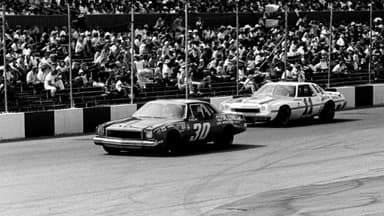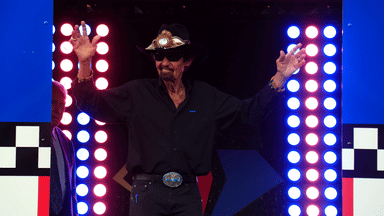
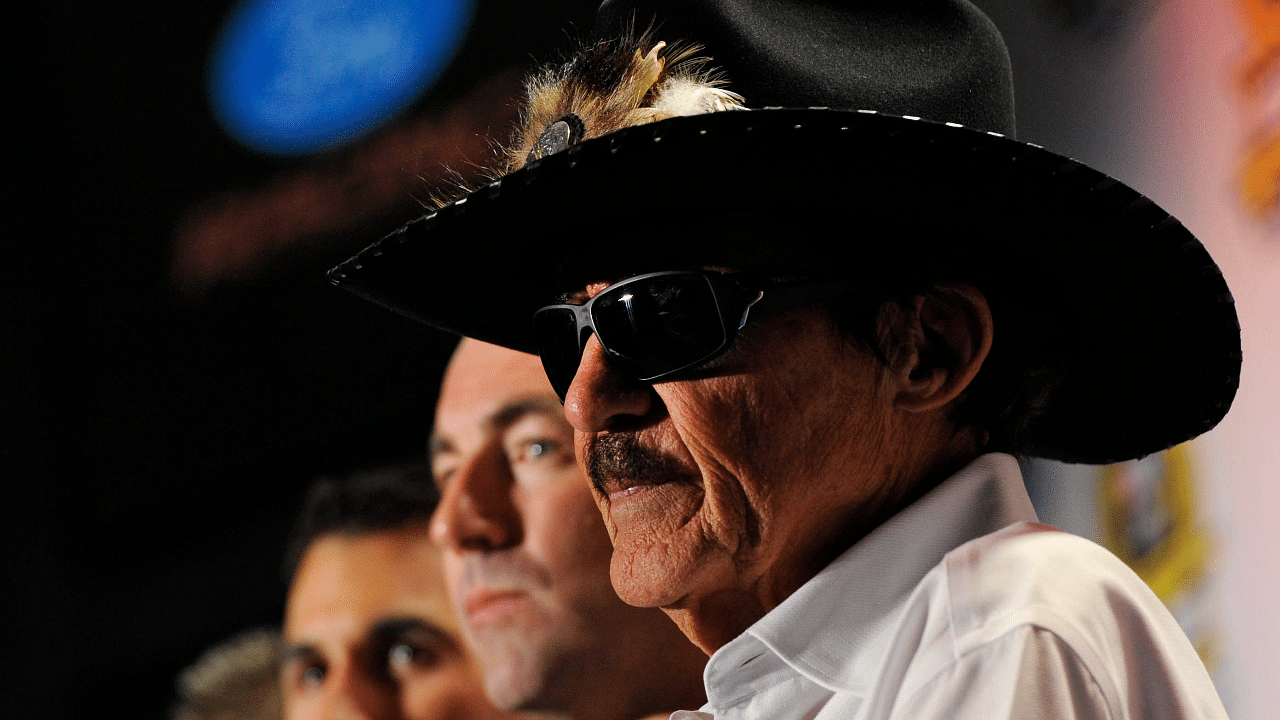
Richard Petty epitomizes, or rather, has set the benchmark for elite achievement in NASCAR, winning seven Cup Championships and 200 races at the sport’s top tier. Beginning his Cup Series career in 1958, Petty made his mark in an era where toughness and grit were the qualities that not just ensured success, but defined a champion.
Advertisement
The cowboy hat that Petty wears even now represents the rugged, self-reliant code with which he lived. It was shaped far from modern polish and forged through physical endurance rather than comfort.
That outlook on life became the hallmark of Petty’s racing career, where results came from rigorous routine and resolve. And, in contrast to the present era, where wins often end in celebrations, stage appearances, and public displays of camaraderie, Petty’s time followed a different script.
During a recent appearance on Petty Family Racing, while fielding questions from fans, he explained how understated moments of wins were back in his day. Victory did not come with ceremony, nor did it invite congratulations from competitors. Instead, they were just another outing, as he looked ahead at the next one.
“I don’t think anybody ever congratulated us on winning a race. But no, it was just a closer-knit bunch of people at that time,” said Petty.
“The people didn’t have their buses or their airplanes or any of that kind of stuff. And when you go to the next race, you get up in the back of the truck, and it’d be three or four drivers sitting there, and they’d talk to you. Reporter come by [to] interview you [and] stuff. But it was just another week,” he narrated.
For Petty, a trophy carried no weight once the hauler rolled toward the next track. He dismissed any urge to dwell on past success or failure. What mattered was the task ahead.
Petty’s mindset revolved around assessing the field for the upcoming race, identifying the drivers he needed to beat, and narrowing his focus to execution. That refusal to linger on prior results fueled his consistency.
The rhythm of the sport itself also differed dramatically back during Petty’s career, which spanned from the late 1950s to the early 1990s. Schedules lacked the structure seen today, for instance.
In some seasons, the calendar stretched to 48 races, and in 1964, it reached 62 starts. Over time, the number settled, dropping to 31 races in 1972 and later to 29 by the time Petty stepped away. Regardless of the total races in a year, Petty’s approach never changed. Each weekend presented him with one objective: To show up and win.
That philosophy extended beyond mindset into preparation. Family collaboration, mechanical ingenuity, and extreme physical commitment formed the backbone of his dominance.
Petty combined those elements with a natural presence that resonated in garages and grandstands alike. At 6-foot-2, he endured cockpit temperatures that climbed to 140 degrees Fahrenheit, grinding through 500-mile races that demanded stamina as much as skill.
Over 35 seasons, the veteran driver made 1,184 starts, including 513 consecutive starts from 1971 to 1989. Even after surviving multiple high-speed crashes that threatened far more than his season, he returned to the driver’s seat with the same determination. That grit and unshakeable routine allowed him to stack victories at a rate the sport has yet to match.