


NASCAR’s Iconic Vulcan Trophy: All You Need to Know About the Talladega Trophy

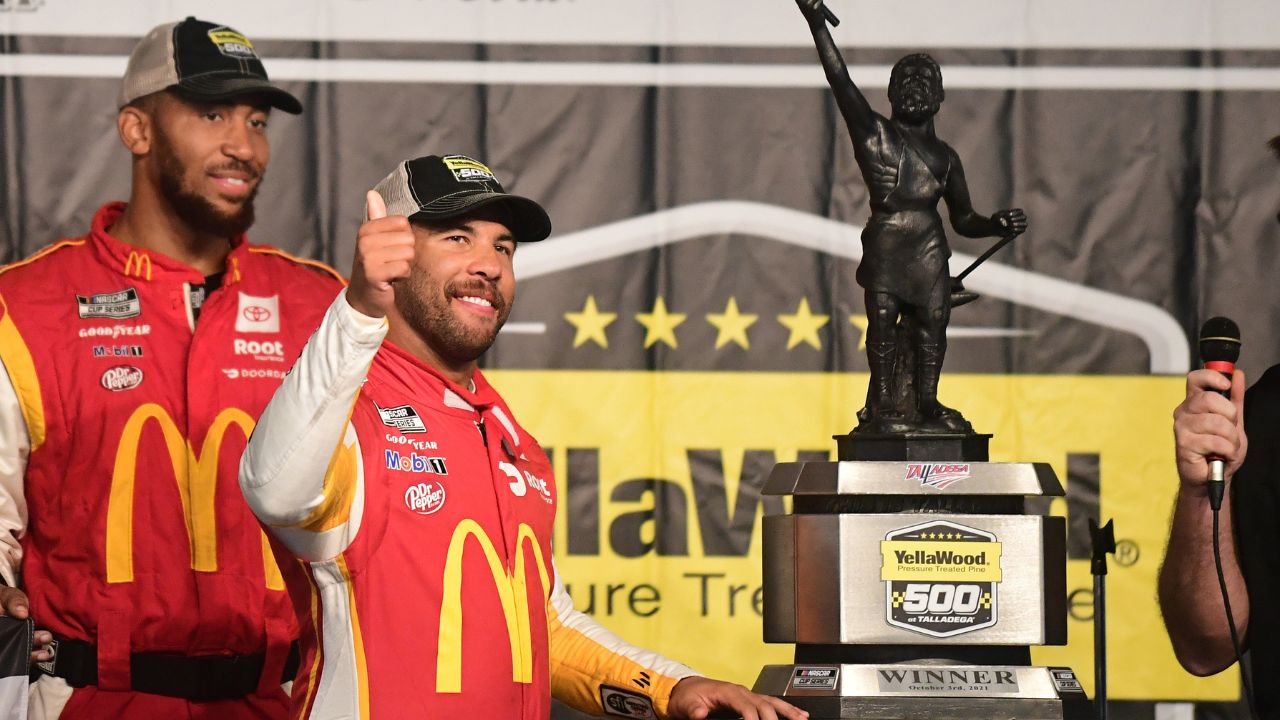
The ancient myth is that Vulcan, the Roman god of fire and the forge, played with metal and created weapons and shields for all the Gods. In 2024, he also serves the purpose of representing speed and grit in motorsports. Every year, starting in 2016, the winner of the NASCAR Cup Series races at the Talladega Superspeedway has been awarded the prestigious Vulcan Trophy.
This handmade trophy made with burning iron, towers at a height of 3 feet and weighs over 100 pounds. It is also a miniature of the world’s largest cast iron statue, Vulcan, which is just an hour’s drive away from the track, in Birmingham.
Birmingham was once the country’s largest producer of iron, and the trophy symbolizes the track’s connection with the town. It also serves as a reflection of the toughness that it takes for drivers to strap themselves into their cars and drive on NASCAR’s fastest track. In the words of the track’s chairman Grant Lynch, “This trophy represents so much of what our venue is about: big, bold and tough.”
View this post on Instagram
The first driver to win the Vulcan Trophy was Joey Logano in 2016. He said after triumphing in the 2016 Yellawood 500, “Trophies are one of the best parts of what we do, and some of them are just cooler and more special because of what they are. Talladega Superspeedway nailed it when they had the Vulcan Trophy made.”
The latest driver to receive the trophy was Team Penske’s Ryan Blaney after winning the 2023 Yellawood 500.
The Talladega Superspeedway has a deeper history with Vulcan. The first time this Roman God appeared in NASCAR’s vicinity was when the ARCA series raced the 1969 Vulcan 500 at the track. Echoing myth further, the Hammer & Anvil Trophy which pays an ode to Vulcan’s forge tools, is presented to the winners of the Xfinity Series and ARCA Series races at the track.
How the Vulcan Trophy is crafted for presentation
The Vulcan Trophy was brought into NASCAR through the work of Marshall Christie, the Director of Metal Arts at Sloss Furnaces in Birmingham, and Lead Sculptor/Artist in Residence Ajene Williams.
The first move that goes into sculpting this god of fire is the creation of an original Vulcan wax pattern. Once that’s done, melted iron is poured into a sand mold that is made based on the wax pattern. Once the iron has cooled off, the pieces are removed and moved to the finishing area. The statue is warmed to remove leftover moisture and polished with a wax finish.
Once the piece is completely cooled down, it receives a final brush-up before going to the hands of the Talladega winners at the podium.
About the author

-

Gowtham Ramalingam •
Denny Hamlin Lauds NASCAR’s Darlington Product as Just the One the Drivers’ Wanted
-

Neha Dwivedi •
Scott Speed Breaks Down What Sets NASCAR Drivers Apart From F1 Stars with Dale Earnhardt Jr.
-

Gowtham Ramalingam •
Chris Buescher Not Motivated by NASCAR’s Incentive Program for Increased Activity on Social Media
-

Gowtham Ramalingam •
“I Wish I Would’ve Done That”: Dale Earnhardt Jr. Gets Candid About the One Regret That Still Haunts His Racing Career
-
Gowtham Ramalingam •
Dale Earnhardt Jr. Backs Connor Zilisch as NASCAR’s Next Mainstream Breakout Star
-
Neha Dwivedi •
“It’s Like a Fever Dream”: Alexa Reddick Fights Back Tears Recalling Son Rookie’s Health Struggles