


What Is Different About Atlanta Motor Speedway? Exploring One of NASCAR’s Most Unique Oval Facilities

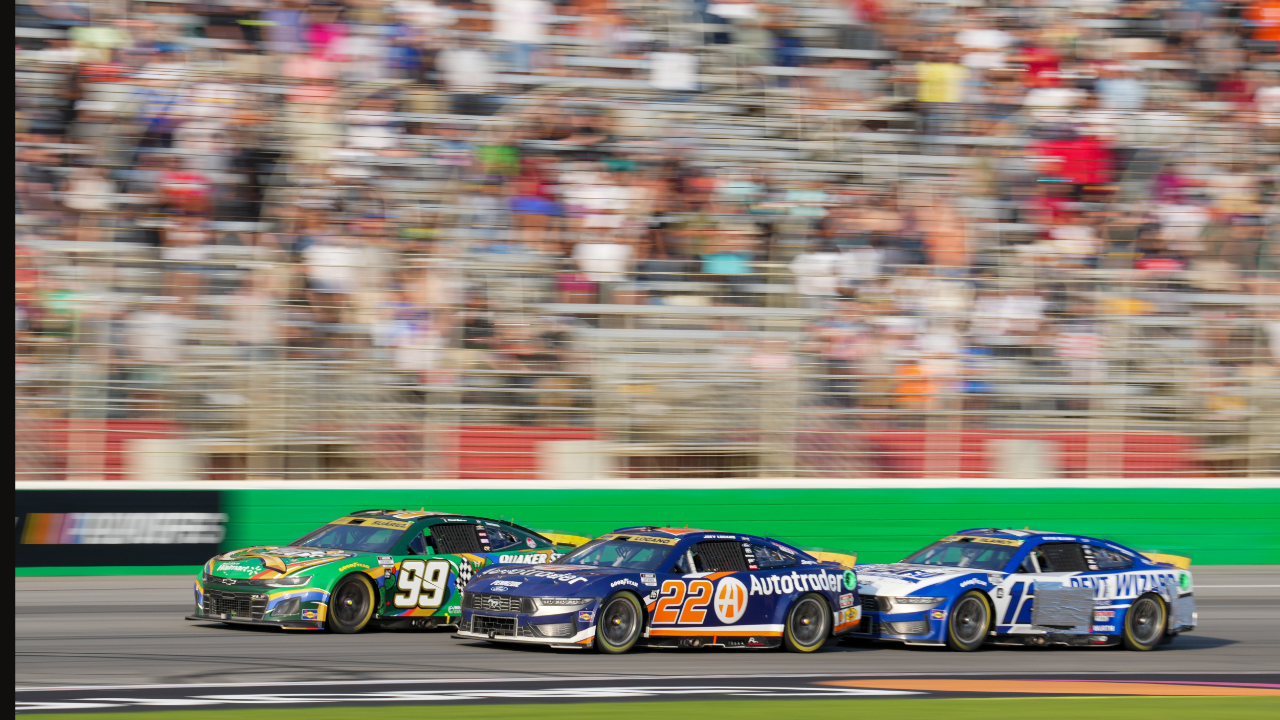
The second challenge of the 2025 NASCAR season will be at the Atlanta Motor Speedway this weekend. This 1.540-mile quad-oval is unlike any other track on the schedule. For its size, it would be categorized as an intermediate. But for the style of racing it enables, it is unquestionably a superspeedway on the same lines as Daytona and Talladega.
In 2021, Atlanta was reconfigured in a major way. The banking in the corners was increased from 24 degrees to 28 degrees, and the width of the track was reduced from 55 feet to 40 feet.
What this did was create a younger sibling to the superspeedways that have been part of the sport for decades. This new avatar of the track NASCAR’s drafting aero package.
Not every driver took kindly to the repaved surface in 2022. However, they have all begun falling in love with how it has been evolving with time.
Ross Chastain said last year, “The corners are so much tighter than Daytona (and) Talladega, but we’re drafting, and as it changes, it’s going to be one-of-one with the steep banking and still a double-white-line rule.”
“You will still draft a bit, but four years from now, no telling how strung out we get, how much off-throttle we have. It’s pretty exciting.” He went a step ahead in comparing Atlanta to Daytona before it was repaved in 2011. Others, including Chase Elliott and Kyle Larson, have been hugely appreciative of it as well.
The incredible history of the Atlanta Motor Speedway
The racing facility that fans will travel to this weekend is a far cry from the one that stood at the venue in 1960. Construction of the track began in 1958 but was halted due to lack of funds.
Most of the original founders, except Garland Bagley, abandoned the ship due to various issues. Fortunately, new investors came into the picture carrying a check of $1.8 million.
The track was finally standing in 1960, ready to host races in the name of Atlanta International Raceway. It made its debut on July 31 and became the seventh superspeedway to host a Cup race.
At the time, a superspeedway was defined as a paved track of one mile or more. Only three of those seven tracks are still in operation alongside it: Darlington, Daytona, and Charlotte.
Times were not good for Atlanta even after its long-awaited debut. It suffered financial troubles throughout the 1960s and 1970s. Things changed for the better in 1990 when Bruton Smith purchased it and renamed it Atlanta Motor Speedway. Under him, the track was massively expanded and began playing host to multiple other racing series apart from NASCAR.
One after the other, the financial issues were resolved, and a new era dawned. The 850-acre property is today one of the fan-favorite mainstays in the NASCAR calendar. Speedway Motorsports Incorporated owns the track currently.
About the author

-

Anirban Aly Mandal •
“I Start Just Like Flirting”: Whitney Cummings Reveals Plans for NASCAR Championship Race at Phoenix
-
Gowtham Ramalingam •
“Nothing Drives Me More”: Kyle Busch Reveals What’s Fueling His Push to Win Again in NASCAR
-

Gowtham Ramalingam •
Austin Cindric Addresses the ‘D Word’, Explains Uptick in Aggression With the Next Gen Car
-
Gowtham Ramalingam •
Ricky Stenhouse Jr. Reveals the Struggles of Being a Single-Car Team in NASCAR
-
Srijan Mandal •
NASCAR Charter System: JGR President Explains How It Protects Teams and Drivers
-
Jerry Bonkowski •
Kyle Petty Beats Dale Earnhardt Jr. as the Best Historian in NASCAR, Claims Kenny Wallace