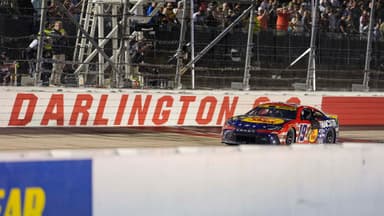
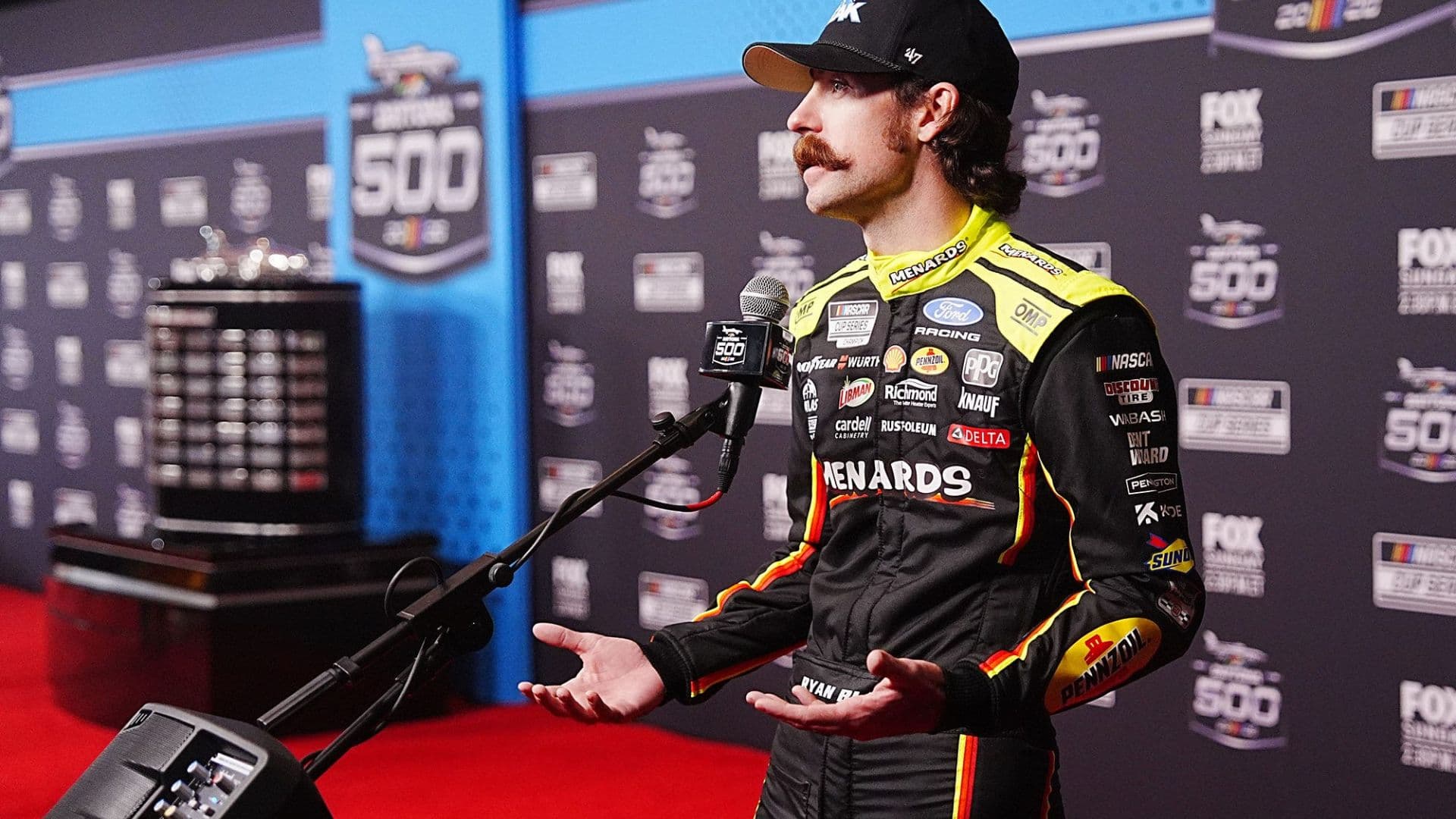
Despite sitting in the sweet spot on paper to win the Daytona 500 or at least land a top-five, Ryan Blaney ended up in 27th place. Trouble knocked on his door early when Stage 2 damage to the No. 12 Ford after Justin Allgaier’s failed block sent the Team Penske driver to the tail of the field. Then he got boxed in again, caught in the fuel-saving chess match led by Toyota drivers.
Advertisement
Being on the wrong side of that fuel-saving playbook, Blaney did not hold back. He called out how the three-wide formation to stretch fuel killed speed, passing, and any shot at climbing forward. “[Toyota] gets three cars and just block the whole field. It’s unfortunate. We gotta fix that. It’s pretty bad.”
Blaney further stated that he does not have a magic wand to fix fuel-saving on superspeedways but wants the tide to turn. “I know we’re working on that. We’re trying to figure out ways to fix it, and there’s been a lot of discussions with the teams and drivers and NASCAR of how do we how do we go about this and how do we fix it?”
“And unfortunately, it’s just part of the game. Like, that’s what you have to do. If everyone else is doing it, you have to do it. It’s not like you can just end up going because everyone just picks the pace up with you.
“But they’re also saving more gas than you that they can jump you if there’s a green flag stop. So it’s stuck in my position because I was in the back. And when it gets roadblocked three wide, like you can’t, you literally can’t go anywhere.”
⛽ “Unfortunately it’s just part of the game […] I want that to change.”
Ryan @Blaney shares his thoughts on fuel saving at superspeedways.
Full Hour: https://t.co/MKhd9eLpQA pic.twitter.com/2seDkIqMRS
— SiriusXM NASCAR Radio (Ch. 90) (@SiriusXMNASCAR) February 18, 2026
In that gridlock, going four-wide is a non-starter because there is no room to thread the needle. That is why Blaney wants change because in those stretches, racing takes a back seat. It turns into riding in line, which does not even feel like racing, pinching fuel, and waiting for pit cycles to shake the order. Teams cross their fingers that they saved more and nailed execution when the time comes.
For drivers buried in traffic like Blaney, it left a sour taste. He did not point fingers at anyone but laid out how the situation snowballed. During the Daytona 500 race, though, it was Bubba Wallace, Corey Heim, and Christopher Bell, who controlled the three lanes through much of the final stage, crawling through laps to save fuel.
The pack behind had nowhere to go, leaving drivers marooned in the back. Frustration ran high, which is why many feel NASCAR should step in before the next superspeedway swing and the 2027 Daytona 500.
Denny Hamlin has pitched a fix, but Billy Scott is not sold
Even though a 23XI Racing car took the win, co-owner Denny Hamlin argued that turning up the speed is the only real fix. He believes more pace would spread the field and ease the concerns drivers like Blaney raised. He even floated the idea of trying an experiment soon.
Opening the taps on engine speed would steer the sport closer to how it once ran. Meanwhile, Tyler Reddick’s crew chief, Billy Scott, poured cold water on the idea of a clean fix, saying teams will always find the next loophole on superspeedways.
Senior vice president of competition, Elton Sawyer, has also gone on record saying fuel saving at superspeedways may be here to stay. He admitted the limits of intervention, stating, “I don’t think we can actually fix it.”
With the Next Gen car, the rules keep the field bunched up, making clean passes hard to come by and putting track position in the driver’s seat. Teams answer by pruning fuel use to gain an edge on pit road before stage breaks and at the finish.
That explains why drivers spend long stretches lifting off the throttle on superspeedways. Burning less fuel means less time needed on pit road. The tactic pays off on paper, but it sucks the life out of the races.
Fans end up watching cars go in circles without pressure, without moves, and without urgency. Usually, the opening stages drift into a holding pattern, with the real fight saved for the closing run. But this time, even the start of the final stage followed the same scene, as drivers kept one eye on the fuel number and the other on the final stretch of the race.