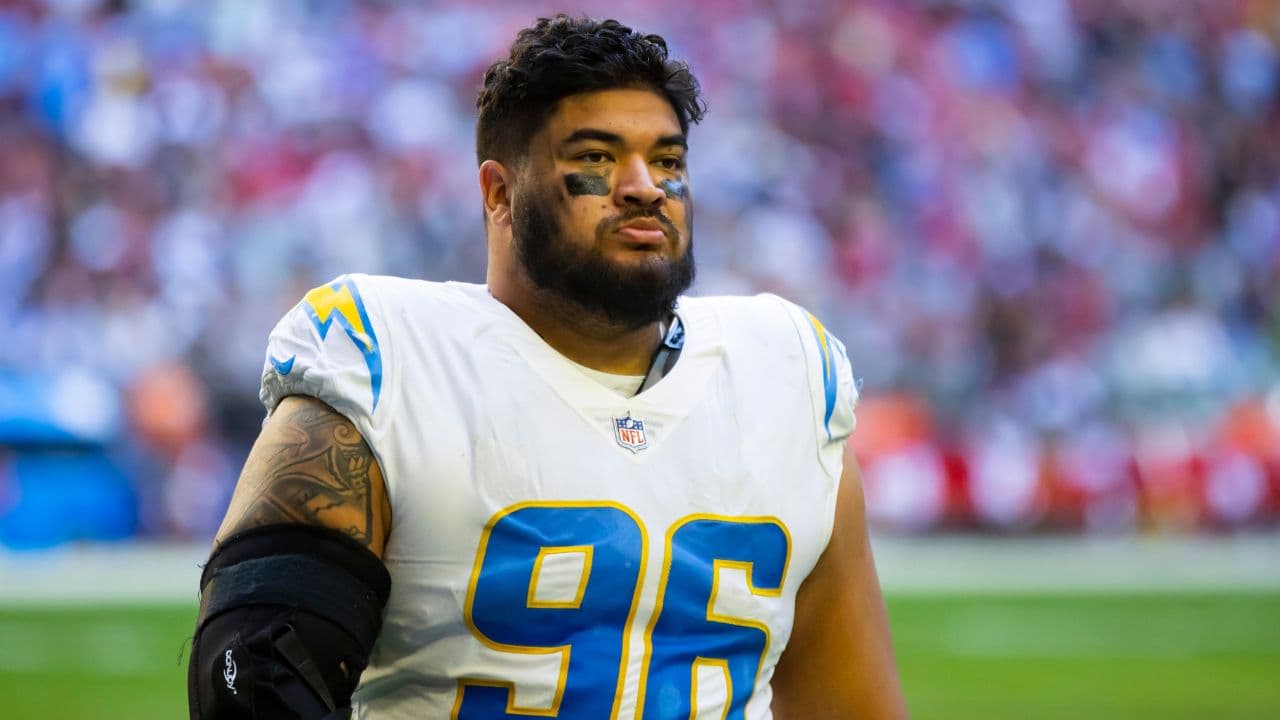
The topic of mental health has always been a contentious one in the NFL. That’s why former defensive lineman Breiden Fehoko recently called out the league for not taking it seriously enough. Referencing the birth of his son, he has now detailed how a coach ruined what should have been a once-in-a-lifetime experience for him.
Advertisement
The NFL has come under scrutiny over how it handles the mental health of its players ever since mental health struggles became a more prominent and openly discussed topic in society. League commissioner Roger Goodell has taken steps to try to reassure critics that the league is focused on the issue. Most notably, he assigned a mental health clinician to all 32 teams.
However, players around the NFL still say that the steps taken are not enough. They talk about how there’s a deep-rooted sense of “toughness” that players feel they need to live up to. If they don’t, it could negatively affect their careers. Fehoko recently recalled an instance when he was frustrated with the NFL’s “toughness” culture.
“After the birth of my son that same night, my coach called me & while I thought he was calling to congratulate me, he told me on the phone ‘Remember what your day job is.’ I remember sitting in the hospital, mad and confused,” Fehoko wrote on his X.
The former pass-rusher was understandably upset at the time. The birth of one’s son is a life-changing moment that sticks in the brain forever. Now, Fehoko will always look back on this story and remember the disdain he felt for his coach immediately after an incredible moment.
Fehoko went on to talk about how players who get injured in the NFL are often forgotten by their teams and are put under pressure to return, sometimes even prematurely.
“It’s not even this situation that comes to mind when I think about mental health awareness in the NFL. Ask any player that’s suffered from injury and ask them how excluded they feel from the team. The only time a coach talks to you is when he’s basically threatening your job so you rush back knowing you aren’t 100%,” Fehoko stated.
They were pretty damning words for NFL coaches. We know it’s a hard job managing 70 different personalities every day, not including other coaches and staff. But how hard is it to reach out and show some compassion to your players?
In response to Fehoko’s post, many fans reached out and showed sympathy for him and other players facing this issue every year.
“That’s real talk right there. I’ve represented players since 2003, and they are isolated and excluded during rehab, especially serious injuries. This is intentional. Teams don’t want injured guys around, period,” an NFL agent wrote.
“Great stuff Breiden. I appreciate the candor. Brutal business man. Doesnt seem that anyone cares at the end of the day,” someone else added.
That’s real talk right there. I’ve represented players since 2003 and they are isolated and excluded during rehab especially serious injuries. This is intentional. Teams don’t want injured guys around, period.
— Ed Wasielewski (@ed_waz) February 23, 2026
It was a very supportive comment section with only a few negative reactions. Naturally, some questioned Fehoko’s “toughness” and called him “soft.” It goes to show that frame of thinking doesn’t solely exist in the NFL.
Other fans asked Fehoko to say the name of the coach he was talking about. During his career, he played for the LA Chargers under Anthony Lynn and Brandon Staley. He was also on the Pittsburgh Steelers briefly under Mike Tomlin near the end of his career as a practice squad reserve in 2024 when his son was born. Fehoko also played with the Detroit Lions’ practice squad in 2025.
Notably, Fehoko’s recent post comes days after he shared another message about how NFL teams might say they care about players’ mental health issues, but behind the scenes, it’s quite the opposite. “You go to a staff member tell em you struggling watch how different they start treating and looking at you. I seen it first hand,” he wrote.
The claim came shortly after it was announced that Minnesota Vikings wide receiver Rondale Moore died from a suspected self-inflicted gunshot wound.