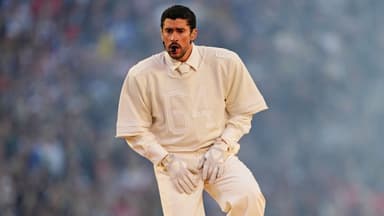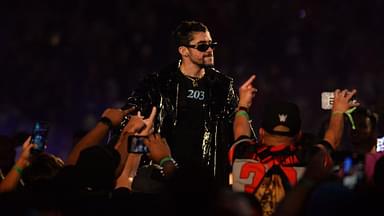
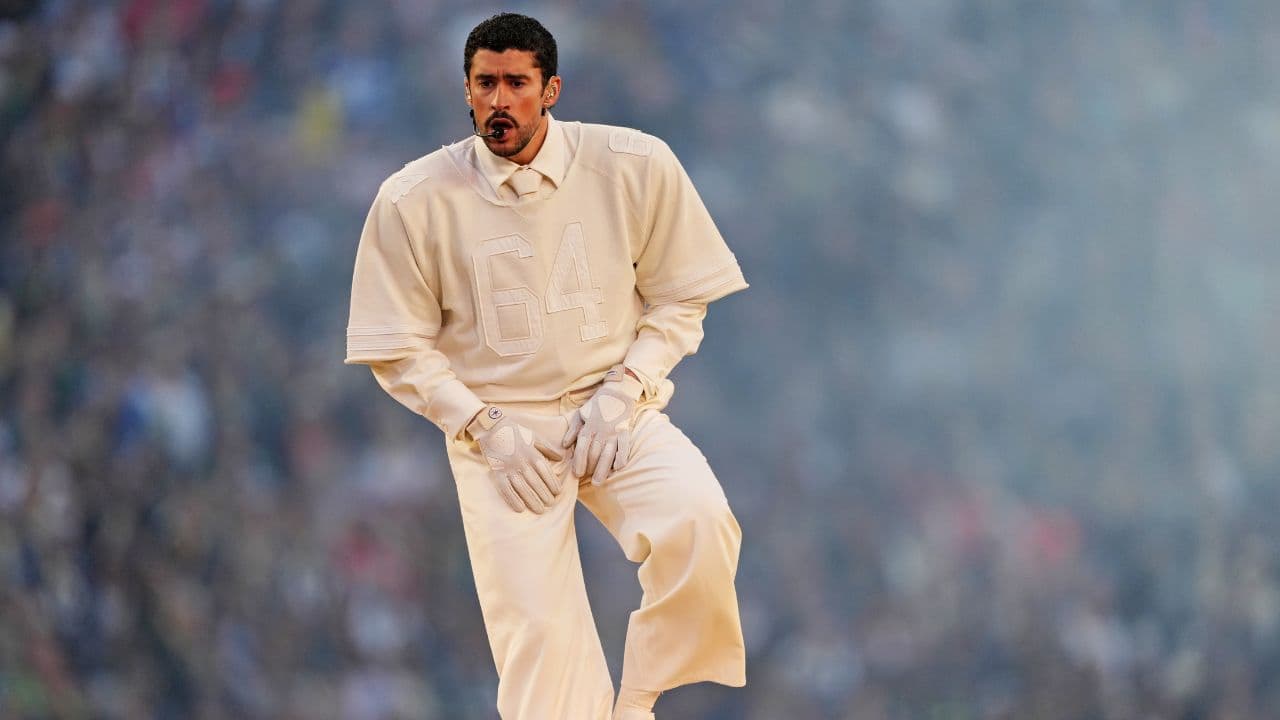
Bad Bunny’s Super Bowl LX halftime show was always destined to make history. The Puerto Rican singer became the first Latino solo artist to headline football’s biggest event, and the first to perform nearly the entire set in Spanish. But there were apprehensions and chaos in the build-up to the show, and pushbacks as well.
Advertisement
The halftime show’s success was even more impactful because of how how sharply it contrasted with the buildup. Bad Bunny’s candidacy was engulfed in political chaos as the date neared. There were boycott calls, criticism from right-wing political figures, and even a rival ‘All-American Halftime Show’ organized to balance out the pop star’s ‘All-Spanish’ performance.
However, once the DTMF hitmaker took center field, the backlash faded into the background. Early reports suggest record viewership of over 135 million, making it the most-watched halftime show ever. Bad Bunny’s streams on Apple Music also surged sevenfold within minutes. But New York City noticed another type of surge. A dip and a surge, to be exact.
According to data released by NYC Water, Bad Bunny’s halftime show triggered what some described as a literal “Super Flush.” During the 13-minute performance, water usage across the city dropped to decade lows. Then came the release, quite literally.
In the 15 minutes immediately after the halftime show, water usage spiked dramatically to a level equivalent to 761,719 simultaneous toilets flushing. Officials later noted it as a rare example of how a single cultural event can synchronize the physical behavior of an entire metropolis.
In essence, the city collectively waited to relieve themselves until Bad Bunny was done performing.
NYC saw a significant reduction in water usage throughout the five boroughs during the Super Bowl’s #BadBunny halftime show yesterday, but in the 15 minutes right after the show ended, there was a spike in usage equivalent to 761,719 toilets flushing across town.#SBLX
— NYC Water (@NYCWater) February 9, 2026
Naturally, fans were both stunned and amused by the data posted by NYC Water. One person asked in the comments, “Can someone explain how this data was compiled?”
Another quickly replied, “The city has water meter monitors in buildings. It’s how they estimate what your monthly bill is. If you’re a building or home owner, you can go online to see what your consumption is throughout the day. Very interesting stuff.”
Others, meanwhile, leaned into the humorous side of the report.
“This is one of the most unique updates I’ve ever read lol I wish cities did stuff like this more often,” one fan wrote. Another joked, “Nobody wanted to piss and miss the alternate halftime show.” A third summed it up perfectly: “If ‘holding it in’ was an Olympic sport, NYC just took the Gold. That’s the power of a legendary halftime show!”
That said, the irony is hard to miss here. A performance, which was being framed as divisive, has ended up uniting millions, not just emotionally or culturally, but biologically too.
For 13 minutes, an entire city paused in sync. Not even Michael Jackson can flex that.
At Levi’s Stadium, that 13-minute performance turned into a vibrant celebration of Puerto Rican culture. The set featured sugarcane fields, a casita-style house party, and dancers dressed as everyday workers.
And by the time Bad Bunny spiked a football etched with “Together We Are America”, and a message reading “The only thing more powerful than hate is love” flashed behind him, the performance had already cemented itself in Super Bowl history, and, as we know now, a New York City record as well.